Forum Replies Created
- AuthorPosts
On February 24, 1986, the General Manager of the now defunct Uganda Airline, Dr Ben Ochola Latigo, ordered the recall of a plane which had been airborne more than 30 minutes back to the ground. The plane was destined for Dubai in the United Emirates when it was recalled back to Entebbe airport. The scandal was widely covered by local and international media.
Dr Latigo ordered the recall of flight No: QU 172 which had left him as he was on his way from Kampala to Karachi. Pakistan. He arrived at Entebbe airport more than 30 minutes after the plane had left. Some airport and Uganda airlines workers told the press.
His action attracted bitter criticism from the government as well as the public. In an attempt to do damage control, he issued a press release in which he defended his action. In the press release he said that he ordered the recall because he had the powers to do so, besides, him and other senior officials were destined to Pakistan for an official negotiation with the Pakistan International Airlines which were to lease two B707 engines to the Uganda Airlines.
The plane was said to have had more than 20 passengers, but the Airlines spokesperson said that there were only seven passengers, and five crew members.
Popular pressure to have Dr Latigo arrested flared and he was arrested on the Uganda-Kenya border as he attempted to enter Kenya. On March 7, 1986, he was produced before court in Kampala. He was represented by Advocate Henry Kayondo and was granted a court bail of Shs300,000 cash. Although he later won the case, the government instituted a commission of inquiry into the mismanagement of the Uganda Airlines which was the first ever by the NRM government to check corruption in Uganda.
The commission discovered that Latigo owned TEKDEL INTERNATIONAL LTD which hired two Mercedes-Benz Cars number UWW 555 and UWY 762 to Uganda Airlines at Shs95,000 per day. As such, the Airlines owed him millions of money the commission heard. Latigo was appointed manager in December 1985 by the military junta under Tito Okello Lutwa. He replaced Colonel Wilson Gadi Toko who was the vice chairman of the military council.
uganda.uk.com
 Jim Muhwezi was once Education, and Health minister Muhwezi, Kutesa censured (1998). Then Brig. Jim Muhwezi, the minister of education, was forced to resign by the Sixth Parliament due to alleged mismanagement of the then newly-established Universal Primary Education. The Sixth Parliament, reputed as probably the most independent and vibrant during Dictator Yoweri Museveni’s presidency, also forced Mr Sam Kuteesa to resign, accusing him of benefiting from the sale of the former Uganda Airlines. The two, who were forced to resign over alleged abuse of office, were never prosecuted and bounced back into Cabinet in 2001, when Dictator Yoweri Museveni was re-elected. The government took the view that their censure was “unfair”. Muhwezi, particularly argued further that by having stayed off Cabinet for years, he had been punished enough. Later, he was again dropped from Cabinet over the Global Fund scandal.
uganda.uk.com
 Parliament stopped the sale of 49 per cent shares of the Uganda Commercial Bank, then the biggest bank in the country and entirely government-owned, to a Malaysian company. Then Maj. Gen. Salim Saleh resigned as defence adviser, after admitting a role in brokering the deal with Westmont Land Asia, the successful bidder, which had been found to be a “briefcase company” with no banking experience. Gen. Saleh was later alleged to be the majority shareholder in Westmont and soon after the purchase, he sold its shares to Green Land Investments, another company in which he was also a shareholder. In his defence before Chief Magistrate Catherine Bamugemereire over the mismanagement of the now defunct Greenland Bank, Sulaiman Kiggundu, who was the bank’s managing director, named President Museveni as the “key person” behind the irregular purchase of the UCB shares by Greenland Bank.
uganda.uk.com
 The Jinja Resident District Commissioner (RDC), Eric Sakwa, has directed police to shoot dead whoever is caught red-handed killing boda boda riders.
Mr Sakwa gave the bizarre directive on Sunday after a 28-year-old boda boda rider was on Saturday morning killed and robbed of his motorcycle.
Sadat Mulyowa Wandera, a resident of Kitove Village, Mafubira Sub-county in Jinja District, was beaten to death by hammer-welding passengers who later fled with his motorcycle registration number UES 499G.
“We are tired of thieves stealing and killing boda boda cyclists. Whoever is caught (in the act) should be shot dead. We shall perform an autopsy after we have killed them,” Mr Sakwa, who heads security in the district, said in a telephone interview.
The Chairperson of Jinja Boda Boda operators, Mr Eria Musobya, said the deceased was murdered by the criminals who pretended to be passengers heading to Magwa.
“They turned against him and murdered him near YMCA Hostel. This crime has shocked the boda boda fraternity in Jinja who thought such murders were only happening elsewhere,” Mr Musobya said.
The Chairperson Bata Boda Boda Stage in Jinja Town, Mr Ibrahim Kiwanuka, asked Government to install CCTV cameras in Jinja Town like they have done in Kampala. This, he said, will capture faces of those who steal their motorcycles.
“Motorcycle thieves are running to Jinja because Kampala is fitted with CCTV cameras. We also ask government toinstall cameras in this town, not to only help the boda bodas, but also curb other criminal activities,” Mr Kiwanuka said.
He added that once such thieves are arrested, they should be killed, warning that once taken into police custody, they would be given bond and begin from where they stopped.
The boda boda industry has recently been rocked by a spate of murders, notably that of Derrick Mulindwa in Rubaga, a Kampala suburb, which was captured on CCTV and went viral.
Mr Sakwa also asked boda boda riders to always furnish security operatives with information because some of them know these groups, where they sleep and to whom they sell the stolen motorcycles.
Following Mr Wandera’s death, fellow riders rode his body through the streets of Jinja Town while demonstrating the manner in which their colleague was killed.
Efforts to get a comment from the Regional Police Commander, Mr Paul Nkore, were futile as he didn’t answer or return our calls by press time. He was however quoted by another media outlet as saying investigations are underway.
uganda.uk.com
Government has declined to renew operation licenses of over 13 NGO’s after intelligence leaked that they have been funding opposition leaders and demonstrating Universities however they have been operating in disguise of helping the needy and fighting for human rights.
According to sources from security the decision to scrap license from NGOS was reached on last week during a security meeting between Ministry of Internal Affairs and agencies.
Sources added that during the heated security meeting, 13 NGOS were ordered to declare their source of income, funders and other necessary documents before their licenses are renewed.
The affected NGOS include:
1. Action Aid International Uganda.
2. Citizen’s coalition for electoral Democracy in Uganda.
3. Alliance for campaign finance monitoring.
4. Anti-corruption coalition Uganda.
5. National Non-governmental organization Forum.
6. Human rights network Uganda.
7. National democratic institute.
8. Great lakes institute for strategic studies
9. Foundation for human rights initiative.
10. Democratic governance facility.
11. Kick corruption out of Uganda and others.“These NGO’s have been getting money from foreign countries but they have been diverting it to other political groups like funding opposition groups to destabilize government,” a security source told us.
Now before their licenses are renewed, they should avail security with all bank statements, source of funding, accountability and the details of the owners of these NGO’s. Ministry of internal affairs last week started vetting all NGO’s in Uganda and profiling them.
Last week on Thursday Executive Director Financial Intelligence (FIA) Authority Sydney Asubo wrote a letter to Equity bank ordering them to avail with the Authority with all necessary account documents and statements for the above named NGO’.
uganda.uk.com
The starting point for all those in opposition who want to be on the ballot should be: How will it be when I don’t make it as President after the 2021 elections?
To start with, Dr. Kiiza Besigye will have been on the ballot paper from 2001, 2006, 2011, 2016 and 2021, yet he now tells us that it is impossible to remove President Museveni using the ballot.
Then we have Hon. Kyagulanyi whose chances to stand for President in 2021 are not in dispute if Uganda Government does not fail him somewhere, this is against the background that he has openly talked about it, and also told his constituents to look for someone to replace him.
We should get to understand that this should not be a gamble game. For a man whose hold to power has history as far as 1968 when he started his mobilization and more so the successes after the 5 year Bush war, followed by hold on to power for 35 years by the time of 2021 elections should be a challenge big enough to get our ambitious brothers: the prospect Presidents in 2021 that they need to think harder.
The wins by President Museveni are possible because among other things he has the control to National resources. It should only have been a constitutional limit to his duration in State House that would have done the magic. The limits have all been removed starting with the consecutive two terms in office, then the age limit.
The President has the military machine which is basically in control of security and other areas. He has the State hand in virtually everything. He appoints the critical people who have a big role in elections and the judiciary.
It is therefore presumptuous for any Ugandan to imagine that he can get the President out in 2021.
If anyone is serious enough, it is time to reflect on the failure to get that office after 2021. We should not believe in miracles happening to sort our selfish interests.
It will be a miracle for any opposition Presidential candidate to come out victorious and late alone get power from President Museveni.
Last time we had machines which should have been used in tallying the number of people who voted at each polling station. This function was not used simply because it is the norm to have inflated voter registers which can give opportunity to staffing of ballots.
FDC should by now have realized that they cannot get over 50% voters for their candidate when Hon. Kyagulanyi is on the ballot paper.
The question is: What went wrong in Uganda?
Even a combined opposition fielding one Presidential candidate may not manage to raise just a half of the resources that NRM will use in the 2021 elections, why then the failure to cooperate?
I cannot support any of the candidates whose role is directly to leave Uganda in the status quo we have been in since 1986.
Even if any of the current ambitious Presidential candidate bows down and gives way to the joint Opposition Presidential candidate, I think such a one will enjoy a better title of a hero other than wait to lose the election in 2021 and wish the earth would shallow him.
The discussion is based on principle. We want to get out of being enslaved, but being selfish and opportunistic by some individuals will surely not get us there.
uganda.uk.com
10th August 2019 at 6:13 pm in reply to: Bahima Century Dynasty is a Fiefdom of Dictator Yoweri Museveni #348 Officials from the Ministry of Defence were Thursday kicked out of the Public Accounts Committee (PAC) over inconsistencies in the implementation of the ministry’s Shs 1.4 trillion budget for the FY 2017/18.
The officials first failed to explain at staggering Shs 35billion utilities bill that supposedly went to water and electricity.
And yet a closer look at the Auditor General (AG) John Muwanga’s June 2018 report, revealed much more unexplained expenditures that perturbed the MPs.
Key among these is the infrastructure development at the Peace Support Operation Training Centre (PSO TC) at Singo military Barracks.
The AG’s report observes that there is no end in sight to this project which was initiated in FY 2014/15 and was supposed to be commissioned on 31st December 2015.
At the time of the inspection, construction of 22 tent bases had stopped under unclear circumstances according to the report, and some soldiers were found residing in mobile flex tents.
This Muwanga says goes against the standards of an International Peace Training School.
More so, some of the tents that were installed in 2008 were found to be too old and irreparable to shelter the soldiers.
Out of 8 residential blocks for officers, 3 had been abandoned at slab level, 4 at window level while commander and deputy commander locks are still stuck at slab level.
Also 8 dormitory blocks remain incomplete and 1 is yet to be roofed.
At the time of the audit, the report says, 4.2 billion shillings had been spent on this project.
Fuel and Spares
The report also notes that a local company YAMASEC Ltd supplied spare parts worth 1.7 billion shillings to the Air Force without an independent person witnessing the transaction.
Documents show that 5 orders were placed between June and October.
Although deliveries for the above goods were witnessed by the receiving committee, AG insists most of the transactions did not adhere to control dictates.
In the same vein, the report notes that the receiving committee was on many occasions notified late to receive delivered Jet –A1 fuel and Avgas fuel worth 10.9 billion shillings.
Attempts to get a comment from army spokesperson Brig Richard Karemire were futile.
uganda.uk.com
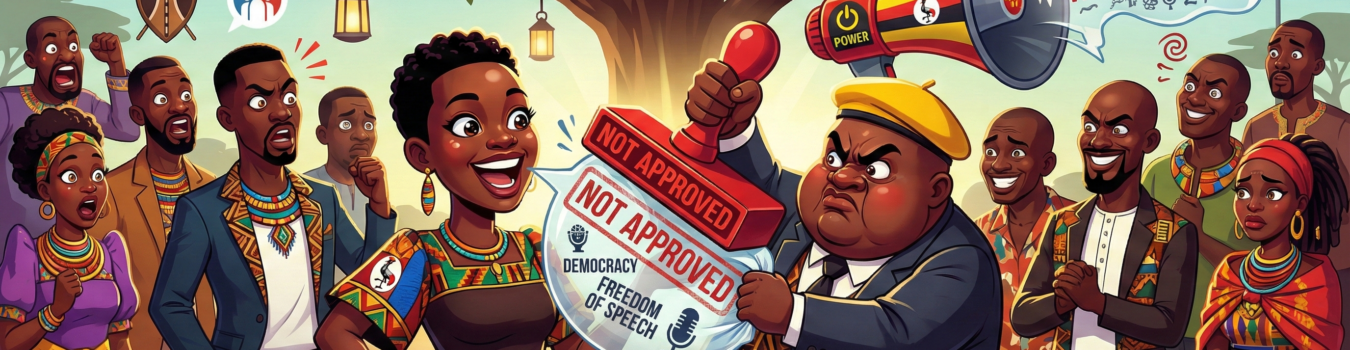
10th August 2019 at 1:43 pm in reply to: Bahima Century Dynasty is a Fiefdom of Dictator Yoweri Museveni #347 Influencers on Ugandan social media and others with large, commercialised online followings must henceforth register their activities for monitoring by the state, the country’s communications regulator said on Thursday.
Authorities say the scheme, which also levies a $20 fee, is designed to clamp down on immoral or prejudiced content.
Critics view it as part of an escalating campaign by President Yoweri Museveni to suppress online content disapproving of him and his government.
Last week, university lecturer and social researcher Stella Nyanzi was jailed for 18 months on cyber harassment charges stemming from a Facebook post criticizing Museveni.
According to digital communications rights watchdog Unwanted Witness, between 2016 and 2018 at least 33 Ugandans have either been summoned and interrogated by police or charged with online communications offences.
The registration scheme is “not a positive move, it infringes on the rights to freedom of expression.
People are able express themselves well when they know that somebody is not watching over them,” said the organization’s chief executive, Dorothy Mukasa.
Uganda Communications Commission (UCC) spokesman Ibrahim Bbosa said the “data communicators” to be registered included individuals with heavily followed social media and other online accounts that carried ads alongside other content on platforms including Twitter, Facebook, Instagram and YouTube.
That would include prominent musicians, journalists and socialites.
As a data communicator…you’re pushing out content which could easily violate the known parameters of morality, of incitement, of ethnic prejudice or not be factual,” Bbosa said.
“We want online platforms to register with the commission so that we can monitor (them),” a process that the $20 fee was designed to fund.
Robert Ssempala, national coordinator for Human Rights Network for Journalists-Uganda, said that, for many, the fee was prohibitive.
“The spirit of the regulation is essentially to make it extremely unaffordable, to make it extremely frightening for people to engage in sharing information on social media,” he added.
Last year the government introduced a tax on the use of popular social media platforms.
Museveni has repeatedly complained that Ugandan social media is a vehicle for “lying” and “gossip”, interpreted referring to information critical of government.
In power since 1986, he is widely expected to stand again in the next presidential election in 2021.
uganda.uk.com
 Residents of Mutungo B in Nakawa division, Kampala are living in fear after persons driving in a government vehicle stormed their area and picked two locals who have been missing since last week.
The two missing persons are men identified as Justin Kayondo and a one Ismail Mere, all residents of the same area.
It is highly believed that they were arrested by security operatives and taken to unknown place since no case was filed at the area police station as confirmed by chimp corps.
Locals recall the registration number plates of the pickup truck that was used by the heavily armed men to whisk away the two persons as UG 2454C, white in color.
According to the area local councilor identified as Faisal Sebayiga Kibirige, when the armed men stormed the village, Mr Justin Kayondo attempted to resist the arrest and run away, but he was shot in the leg.
Relatives and locals are now demanding authorities to know the whereabouts of their loved ones adding that they have dependents that they left behind.
Kampala Metropolitan Police Spokesperson Patrick Onyango confirmed the arrest saying that investigations are going on.
“We are aware that one of our sister security agencies conducted an operation in Mutungo area and arrested two people, however we would like to urge the locals and relatives to keep calm as there are investigations going on,” Onyango said.
Onyango assured that the arrested are in safe custody and will be released immediately when investigations are complete.
He however did not disclose the specific security agency having the missing persons and where they are being detained.
Recently, sister security agencies have on several occasions intensified arrest of people without identifying themselves neither revealing places of their detention and cases which has instilled fear in the public.
In the past two weeks, police and CMI clashed over a businessman who went missing from his shop in Nansana when they both made controversial statements about the arrest.
A businessman identified as Yuda Kiseka allias Mirembe was pick by persons believed to be security operatives from his shop located at Nansana Masitowa along Hoima road and family could not trace his whereabouts as details regarding the arrest were not registered at police.
Also a city lawyer and advocate of the High Court Patrick Mugisha Machiika was last week picked by persons believed to be security operatives from his chambers located at Kings Gate Mall in Kabalagala and detained from un-gazetted detention facility.
He was later released after his family coursed his “abductors” by filing a habeas corpus in the courts of law.
uganda.uk.com
 Uganda’s problem is a leadership crisis characterised by brokers, brokers and brokers! It is a nation where brokerage has replaced work; and everyone is seated waiting for “the deal” of his life!
Doctor Kizza Besigye, we all know that for some reason (more likely your political stance) you have been mercilessly beaten, flogged and imprisoned. We all know that, perhaps, you hold the Ugandan record for the most imprisonment without trial; the original sin of African post-independence democracies!
You have indeed sacrificed for this nation! From working in the human blood of injured combatants without proper protection to being imprisoned every day for your beliefs and methods, your record of sacrifice remains up in the clouds.
Therefore, since we are now discussing sacrifices and the cost of those sacrifices on the democratisation process of Uganda, it would be important if you told us whether those sacrifices are done for your own benefit or for the nation; because, unlike Jesus Christ whose record left no trench of personal enrichment, we all know that you are one of Uganda’s super rich elites, albeit without a clear record of the sources of your immense estate. We shall leave this at that.
Doctor Kizza Besigye, I know that many Ugandans have asked you this question and have been accused of being funded by the NRM. I know that many peace-loving Ugandans have been branded moles for posing legitimate constitutional questions about your political methods.
All the same, let me now ask you the same old questions; what is your mission? What is the main motivation for your “sacrifices”?
Doctor Kizza Besigye, your career in opposition politics started at a time when I was about 20 (years) old. All this time, the theme for your politics has been “regime change”. To be more specific, your gospel has clearly been that of change; change from Museveni to yourself.
I have never clearly understood what you want to do for Uganda other than the removal of President Museveni from power.
Every day, I really wonder if you know what Ugandans need; or if you are like a madman who will gather stones; throw in all directions; and if by chance he hits an abandoned wall, he shouts loud; That’s my target!
Your target(s) for Uganda should go beyond the obsession of unseating Gen. Kaguta!
In your politics, you only seem to project to Ugandans that once Museveni is gone, everything will be ok. You have even spread your virus to those seeking to be like you; the only difference being in what they wear on their heads! Yes. I am talking about Bobi Wine and his red-headed army!
With this wrong political culture that you have helped foment in this country, one would not be wrong to conclude that after Malaria, Polio and HIV, your politics is the 3rd most dangerous thing to the future generations of this humble nation.
Doctor Kizza Besigye, I want to stress to you that Uganda’s problem is not Museveni!
Uganda’s problem is (1) a health system that is more ill than the patients; (2) a police system more criminal than the thugs; (3) an education system more ignorant that the pupils; (4) a parental system more vulnerable than the child; (5) a leadership more backward than the followers; (6) a housing system worse than the wilderness; (7) a funeral service system more revered than the emergency system; (8) a justice system more unjust than the mob; (9) a feeding system more hungry than the starving; (10) and an opposition that is devoid of alternatives!
Doctor Kizza Besigye, Uganda’s problem is the decay of the education system; an education-chain that is devoid of value; and one that is totally harangued by our original sin of corruption!
Yes. I say to you that Uganda’s problem is an education system, which only ensures that a child spends a long time in school and grows up without learning any practical life skill.
Uganda’s problem is the sick and rotten parental chain of absolute mediocrity where academic grades for our children are valued ahead of knowledge acquisition!
Yes. I am talking about the millions of Ugandan parents who would rather take their children to schools specialised in “manufacturing academic results” than those committed to “educating the whole”!
Uganda’s problem is the millions of young professionals, doctors, teachers, nurses, engineers etc, who get out of universities, technical institutes and other study centers ill trained but at least willing to work; but who can’t find any job!
Yes. I am pointing at those young professionals who walk the full length of the streets willing to get a job, add and contribute; but whose knocks meet closed doors.
Uganda’s problem is a desperate socio-economic environment, which prefers the selling of the nation’s young and energetic people to modern-day slavery in the form of international labor export!
Yes. I am talking about those young Ugandans, lawyers, doctors, nurses, engineers and teachers who are well qualified to contribute to national growth but who are condemned to being housemaids and garbage collectors in nations potentially poorer than the pearl of Africa.
Doctor Kizza Besigye, Uganda’s problem is a leadership crisis characterised by brokers, brokers and brokers! It is a nation where brokerage has replaced work; and everyone is seated waiting for “the deal” of his life!
Yes, I am talking about those power brokers, land brokers, sex brokers, news brokers, health brokers, business brokers, etc who have sold everything to the ugly level of brokering human body organs from unsuspecting Ugandan patients!
Yes, Uganda’s problem is a socio political environment where the sweat of the majority is the bread of the minority; a nation where the greed and immorality of the public servant has effectively replaced the gospel according St. Mark!
Doctor Kizza Besigye, Uganda’s problem is a desperate situation where law volumes are treated as mere sheets of paper not worth the ink in which they are written. Yes. I am talking about a justice system that administers injustice; one where the maid of justice is thrice raped by the judge on her way to the alter of justice.
Uganda’s problem is a political reality with a fatally commercialised electoral process that only facilitates thieves and pillages into public office.
Doctor Kizza Besigye, what I have said above is just a microcosmic projection of Uganda’s problem. I can go on and on.
This is the nation where everything seems to be headed for the worse. This is a nation where evil is no longer an exception but a general rule.
This is a nation where people are so useless to themselves that witch doctors, fortune-tellers and false prophets are fast becoming role models. Yes, this is the pearl of Africa.
Doctor Kizza Besigye, I have narrated all this to ask you one question; what ambitious plan do you have to help an average Ugandan overcome the huddles that he/she faces every day?
For 20(twenty) years, you have never paraded a clear plan for Uganda’s recovery. All you go around preaching is “ajja agenda”, “omusajja agenda”, blah-blah. So what? What happens after he has gone? Do you take over and continue the same? What is your alternative strategy?
An average Ugandan wants;(1) market for his produce; (2) a good school for his child (with a well motivated teacher); (3) a decent retirement after serving the nation; (4) social security in old age; (5) health insurance; (6) a good hospital (with all necessities and a well motivated doctor); (7) a job for his specialty; (8) food for his family; (9) a good road; (10) a reliable public transport network; (11) sustainable sources of income; (12) a functional justice system; (13) safety and security. What ambitious plan do you have for Uganda other than the removal of the prince of Kiruhuura?
An average Ugandan needs peace; functional health care; proper housing; justice in a court of law; and a system that generally rewards its best contributors. An average Ugandan needs a change, no merely of guards; but one of a fundamental nature!
An average Ugandan doesn’t care about who the President of the Republic is; but rather whether that President sits on a function system!
Doctor Kizza Besigye, the recovery of Uganda needs men and women with “big hearts”; men of in-depth character and not the bunch of scarecrows that you and your fanatics represent!
Political ambition needs to be benched against a value chain. As much as one seeks to be elected, one must remain aware that the election is not about him/her but rather about the electorate. Unfortunately, this still eludes you and your political retinue characterized by fanatic hangers-on; all together inept of democratic sense!
For nearly 20(twenty years) you have never come out clearly to guide the nation on how you will be a good President siting on a functional government; and this is not because you don’t care! With the deepest respect, I think you just don’t get it.
As a well-trained Medical Doctor, I know you were inducted through the function of treating and or eliminating medical infirmities.
However, I don’t know whether you were properly inducted into the art of pre-treatment diagnosis; and this is a very serious concern for me as a change thirsty Ugandan.
If indeed you had been properly inducted in the function of diagnosis before prescription of therapy or medical procedure, you would have by now known that Museveni is not the disease whose cure Ugandans most desperately need.
Yes. You may argue; and rightly so that President Yoweri Museveni is the epicentre of the pandemic that afflicts Ugandans. But let me ask you one question; Do you want to simply change the epicentre from west to south instead of eliminating the pandemic?
One of Museveni’s problems, which you have ridden on to build your own political brand is his chronic inability and or unwillingness to peacefully retire from power/power. We all know that our beloved President forgot the spelling of the word “retirement”. But are you the person most suited to tell him to retire? Everyday I wonder if you have lived by your wish for Museveni.
Democracy doesn’t just apply to persons in state house. It applies to us all. Democracy is a way of life. It is a culture that runs on certain basic principles that spring from within.
Power doesn’t cease to be power simply because it lies in the opposition! By its own right, opposition politics involves a lot of power; and an opposition stronghold should be seen to practice the very democratic principles that it demands of a siting government.
This includes but is not limited to regular free and fair elections at all levels, as well as a peaceful and respectful transfer of political office. These principles apply to all political associations, whether in government or outside government.
For 20(twenty) years, I have watched you contest election after election and harvesting the same results. In the beginning, as a young voter, I voted you out of genuine conviction. I later voted you for lack of worthy alternatives, and then, like majority Ugandans, I stopped voting. We search for unknown results, we don’t just search!
The reason I stopped voting is because I felt two undemocratic people were contesting against each other, and I was not about to start choosing which pygmy is taller than the other! They are both short!
From the sidelines, I have keenly watched your FDC politics; and have wondered whether you truly believe in democracy.
As the father of the FDC, both democracy and basic manners demand that you never show a side; especially in matters touching the internal politics of the party. You should reserve your clout for peace building and reconciliation of opponents in the wake of divisive internal politicking of the organization you say you love.
You, showing a side, in any internal electoral processes of the FDC has a great bearing on swinging the vote, not in the direction of proper change but in the direction of your will. This is one arm of generating a fair election inside your party. You do the opposite, because you are an invisible candidate in those elections.
Doctor Kizza Besigye, you, showing your side and actively participating in the evil practice of blackmailing your opponents as moles crystallises the definition of an un-free and unfair election. I don’t know whether you only define an un-free election as one where tanks, batons and tear-gas are assembled to beat the opposition into submission!
You accuse Museveni of failing to nurture succession; and for sitting on Ugandans like a ghost! But you and Museveni seem to suffer the same disease, a delusion of grandeur, which you both hold as the vision for Uganda.
Honestly, both you and the leader of the NRM have clearly indicated that only you are worthy leaders of your respective causes; whatever those causes are. In fact, you should both reconcile with each other and work together! The two sides of the same coin remain together, forever.
In fact, I think Museveni is better than you. The only difference between you and Museveni is that for you, you are a bloody masquerader who pretends to be a liberator when you are actually a consummate conqueror! Yes. This is my assessment. At least, he has openly told us that he is not a public servant; and that he works for his beliefs and the future of his grand children! Sir, who do you work for?
You present a stooge in an internal election of the FDC, campaign for him to be party President. After the election you make your stooge your de-facto assistant in your fictitious “people’s government” whose center of command is your deluded mind? That is first class fraud!
Also, I have tried to observe all democracies in the world. After the election, members of the opposition are never unwilling to partner with the winning party for national development.
You may argue, and rightly so, that Museveni is unwilling to cooperate with you. But isn’t it also true that the nature of your politics dissuades the spirit of co-operation? I doubt I would invite your politics to my government if I were President!
Yes. You may have disagreements with Museveni, but that should never mean that you don’t see the only time he gets it right, like building roads damns! The inflated costs of those roads not withstanding. For 20(twenty) years, I don’t recall when you ever commended the government for any good done.
Kizza Besigye, when periods of divisive politicking end, worthy opposition leaders partner with sitting governments for the cause of national development. You have opposed, opposed and opposed. Why?
This, it self, is wrong because in your disagreement with a siting government, you should never deny it credit where such credit is due. You should oppose on principle. You shouldn’t oppose as if that is what you were born to do.
When you oppose everything whether it be good or bad, you become a fundamentalist. That may be good for you (depending on your mission), but it is obviously not good for the nation. I have herein earlier highlighted that politics is not about you. It is about the electorate.
Doctor Kizza Besigye, as a leader in the opposition, you should never limit your contribution to the Presidency. You may never be the President of the Republic; but you can surely be an agent of positive change.
When you command the vote of nearly 40% of the voting population and the sympathy of nearly 65% of the entire populace; if you have “a big heart”, you can influence a lot of things. That is if your politics is about the good of the nation, not this nionionionionio that we see everyday.
You can champion projects for the improvement of hygiene; domestic income and livelihoods; and changed attitudes towards honesty in service delivery. You can be a strong influence on school going children and the youth as a practical role model. Yes. You can really do a lot! You cannot politic from election to election as if we your ballot boxes.
Pro-development Initiatives such as those I have indicated above would increase your rating as a citizen, a democrat and a leader. They would give you a deserved title of “peoples president”.
But when you keep politicking and provoking a sitting government the way you do, the results are really bad for entire nation. The government ends up making draconian laws to contain you, and this quickly grows into a culture of making improper legislation, only courtesy of your misconduct; as well as an impulsive government and its useless Parliament.
Sadly for 20 (twenty) years, I don’t know of any project, which you have championed for the improvement of the life of a contemporary voter, other than teaching people how to yap, yap and yap.
Lastly, Doctor Kizza Besigye, I want to teach you a few small lessons.
First, it can never be that every time you lose an election, the election has been stolen. Yes. We all know that elections are stolen, but there are many tools to guard against election fraud. Unfortunately, those solutions do not exist in the book of lamentations!
Secondly, you never win an election by merely capitalising on the rhetoric of the elite. They don’t vote! Therefore, if you measure election success by gathering the number of English letters written to you commending your progress, you are out for a rude shock!
Thirdly, you cannot win an election if you fail to place poling agents on a cognisable number of the poling stations. You will not expect your opponent to guard your vote! Vote stealing is part of every election. You must create an environment that ensures that every one of your votes is counted (and for you).
Finally, when you lose an election, whether on the votes or on the methods (obukodyo), you should honourably concede defeat, pick up the pieces and move on. No one said you must be President any way!
You should never seek to declare yourself President! On this, I totally disagreed with you. You cannot live a life of seeking to disrupt public order using crude methods! Electioneering must come to an end; because, at the end of every election, life must continue.
In all, the debate for national redemption should be more focused on “a better government” than on who leads that government. As of now, it is still 2:0 in favor of the old man with a hat; and unfortunately it seems both of you are playing extra time in a final.
In football, this is the critical time when your fans (who have paid to watch you play) start exiting the stadium; an indication that your tactics haven’t been good enough. Change your methods.
For God and my country.
YOURS TRULY (whatever that means)
Banturaki Bernard, Advocate.
uganda.uk.com
Members of the youth pressure group “Jobless Brotherhood” are demanding an apology from Parliament over what they deem a waste of Government funds in the construction of the international specialised hospital in Lubowa.
Early this year, parliament approved a $379 million (1.4 trillion) shillings loan guarantee to Finasi/ Roko construction companies for the construction of the 264 bed facility.
The project however faced setbacks with the introduction of another player, a Chinese firm Power China Guizouh Engineering Company as a civil works contractor.
It is said that up to $86 million meant for the project is already missing.
On Tuesday this week, officials from Ministry of Health led by Minister Dr Jane Ruth Aceng and permanent secretary Dr. Diana Atwiine together with MPs went to visit the construction site but were blocked at the gate.
Yesterday, the jobless brotherhood called for an apology from Speaker of Parliament Rebecca Kadaga and the entire house over the unfortunate development.
Robert Mayanja who is in charge of operations in jobless brotherhood says Kadaga and MPs “justified the robbery at Lubowa hospital.”
“Up to 1.4 trillion shillings on top of free Government land was handed out, against the wise guidance from the opposition and some technical analysts, when Mulago National Referral Hospital only needed 243 billion shillings to be upgraded to the standard of Helios Klinken International hospital in Frankfurt, Germany, John Hopkins Hospital in USA and Royal Barkshire in the UK,” said Mayanja
He also said that only 349 billion shillings was needed to upgrade referrals such as Jinja, Fort portal, Hoima, Kabale, Arua, Mbale and Lira to Mulago status.
The group threatened to protest if the House fails to issue an Apology.
Jobless Brotherhood are known of holding protests using painted piglets.
uganda.uk.com
Did you know that today if you walking at night and you met two policemen and they tell you, lets walk the other side together because there’s a thief where you headed, only 1 person out of 100 would comfortably go?
The police has now to pay these NTV reporters for week to air news about Ziggy D. They have to go bring their spokesperson to show that she is a different person. But as usual the police is addressing wrong symptoms. Deal with trust and you don’t mend trust like this. When omufere wants to steal you they throw a bunch of papers cut like money and tied together with a few notes on both sides .they ask you that its genuine when u pick it they ask you to go share it and if you dare to trust them you will regret.
Now police is using omuzungu asuude sente to make you trust them. Just shut up and lay low like an envelope
uganda.uk.com
1st August 2019 at 10:02 pm in reply to: Bahima Century Dynasty is a Fiefdom of Dictator Yoweri Museveni #336 A report by a Parliamentary watchdog committee has called for unspecified action to be taken against the President’s brother, Gen (rtd) Salim Saleh and others for obtaining billions in public funds through a company in which they had interests to do business with the government.
The Committee on Commissions, Statutory Authorities and State Enterprises accuses Gen Saleh of introducing Uganda Coffee House, APS, Denmark — a firm he and his wife Jovia Saleh had interests in, to the Uganda Coffee Development Authority (UCDA) to help the agency market Uganda’s coffee in the Scandinavian countries.
UCDA subsequently signed a joint venture with Uganda Coffee House, APS, Denmark to market Uganda’s coffee in 2003, with Gen Saleh signing off as the chairman of the Board and a one Kwame Ruyondo as the Director and [Secretary].
Mr Ibrahim Ssemujju’s committee said for this and other unmentioned actions, “the report recommends that Gen Saleh is guilty of influence peddling and recommends action against him.”
Uganda Coffee House is put down as a subsidiary of House of Coffee Ltd, a consortium owned by several Ugandans, M/S Akiba. This firm owned 70 per cent of the shares in the coffee consortium and was controlled by Gen Saleh and his wife.
By the time the venture collapsed in 2005, the government had injected more than Shs3.2 billion in the business, of which Shs2.5 billion was released in 2003 after Gen Saleh had filed a request to then Prime Minister Apollo Nsibambi.
It is reported that in August 2002, M/S Akiba, Gen Saleh’s firm tabled another request of $15 million (Shs28.5b) “to add value to the Ugandan coffee and promotion in Denmark”
On August 26, 2002, Prof. Nsibambi is reported to have convened a meeting attended by then State Minister for Finance (General Duties) Mwesigwa Rukutuna and Akiba International to discuss the request for $15 million by the firm.
During that meeting, Prof Nsibambi is said to have directed Mr Rukutuna to follow up on the matter. Subsequently, on September 25, 2002, Mr Rukutana called a follow-up meeting to allow Gen Saleh to defend his request.
The report does not say whether the $15 million was provided after Mr Rukutana, who is the incoming Deputy Attorney General, arranged this meeting. A later meeting is only said to have agreed to “support companies involved in value addition”.uganda.uk.com
1st August 2019 at 9:53 pm in reply to: Bahima Century Dynasty is a Fiefdom of Dictator Yoweri Museveni #335 The wife of Criminal Jim Muhwezi Katugugu, that stole Global Fund for AIDS, Malaria and Tuberculosis funding for Uganda children, Doubles as the Proprietor of Kampala Casino, Agip Motel, Mbarara and Rukungiri Inn. The Parasite Suzan Kabonero Muhwezi, has Been Elected Chairperson of Uganda Hotel Owners Association (UHOA)
Besides serving as the New elect Boss for UHOA Susan Muhwezi is a cousin to Janet Kataaha Museveni and also acts as the auntie to Criminal Yoweri Museveni’s daughters, She serves as Vice Chairperson of Uganda Tourism Board-UTB and a Senior presidential Adviser on the African Growth and Opportunity Act (AGOA) (AGOA) and Trade, a programme of the United States government to encourage African countries to access the American markets. This project is currently under State House, but has terribly failed.
Also Rujumbura protestant leaders awarded the Parasite as a woman of God by decorating her the respect of Canon. Suzan Kabonero Muhwezi is an in-law to Dictator Yoweri Museveni.
uganda.uk.com
30th July 2019 at 11:12 am in reply to: Bahima Century Dynasty is a Fiefdom of Dictator Yoweri Museveni #316 Yoweri Museveni’s origins are shrouded in mystery. Many versions of where he was born and his true nationality are claimed. Those who know him view the vagueness around his origins as deliberately created. He one time said that he was born in Mbarara Hospital even as he claimed he does not know his exact date of birth. That was in Mbarara in April 1992. But later he changed and said it was Ntungamo! This feigned ignorance of his exact birth date is atypical of a man who otherwise boasts of having an incredible memory and ability to recall events that many people have forgotten. The clearest signal of Yoweri Museveni’s origin comes from the stigma that Rwandese and Ugandans of Rwandese origin have been subjected to.
Yoweri Kayibanda, a.k.a Tibuhaburwa, was born in Rwanda, despite his insistence that he was born in Uganda. The most informed sources who have known Yoweri Museveni since his early childhood insist that he and his mother, the late Esiteri Kokundeka, came to Uganda from Butare, southern Rwanda, where he was born around April 1943. One of these sources, Gertrude Byanyima, the wife of the late Boniface Byanyima, the former national chairman of the Democratic Party, says Museveni came to Uganda as a child from Rwanda.
This is a reliable source given that Yoweri Museveni spent the biggest part of his early teenage life in the Byanyima family home in Mbarara town in Western Uganda. Byanyima used to pay Museveni’s school fees or at least part of it. Not once has Yoweri Museveni denied this.
One time when she was speaking to party supporters at her home in Mbarara on 2 March 1996, Mrs. Byanyima said: “Museveni is just like us here. He came here at 16 and it’s us who brought him up. He was never a good academic performer. The cupboard you see there was Museveni’s library. When you check in it you’ll find his books, a lot on imperialism, with his former names Yoseri Tibuhaburwa.”
When Byanyima said that Museveni “came here at 16”, it was not so clear whether she meant that Museveni came to Uganda at the age of sixteen or that he first visited the Byanyima home at that age. After she made that claim, some of Gertrude Byanyima’s children; Martha, Winnie, Abraham, and Anthony wrote a joint letter apologizing to Museveni for any embarrassment caused to him by their mother’s claim. But mark you, they did not specifically refute or question the substance of what she had said!
Gertrude Byanyima referred to Museveni as “Yoseri” rather than “Yoweri” and said those were his original names.
It should be noted that during his university days, Museveni used the initial “T” from a name Tibuhaburwa he had given himself. In full, it comes from the Runyankore expression “Obwengye Tibuhaburwa”, meaning intelligence is natural born, not learned. In a thesis he wrote in 1971 titled, “Fanon’s theory on violence: its verification in liberated Mozambique”, the author gave his byline as “By Yoweri T. Museveni.”
Many people from Western Uganda hold this same view of Museveni’s Rwandese roots, among them the Banyarwanda of Western Uganda or the Rwandese refugees who lived for thirty years in Uganda before returning to Rwanda in the 1990s.
Most of these people give his origins as in Rwanda. Some of these people who know Museveni point out the fact that his mother never spoke any Ugandan language fluently all her life, but only Kinyarwanda, the national language of Rwanda.
Many times, Museveni has been challenged to prove his Ugandan roots by showing the public any graves and burial sites in Uganda of any of his grandparents but he has always studiously avoided commenting on that. Those challenging him to do so bring up the issue because they know that there is nothing to show and want to put him in an embarrassing position.
The rumors around Museveni’s origins grew intense in 1992, leading him to appear in army combat uniform before a live national television audience where he listed a number of Runyankore names that he claimed were his. In February 1994 while on a visit to Gulu, Museveni addressed a public rally. Some teenagers from St Katherine Girls’ Secondary School began to shout at him complaining that his NRM government was filled with Banyarwanda. “Look at him,” they remarked, “he is a Munyarwanda proper!” Museveni heard the comments and commented: “These girls are saying I am a proper Munyarwanda. Maybe they bore me and they are in a better position to explain to us.”
The embarrassed headmistress of the school, Beatrice H.A Lagada, suspended six of the girls. Museveni, though, neither confirmed nor refuted the girls’ claim.
Esteeri’s mental problems in Rwanda lead to Museveni’s hatred for Rwanda
During her years in Ankole in the mid-1960s, Museveni’s mother had become a convert to the Born-Again Christian faith. She sometimes visited Bweranyangye Girls’ Secondary School and took part in mission outreach activities in Ankole.
Many people who observed her became convinced that her eldest son had taken his personality from her. She was eccentric and was fond of wearing woolen clothing. In some way Esteeri Kokundeka was ahead of her time.
The main fashion of the day among the ordinary women in Ankole at the time was the traditional robes. Kokundeka on the other hand took a liking for European fashions and so stood out as odd whenever she went about in public, wearing woolen clothes and western-style dresses, some of them above the knees in length.
At first some people wondered who this strange woman was, who was so different from the rest of her contemporaries in a society that was still very traditional. She did not have formal education and had not traveled widely out of her home area but looked to be very modern. Moreover she was a modest woman and a devout Christian. In between periods of depression and silence, she experienced bouts of high energy.
Her repetitive phases of high excitement had many common villagers convinced she might be mentally disturbed. What was beyond doubt at the time was that Museveni’s mother was suffering from some kind of mental disorder. She certainly showed all the signs of what these days would be called bipolar personality. (Madness, for most non-mental health professionals).
Bweranyangye Girls’ Secondary School in Ankole, where her daughter Violet was studying, is one of the places Kokundeka used to visit a lot to preach. She was dreaded and shunned by many of the girls. They saw her as a tyrant, a complicated and extremely difficult woman to get along with. On some occasions when she visited the school, girls would avoid meeting her and hide in their dormitories. She did not display the normal affection and motherly traits that would be expected in a parent, even toward her own children. She was seen as too unreasonable and hard to understand. Like her fellow villagers, many at Bweranyangye became convinced that Kokundeka had a mental problem.
In 1967, she did have a real mental breakdown. The details of that are not very clear. But that year, she was admitted at the famous Butabika Mental Hospital on the outskirts of Kampala. Her mental disorder, perhaps arising from a series of traumatic experiences in Rwanda, affected her so drastically as to lead her to reject her son, are themselves most likely the rock on which the crisis in Museveni’s life originated. That crisis in Museveni’s life lies at the root of the personality that we shall examine further in the following pages.
Museveni presses Esteri to tell him his real father
People who knew Museveni very well during the mid-1960s say that he changed his attitude towards his mother, Esteeri Kokundeka. He was asking her something she was not prepared to reveal and there developed a mutual rejection. But it seems to have been very traumatic for him to be rejected by someone he had considered as to rock and foundation of his whole existence.
Museveni had tried to probe his mother to tell him who his real father was and she dismissed his questions. But Museveni persisted with his questions and in her impatience, his mother finally disclosed to him the circumstances of his birth.
Those who knew Museveni’s mother all through her life in Uganda remarked at how bitterly she hated and resented Rwanda.
In 1982 during Museveni’s guerrilla war, one of Museveni’s most trusted commanders, Kahinda Otafiire, was assigned the task of smuggling her out of Uganda to Rwanda. Museveni’s mother protested vehemently saying she hated Rwanda and did not want to go there ever again in her life. After repeated begging, Otafiire managed to get her to Kenya.
This gives us an interesting look into Museveni’s origins, and most importantly his hatred for Rwanda.
Why would his mother resent and hate Rwanda so much unless she had once lived there. Would simply hearing about Rwanda be enough to make her feel so upset about the country?
It is one thing to hate Rwanda. It is quite another to choose to remain in harm’s way in Uganda than to set foot in Rwanda. What was it about Rwanda that repelled and horrified Museveni’s mother so much?
Esteeri knew Rwanda much better than the average illiterate village woman in Ankole. She definitely hated the country. She seems to have had such a terribly traumatic experience in Rwanda that her outlook toward that country was clouded under all sorts of resentment.
What terrible memory could this be?
Might she have been raped as a girl or young woman or sexually molested by someone while she still lived in Rwanda? Had she become pregnant by a relative while in Rwanda, so that she had to live with the stigma of having an incest sexual relationship hanging over her and bringing her distress? Did she become pregnant by a brother, a father, or an uncle, and, unable to stand the shame of the affair and decided to flee Rwanda for Uganda, bringing with her the illegitimate son of that illicit relationship?
Whatever the case, she resented Rwanda and rejected her son.
This could explain her hatred of anything to do with Rwanda. If this is true, we have the basis of an understanding of why she seemed to lack any maternal warmth towards the young Museveni. In turn Museveni thought he could win his mother’s affection by hating Rwanda even more than his mother did.
It is likely that Esteeri conceived her son with a close relative, or a servant in the homestead in Rwanda in a forced sexual encounter. In such circumstances, she came to see in her son a reminder of the shaming incident in Rwanda that led her to abandon her home and flee the country for Uganda.
It turns out Esteeri was trying to protect his son from developing his own trauma. So, it seems that she must have directly or indirectly told Museveni of the circumstances of his birth and parentage and that once he knew this, a deeply traumatizing personal crisis shook him as well. Needless to say, Museveni failed to recover from this story.
Museveni’s biological father was an itinerant Rwandan peasant called Kayibanda, now deceased. Kayibanda had also migrated from Butare to Uganda and then to Tanzania.
Esteeri banished from Rwanda
The real scandal, though, was that Museveni’s mother was of royal Rwandan Tutsi stock. Apparently during one of her idle moments at the royal court in Rwanda, she was seduced by – or she seduced – one of the court workers, a Mutwa (“pigmy”) named Kayibanda.
Museveni was the result of this liaison, making him paternally a Twa and maternally a Tutsi.
Her proud Tutsi royal family had to quickly chase her for shaming them. So she fled to Uganda forever. Because of the disgrace she had brought upon herself by this liaison with a commoner, she, the commoner, and their son Museveni were banished; they fled across the border into Uganda. Being desperate to find means of supporting the woman and their child, Kayibanda was given employment as a herdsman by a young cattle owner named Amos Kaguta, also of Rwandese stock who had earlier migrated from Rwanda. Kaguta’s brothers are reported to have remained in Rwanda when he migrated to Uganda. Soon Kayibanda began an affair with Kaguta’s wife. Kaguta angrily banished Kayibanda from his home. Kayibanda fled to Tanzania with Kaguta’s adulterous wife.
But Kaguta retained Esteeri Kokundeka and her child Museveni as his wife and child.
Meanwhile, before being banished from Kaguta’s home Kayibanda and Kokundeka had had a second child, a girl who later got married to a Rwandese Ugandan named Nathan Ruyondo. Ruyondo would become a Ugandan civil servant in the town of Masaka. Museveni, therefore, had one direct sibling, this girl who got married to Ruyondo.
The day before he started his guerrilla war in 1981, Museveni travelled to Masaka and spent the night in his true sister’s home, on 5 February 1981. He used Ruyondo’s Peugeot 304 to drive to the Kabamba army barracks for the attack the next day, 6 February. When he narrates his attack on Kabamba in “Sowing The Mustard Seed”, Museveni describes Ruyondo as “one of my acquaintances.”
How, with a sensitive life-and-death attack coming, could he borrow the car of an ordinary “acquaintance” without worrying that this acquaintance might betray him to the authorities, if the car’s ownership was traced back to Ruyondo?
This Peugeot 304 belonged to Museveni’s brother-in-law, a fact he has never disclosed because in Masaka, it was commonly known that Ruyondo’s wife was pure Rwandese. And so, for Museveni to even hint at a close relationship with Ruyondo or to admit that Ruyondo’s wife was his direct paternal and maternal sister, would have confirmed to many that Museveni is indeed Rwandese himself.
Even more interesting is that Ruyondo’s wife was open about being Kayibanda’s daughter. So by openly admitting to being his sister, Museveni would have been confirming that Kayibanda was his father.
Kaguta, having retained Esteeri and her son Museveni, later in 1949 had a child with her himself. She was named Violet Kajubiri because she was born in the “Year of the Jubilee”, the fiftieth anniversary of the founding of the Protestant Church in Uganda.
Meanwhile, in the late 1950s, there was a heavy presence of Arab hides and skins traders, especially in the cattle corridor of western Uganda.
These Arab traders travelled back and forth along the route between the East African coast of Kenya and Tanzania and the western interior of Uganda for several generations. Their wares were hauled over this long distance by among others Yemeni and Somali drivers who came from families that had settled in Mombasa along Kenya’s Indian Ocean coast. In his 1997 autobiography, “Sowing The Mustard Seed”, Museveni confirms this trade link between the East African coast and Ankole, when he explains his early years: “In the days of my early childhood … cattle were literally central to our whole lives. … For clothing I wore the skin of a premature calf … although at the time it was no longer the common way of dressing. Even before the Europeans came, people were wearing textiles brought by long-distance travellers from the Swahili coast” (page 4).
One of these Mombasa Yemeni or Somali (many accounts diverge on this) lorry drivers met Museveni’s mother who was known to be a little loose and a child named Caleb was born to them in 1960. That is why Salim Saleh who is also known as Caleb Akandwanaho has never used the name Kaguta as his middle name even after he became a senior government official.
Kaguta is not Saleh’s father. Saleh’s physical features; curly hair and light Arab-Somali skin complexion, are an additional giveaway.
When Museveni came to power in 1986, rumors that he was Rwandese filled Kampala. Does anybody think Salim Saleh would not have used Kaguta’s name in order to bolster his Ugandanness if Kaguta was really his father?
In a Boston Globe article published on 1 May 2005, a former U.S ambassador to Uganda Johnnie Carson referred to Caleb Akandwanaho (Salim Saleh) as Museveni’s “half-brother”. This fact, which was widely known in Uganda, is one of the signs that Museveni’s biological father was different from Saleh’s. The name of Salim Saleh’s biological father is not known. It’s not clear whether Saleh himself knows his father.
During the 1970s exile, the Museveni family lived in the Upanga Estate of Dar es Salaam, Tanzania. The teenager Saleh was very close to the Arab and Somali community although the rest of the Museveni family was polite but distant from their Arab and Somali neighbors. These Somali and Arabs regarded Salim Saleh as one of their own. Many people assumed that he was a Somali or coastal Tanzanian. Saleh, in his younger years, was even slimmer and more light-skinned in complexion and you could easily see the physical features of one with Arab or possibly Somali blood.
It is only in the 1990s as he grew bulky and his HIV condition began to darken his skin, that his features began to change.
Museveni became close to Libya’s Colonel Gadhafi by using Saleh’s Arab blood to convince Gadhafi he was really pro-Arab. We shall see later why Gadhafi also became close to the Tooro kingdom through another of Museveni’s manipulations.
Meanwhile, when Museveni came to power in 1986, his biological father Kayibanda came to Uganda from Tanzania to visit his son and share in his new-found recognition and fame as President. Museveni gave his father a blasting that he never forgot! He gave him money and angrily told him to go away and never to return.
Museveni’s mother came to Uganda pregnant with the boy “Rutabasirwa”. That is Museveni’s real name. His middle name was adopted from his stepfather Kaguta and he only began to use the middle name Kaguta after he became president.
According to Museveni’s inner family members, Kaguta’s brothers live in Rwanda. This shows that even Museveni’s half-sister Kajubiri is a Rwandese. It was strange that Amos Kaguta did not seem to have immediate relatives in Uganda and yet there were never any reports of any of them having died and been buried in Uganda.
During the 1930s and 1940s and even right up to the 1950s, there was tremendous prejudice among the Banyankore tribe against Rwandese, particularly the Tutsi. The prejudice ran much deeper among the peasants. Does anyone think it would have been possible for Esteeri Kokundeka, a Rwandan Tutsi, to get married to a Munyankore man, more so if she already had another man’s child?
Only when you know that Kaguta is a Rwandese Tutsi do you understand why Kokundeka got married to him. She also decided to stay with him when the ethnic Twa Kayibanda had been banished to Tanzania.
One of Museveni’s closest childhood friends was Eriya Kategaya whose mother too was a Rwandan Tutsi and a Munyankore father. The bias that the Banyankore felt toward the Banyarwanda at the time would have made it difficult for Museveni and Kategaya to be so close, if one of Kategaya’s was not a Rwandan.
In the 1990s, Museveni made a habit of publicly promoting the Runyankore language, praising the Ankole cultural heritage and saying he was compiling a Runyankore-English dictionary. Those who know him and watched him commented that this was a bid to make himself look a true Ugandan and bury any lingering rumors that he might be Rwandese.
The very first sentence on the very first page of “Sowing the Mustard Seed” is revealing. Museveni writes: “I was born among the Banyankore Bahima nomads of south-western Uganda in about the year 1944.” In this first line, Museveni would once and for all have dispelled the rumors about his origins by stating categorically “I am a Munyankore Muhima.” He was careful not to be specific about that. Instead, he vaguely says he was born among the Bahima.
Museveni’s school days and first job
Museveni attended Kyamate Primary School, Mbarara High School, and Ntare School, all of them Anglican Protestant schools. During his time in secondary school, his schoolmates found him strange and many thought he might be mentally unstable. His radical views and eccentric behavior while at Ntare School made him stand out. He was an ardent member of the school’s debating club and the Scripture Union, the study group of the Anglican Church in Uganda. Members of the Scripture Union found him to be domineering and even in a religious setting, he was always trying to force his views on the association. Instead of a conciliatory Christian stance when others expressed views contrary to his, Museveni during unguarded moments displayed a militant attitude. Museveni’s behavior at Ntare School in Mbarara was similar to that of his mother’s. Even when his friends and classmates made an allowance for his behavior being part of the normal turbulent teenage years, some of it was not. One time in 1965 Museveni called a strike, which became so violent that a prefect in the school was beaten to death. Museveni was arrested and taken to the Mbarara Police Station. He was taken to the Mbarara district commissioner, at the time, Edward Athiyo. When Athiyo saw this young boy who was so thin and had almost had no buttocks, he could not believe that Museveni could cause such chaos.
So Athiyo ordered Museveni to be given 12 strokes of the cane and released.
That is how people tended to underestimate Museveni for many years. They always thought him weaker than he really is based on his looks, politically and physically. It was troubling because Museveni never did things on the spur of the moment. He always thought things out, and appeared to know what he was doing. But what he did was rarely the acts of a normal person. One of the persistent statements that Museveni had started making was that he was determined to be the president of Uganda one day in the future. He was laughed off as a clown by his schoolmates who saw this as one more of his characteristic outbursts. He kept mentioning this time and again. He was ignored and dismissed by onlookers as out of his mind, as usual. Something that has never been analyzed is his obsession with being Uganda’s head of state that began to drive Museveni from his late teens. The young man was too obsessed to be president that one has to ask sincerely why he was consumed by only this and no other career ambition.
Museveni never explained what he planned to do when he achieved this dream. There is no definite evidence in this regard, but it can be assumed that Museveni went through a terrible experience as a teenager either being mocked about his dubious origins or watching with deep envy his friends and other schoolmates with families and a sense of social belonging and he with none.
Museveni was ridiculed and mocked over the fact that his half-brother Saleh was an Arab and these insults cut deep into Museveni. A humiliated Museveni must have developed a great need to compensate for his shameful background. There could only have been one way to do this and that would be to become a powerful head of state, thus rising even above the traditional kings of Ankole, Tooro, and Bunyoro of western Uganda, whose subjects he lived and studied among.
To be president required simple Ugandan citizenship which he could claim to have. Beyond that, one did not need to be from a particular ethnic group because the presidency was not hereditary. He had to dominate and domineer those who had insulted and mocked him.
After sitting his advanced level exams in 1966, he passed to go to read law at Makerere University in Kampala in 1967. In his A ‘Level exams, he scored three principals: DDD in History, Economics, and Literature. We do not know what he got in the compulsory General Paper supplementary subject. One day, a journalist should ask him at a press conference to tell us how much he got in General Paper.
But you can see why he feared to tell us how much he got in A-Level when he wrote the Mustard Seed because if Ugandans knew he got DDD they would wonder how he is the only man with a vision to rule Uganda! DDD even in the 1960s was not a result to make you celebrate.
Makerere was at that time one of Africa’s most prestigious institutions of higher learning. But Museveni was unable to complete his first year there. He has claimed the reason he did not complete Makerere University is that his original first choice had been Dar es Salaam and Makerere had only been a second choice.
According to a source at the time then working in the Office of the President, Museveni actually did study at Makerere. While at Makerere Museveni had a mental breakdown. Uganda’s Prime Minister Milton Obote quickly had a letter written and arranged for Museveni to be flown to Sofia, Bulgaria, in Eastern Europe where he was admitted in a psychiatry hospital. Because of this, he was unable to continue at Makerere. It is not clear what triggered Museveni’s mental breakdown. Maybe it had something to do with his mother’s breakdown that same year and therefore was part of a cycle of mental breakdowns by mother and son or it was an incident isolated.
How does one explain why Obote got involved in the personal matters of an obscure student from western Uganda? The reason is that Museveni had been a youth-winger and member of the ruling Uganda People’s Congress (UPC) party. Obote was well known for his loyalty to even the youngest and most obscure people affiliated with his party.
President Obote subsequently rang up his Tanzanian counterpart President Julius Nyerere and said he wanted Nyerere to recommend “this illustrious young man” Museveni to the University of Dar es Salaam. A letter was later written to President Nyerere formally requesting him to help gain admission for Museveni at Dar es Salaam.
Much later in life as President, Museveni was hostile to Makerere University in an unexplainable way. Some now trace that hostility back to the haunting memories it gives him of his mental illness in 1967.
At Dar es Salaam University between 1967 and 1970 Museveni studied law for his first year but owing to his underperformance, he was transferred to the Political Science department for the remaining two years. On the first day of law class, the lecturer asked each of the students to stand up and introduce themselves.
They did. Museveni was seated right at the back of the class. When it came to his turn, he stood up and said, “I am Yoweri Museveni of Rwanda.” Some Ugandan students in the class were stunned, as most of them had always assumed that he was a Ugandan from Ankole. Knowing his stubborn ways, they dismissed this statement as one of his pranks and attempt at humor. He soon became involved in radical nationalist and leftist politics. In September 1968, during his second year at Dar es Salaam University, Museveni visited the military camps of the Mozambican independence group, Frente de Liberatacao de Mocambique (FRELIMO), and acquainted himself with their goals. He had gone there to research for his thesis.
At Dar es Salaam University, Museveni was one of the leaders of a radical student association, the University African Students’ Front (UASF), a discussion group that advocated pan-African unity and advanced the struggle for Africa’s independence. The university published a Marxist magazine called Cheche, whose main theme was revolutionary causes and African liberation. In one of its issues, Museveni wrote an article in which he compared President Nyerere to the 19th century German leader Otto von Bismarck.
An aide to Nyerere read it and was impressed by the article and sought out this Museveni who had understood Nyerere in such visionary terms. A mentor-protégé friendship between Nyerere and Museveni soon developed. In 1969, Museveni visited Makerere University to speak at a seminar on African liberation.
Museveni had recently returned from Mozambique where he had watched the FRELIMO guerrillas train and was impressed by their level of organization and in particular, their interpretation of the role of a soldier in Africa’s independence struggles. In his speech to the Makerere students, he passionately argued that war was the highest form of political struggle and could only be conducted by political fighters not by politically neutral soldiers. This speech spelt out Museveni’s beliefs and because he emphasized them so forcefully, we can surmise that he had now come to the conviction that war was to be, henceforth, his principal vehicle for the pursuit of his ambitions and the application of his political ideas.
One day late in 1970 while at Dar es Salaam University, Museveni suffered another mental breakdown, like that of 1967. This time he was flown to a psychiatric hospital in Oman in the Middle East. After undergoing treatment, Museveni returned to Dar es Salaam. After completing university in Tanzania in March 1970, Museveni applied for and got a job in Uganda’s Ministry of Foreign Affairs. President Obote met Museveni again in August 1970 and was impressed enough by the young man that he had him transferred to the Office of the President at the parliamentary buildings in Kampala.
This is the man, Museveni, who has surpassed Amin in brutality and hated Rwanda because it reminds him of his mother’s banishment.
uganda.uk.com
- AuthorPosts

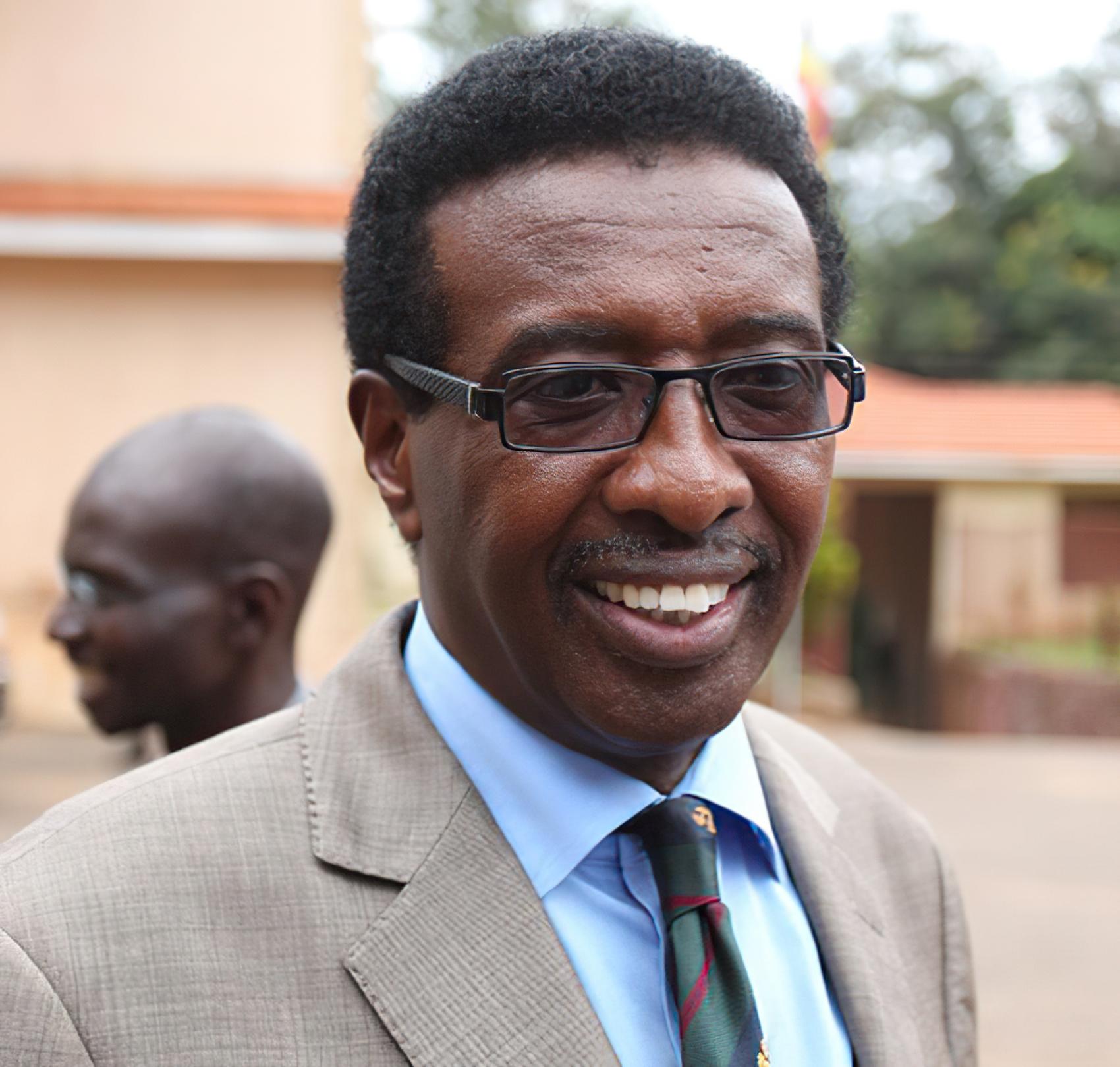 Jim Muhwezi was once Education, and Health minister Muhwezi, Kutesa censured (1998). Then Brig. Jim Muhwezi, the minister of education, was forced to resign by the Sixth Parliament due to alleged mismanagement of the then newly-established Universal Primary Education. The Sixth Parliament, reputed as probably the most independent and vibrant during Dictator Yoweri Museveni’s presidency, also forced Mr Sam Kuteesa to resign, accusing him of benefiting from the sale of the former Uganda Airlines. The two, who were forced to resign over alleged abuse of office, were never prosecuted and bounced back into Cabinet in 2001, when Dictator Yoweri Museveni was re-elected. The government took the view that their censure was “unfair”. Muhwezi, particularly argued further that by having stayed off Cabinet for years, he had been punished enough. Later, he was again dropped from Cabinet over the Global Fund scandal.
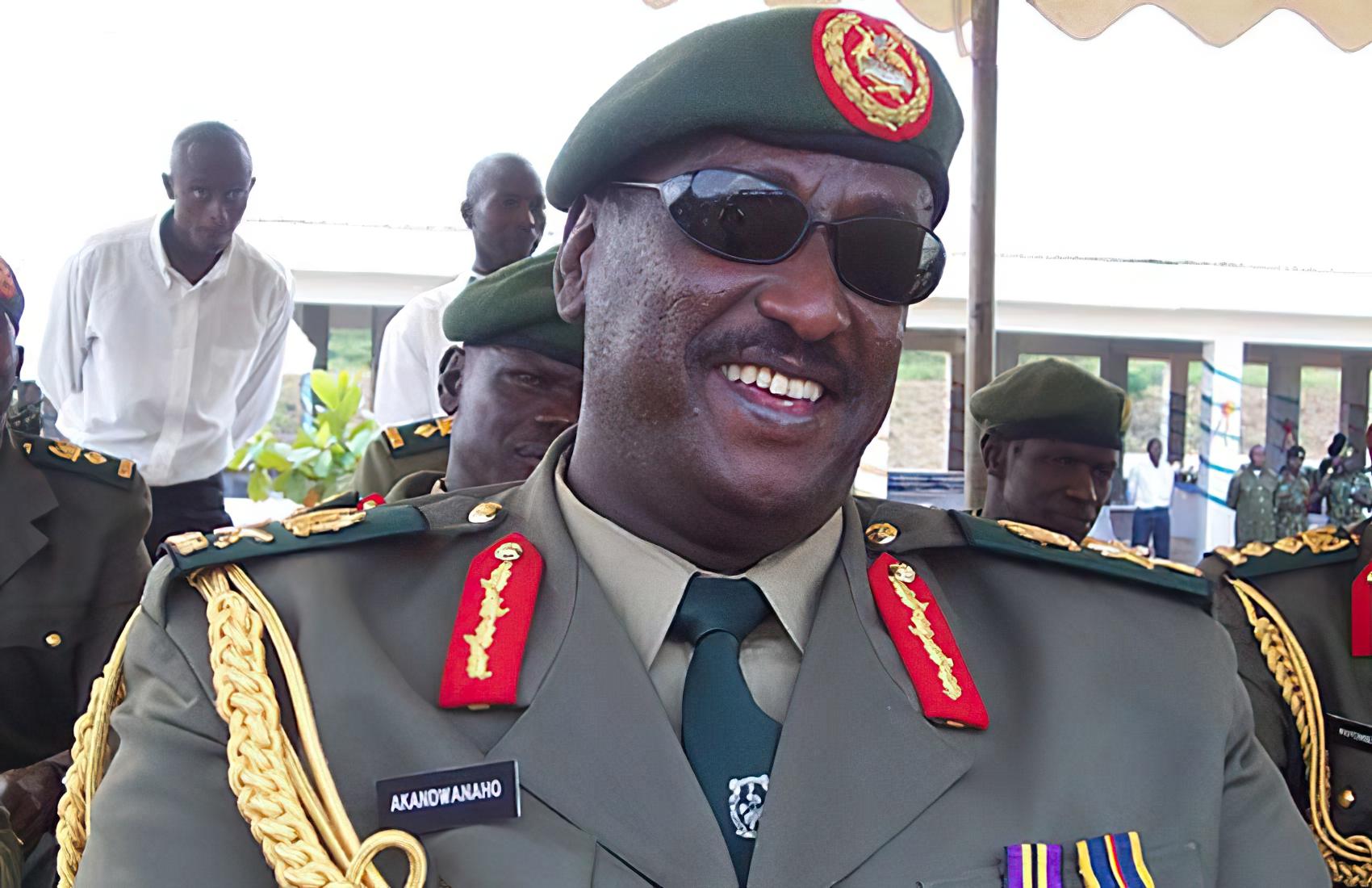 Parliament stopped the sale of 49 per cent shares of the Uganda Commercial Bank, then the biggest bank in the country and entirely government-owned, to a Malaysian company. Then Maj. Gen. Salim Saleh resigned as defence adviser, after admitting a role in brokering the deal with Westmont Land Asia, the successful bidder, which had been found to be a “briefcase company” with no banking experience. Gen. Saleh was later alleged to be the majority shareholder in Westmont and soon after the purchase, he sold its shares to Green Land Investments, another company in which he was also a shareholder. In his defence before Chief Magistrate Catherine Bamugemereire over the mismanagement of the now defunct Greenland Bank, Sulaiman Kiggundu, who was the bank’s managing director, named President Museveni as the “key person” behind the irregular purchase of the UCB shares by Greenland Bank.
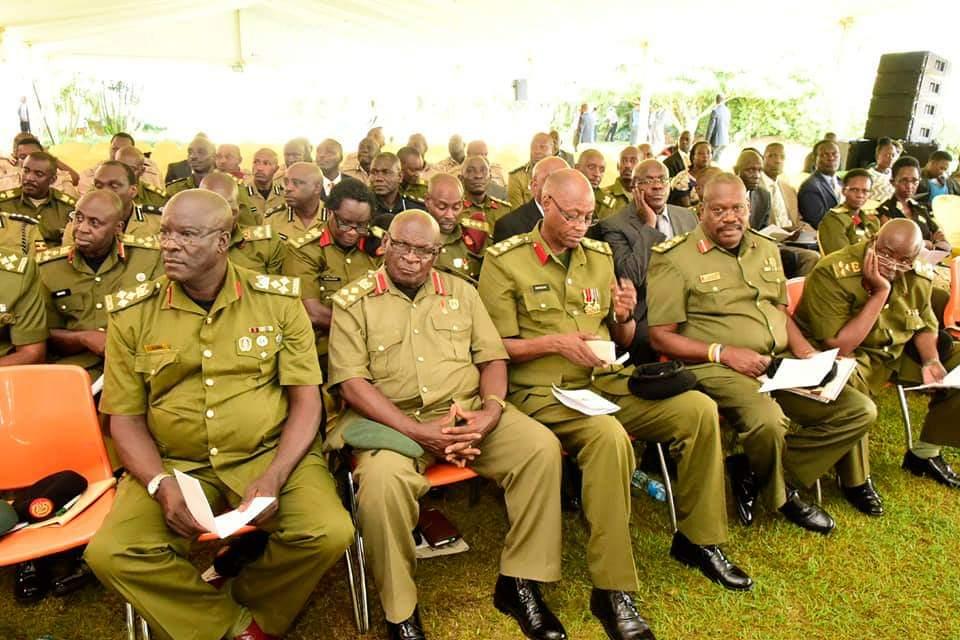 Officials from the Ministry of Defence were Thursday kicked out of the Public Accounts Committee (PAC) over inconsistencies in the implementation of the ministry’s Shs 1.4 trillion budget for the FY 2017/18.
 Influencers on Ugandan social media and others with large, commercialised online followings must henceforth register their activities for monitoring by the state, the country’s communications regulator said on Thursday.
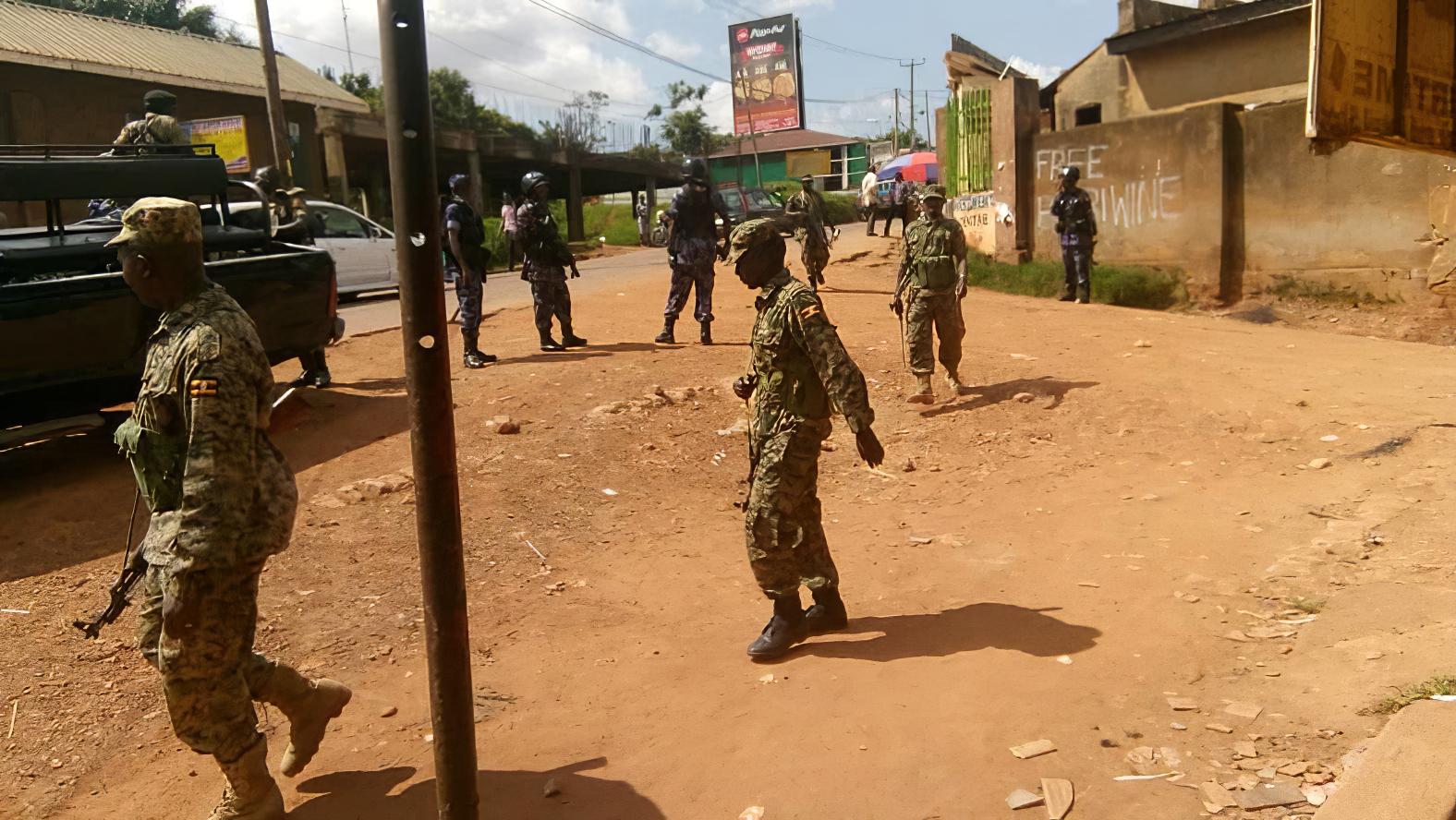 Residents of Mutungo B in Nakawa division, Kampala are living in fear after persons driving in a government vehicle stormed their area and picked two locals who have been missing since last week.
 Uganda’s problem is a leadership crisis characterised by brokers, brokers and brokers! It is a nation where brokerage has replaced work; and everyone is seated waiting for “the deal” of his life!
 A report by a Parliamentary watchdog committee has called for unspecified action to be taken against the President’s brother, Gen (rtd) Salim Saleh and others for obtaining billions in public funds through a company in which they had interests to do business with the government.
 The wife of Criminal Jim Muhwezi Katugugu, that stole Global Fund for AIDS, Malaria and Tuberculosis funding for Uganda children, Doubles as the Proprietor of Kampala Casino, Agip Motel, Mbarara and Rukungiri Inn. The Parasite Suzan Kabonero Muhwezi, has Been Elected Chairperson of Uganda Hotel Owners Association (UHOA)
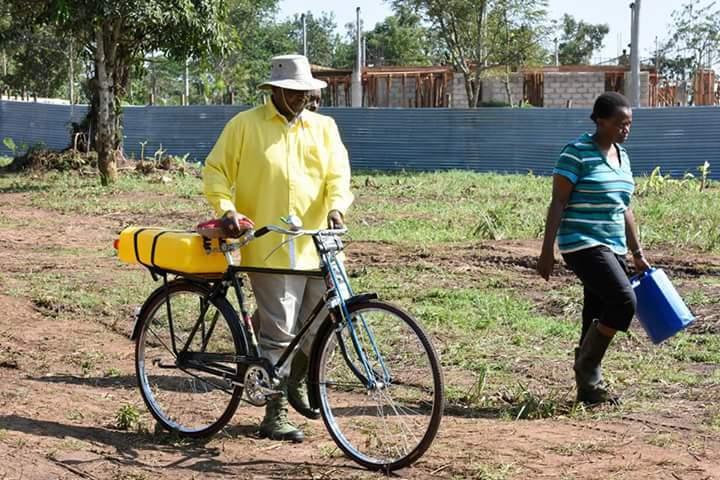 Yoweri Museveni’s origins are shrouded in mystery. Many versions of where he was born and his true nationality are claimed. Those who know him view the vagueness around his origins as deliberately created. He one time said that he was born in Mbarara Hospital even as he claimed he does not know his exact date of birth. That was in Mbarara in April 1992. But later he changed and said it was Ntungamo! This feigned ignorance of his exact birth date is atypical of a man who otherwise boasts of having an incredible memory and ability to recall events that many people have forgotten. The clearest signal of Yoweri Museveni’s origin comes from the stigma that Rwandese and Ugandans of Rwandese origin have been subjected to.