Uganda Autonomous Media | Independent News & Culture › Forums › Exposed › Bahima Century Dynasty is a Fiefdom of Dictator Yoweri Museveni

-
AuthorPosts
-
23rd July 2019 at 12:20 pm #280
 Today Uganda has been turned into a fiefdom of Dictator Yoweri Museveni and his family. The criminal Family of Yoweri Museveni has systematically used a sectarian method to swindle Ugandans, Using a sectarian dynastic called the Bahima Century Dynasty. The criminal family has been able to award itself all income generating entities in Uganda, and Security. The main purpose of Yoweri Museveni’s sectarian thuggery, is to deprive Ugandans a bright future, and turning them into slaves.
The BAHIMA CENTURY DYNASTY’s 7 Commandments – Extinction of Native Ugandans
- THE NATIVES BE DENIED QUALITY EDUCATION.
- THE NATIVES BE DENIED QUALITY HEALTHCARE.
- THE NATIVES BE DENIED FOOD SECURITY.
- NATIVES BE DENIED CIVIL SERVICE, MILITARY, POLICE AND INTELLIGENCE.
- THE NATIVES MUST SUFFER LOSS OF LAND AND PROPERTY.
- THE NATIVES BE KILLED, JAILED AND EXILED.
- THE NATIVES BE IMPOVERISHED.
March 13TH 2006 Meeting.
The opening remark was; –
Corruption in the Bahima Century Dynasty is not criminal, but a courtesy responsibility to attain the financial wellness or our successors to downcast the poverty of our fore fathers. – By Yoweri Kaguta Museveni, Chairman.
When oil was confirmed in the mid-2000s, the 1993 Rwakitura Covenant 50 year Master plan was amended to 100 year (Bahima Century Dynasty). The meeting which took place in Rwakitura on March 13th 2006 after the election. The resolutions were: –
- The Corporation with Rwanda be improved and downplay all Kisangani conflicts.
- Make peace with Kizza Besigye as long as Winnie Byanyima forever lives out of Uganda.
- Increase the number of districts to decrease political fatigue at the central government as well as expand parliament.
- Bring Amama Mbabazi an immigrant Hutu closer to the piloting deck for the coups he has successfully foiled.
- Hand over regular civilian security to Kale Kayihura and use it to control Kizza Besigye not to go overboard.
- Shift power from the mainstream institutions to projects, authorities and commissions which should be run by biological allies or a trusted social network of Bahima Century Dynasty.
- The Presidential Guard Brigade should form a special unit to monitor wealth inflow and outflow of individuals who do not belong to the Bahima Century Dynasty.
- Block and destroy any educated rich Muganda, Northerner or Easterner. Bonny Katatumba should be categorised equally for his monarchical ideas.
- The Bahima Century Dynasty membership should control all resources in the country.
- Train all our children using the most elite education there is in the world.
- Uphold this current curricular in all government and private schools for the rest of Ugandan to widen the gap between Bahima Century Dynasty and all the rest.
- Train members of Bahima Century Dynasty to professionalise oil exploration and trade.
- Acquire all resourceful land in the country and tighten the grip on all resources in the country.
- Do not allow any politician from the opposition to surpass the position preserved for Kizza Besigye.
- Do not inter-marry. Hate the northerners, easterners and centrals. Never at any time mix with Muslims. Detest them like faecal matter.
- All public property belongs to Bahima Century Dynasty.
- Craft all means available at any cost to maintain power in the circles of the Bahima Century Dynasty.
- The Bahima Century Dynasty should be encircled by Banyankore, then Bahororo, Bakiga, Tutsi and Hutus. The rest should be workers, drones, slaves and all Muslims invisible and outcasts.
- Shift some of the investments from the west to China, Russia, Saudi Arabia, Jordan and Kuwait.
- Bahima Century Dynasty should grow to a level of controlling a number of factors in the entire great lakes region.
- To advance the wealth of Bahima Century Dynasty, 15% of the National budget should directly be drawn and distributed amongst members of the Bahima Century Dynasty regardless of their job position or age group as long as one is 18 years.
- 50% of the National Budget should be drawn into the Bahima Century Dynasty membership through contracts, projects, salaries, supplies etc…
- It is in the mandate of the state of Uganda to protect every member of Bahima Century Dynasty from any sort of crime be it minor, major, capital or international. Bahima Century Dynasty should keep clean by using proxies to do the dirty work.
- All military power should be under the control of the Bahima Century Dynasty mainly the president.
- Any potential opposition should be restrained by death.
The leadership is as follows: –
- Chairman – Yoweri Kaguta Museveni.
- Vice Chairman – Sam Kahamba Kutesa.
- General Secretary – Janet Kataha Keinembabazi.
- Assistant General Secretary (Youth) – Molly Asiimwe.
- Secretary for Internal Affairs – Caleb Akandwanaho.
- Secretary for External Affairs – Violet Kajubiri.
- Secretary for Children Affairs – Natasha Museveni
- Secretary Social Affairs – Chris Kajara.
- Secretary for Security – Elly Tumwine.
- Deputy Secretary for Security – Sabiti Muzeyi.
- Secretary for Investment, Youth Wing – Odrek Rwabogo.
- Secretary for Investment, Corporate Wing – Patrick Bitature.
- Secretary for Overseas Investments – John Kazzora.
- Secretary for Local Investment – Nzeire Kankunda (Toyota)
- Secretary for Political Affairs – George Kashakamba.
- Head of membership Committee – Molly Kamukama.
- Head of Welfare – Allen Kagina.
- Deputy head of Welfare – Seth Rukurungu.
- Head of Local Contracts – John Nasasira.
- Head of Committee for Social Responsibilities and Philanthropy – Kainerugaba Muhoozi.
- Head of Innovations – George William Nkiriho.
- Head of Quest Ideas – Francis Turyamwijuka.
- Head of Supervisory Committee – Chris Rwakakamba.
- Head of Education and Culture Prof. Turyamuhika.
BUSINESSES MONOPOLIES.
- All government contracts – Bahima Century Dynasty.
- All Supplies to Operation Wealth Creation – Bahima Century Dynasty.
- All Gorilla tracking permits – Yoweri Museveni.
- Milk Exportation – Yoweri Museveni.
- Fish exportation – Yoweri Museveni.
- Flower exportation – Yoweri Museveni.
- Dams, Railway and Pipeline – Yoweri Museveni.
- Road Construction – Museveni and Janet.
- UMEME – Yoweri Museveni, Janet and Muhoozi.
- Gold Mining – Yoweri Museveni and Janet Kataha.
- Tiles manufacturing –Yoweri Museveni and Salim Saleh.
- Uganda Airlines – privately Company owned by Sam Kutesa by law.
- Planned Vehicle assembling – Sam Kutesa.
- Transport for UN especially UNHCR and WFP-Sam Kutesa.
- Water Transportation – Sam Kutesa.
- Air Transport – Sam Kutesa.
- Government motor vehicle procuring – Sam Kutesa.
- Mobile Money Loans – Sam Kutesa and Salim Saleh.
- All petroleum reserves in Uganda – Salim Saleh.
- Petroleum Imports – Salim Saleh.
- All Bajaj motorcycles and spares – Salim Saleh.
- Eskom – Kutesa, Saleh and Kataha.
- UEDCL – Muhoozi.
- All Petroleum Products – Muhoozi K.
- All tyres – Muhoozi and Karugire.
- Uganda Medical Stores – Muhoozi and Diana Museveni.
- Gold refining – Muhoozi, Rwabogo and Karugire.
- All Tiger Head Batteries -Karugire.
- Beef Exportation – Odrek Rwaboogo.
- Airtime printing – Charles Mbiire.
- Mobile Money – Bitature and Janet.
THE BAHIMA CENTURY DYNASTY EMPIRE-BUSINESSES AND PROPERTIES OWNED BY PROXIES.
A. YOWERI KAGUTA MUSEVENI
- 46% of Sudhir’s wealth belong to Yoweri Museveni in Uganda, East Africa, South Africa, Europe and America.
- 72% of Karim Hirji’s wealth belongs to Yoweri Museveni with 10% left for Janet Kataha.
- 44% of all Mukwano’s wealth belongs to Yoweri Museveni.
- 67% of Bidco’s wealth belongs to Yoweri Museveni.
- 49% of Samona belongs to Yoweri Museveni.
- 82% of Quality Chemicals belongs to Yoweri Museveni.
- 70% of Aya Groups belongs to Yoweri Museveni.
- 100% of J&M Hotel belongs to Both Yoweri Museveni and Janet Kataha.
- 13% of Exim Bank Shares belong to Yoweri Museveni ( $8.63bn).
- 41% of Kakira Sugar Works belong to Yoweri Museveni.
- Pearl dairy Farms Limited belongs to Yoweri Museveni.
- GBK Group of Companies –Yoweri Museveni.
B. SALIM SALEH AKANDWANAHO
- 66% of Mandela’s wealth belongs to Salim Saleh including City Oils and café Javas.
- 48% of Tata Motors – Salim Saleh.
- 62% of Kinyara Sugar belongs to Salim Saleh
- Mansons Uganda Limited belongs to Salim Saleh.
- 66% of City Oils belongs to Salim Saleh.
- 38% of Eco Bank belongs to Salim Saleh.
- Mogus Oils – Salim Saleh.
- Heritage Coffee Company Ltd – Salim Saleh
- 46% plus 20% of Movit investments belong to Salim Saleh and Muhoozi respectively.
C. JANET KATAKA MUSEVENI
- 42% of all Madhivan’s wealth belongs to Janet Kataha.
- 61% of Patrick Bitature’s wealth belongs to Janet Kataha.
- 71% of Roofings Limited belongs to Janet Kataha.
- 65% of Basajjabalaba’s wealth belongs to Janet Kataha.
- 80% of Simba Telecom – Janet Kataha.
- Garden city – Janet Kataha.
- Golf Course Kampala Hotel – Janet Kataha.
- Rainbow International School – Janet Kataha.
- Protea Hotels East Africa and South Africa belong to Janet and Bitature at 50% each.
D – SAM KAHAMBA KUTESA
- Uganda Air Cargo belongs to Sam Kutesa.
- 37% of Shoprite belongs to Sam Kutesa.
- 91% of Victoria Motors – Sam Kutesa.
- Mestil Hotels belong to Sam Kutesa.
- Oasis Mall belongs to Sam Kutesa.
- Pioneer Transporters – Sam Kutesa.
- Logix technical Solutions – Sam Kutesa.
E – MUHOOZI KAINERUGABA
- 66% of Ham Kiggundu’s wealth belongs to Muhoozi inclusive of all investments in Uganda, UK, USA and South Africa
- 68% of John Bosco’s wealth belongs to Muhoozi including Freedom City.
- 77% of Eagle Air belongs to Muhoozi.
- Skyjet Airlines belong to Muhoozi.
- Orange Telecom – 34% Muhoozi.
- Kampala Jelliton Suppliers – Muhoozi.
- BPC Chemicals Ltd – Muhoozi.
- 41% of Aponyes’ wealth belongs to Muhoozi including Mega Standard Supermarkets.
- 80% of Harris International belongs to Muhoozi and Odrek.
- Acacia Mall belongs to Muhoozi and Kagame with 50% shares each
F – ODREK RWABOGO
- 83% of Autocare – Odrek Rwabogo.
- 65% of Translink Uganda Limited belong to Odrek and Patience.
- 80% of Harris International belongs to Odrek and Muhoozi
- Vehicle and Equipment Leasing – Odrek Rwabogo.
- Future Link technologies – Odrek Rwabogo.
- Picfare Industries – Odrek Rwabogo.
- Tiagong Plastics – Odrek Rwabogo.
- GM Security – Odrek Rwabogo.
- Canada Uganda Recruitment Agency –Odrek Rwabogo.
- ZENCH XIN Electronics – Odrek Rwabogo and Sam Kutesa.
- Elite Computers Limited- Odrek Rwabogo and Frank Tumwebaze at 50% each.
G – NZEIRE KAKUNDA[TOYOTA].
- Sango bay Estates belong to Nzeire.
- 51% 0f Toyota Uganda belongs to Nzeire.
- Shell Ankole Limited – Nzeire.
- Kargo International Ltd – Nzeire.
- Mechtools and Equipment – Nzeire and Nasasira.
- 55% of Drake Lubega’s wealth belongs to Natasha Museveni and Karugire.
- Kazinga Channel Office World – Natasha Museveni
- Homeland Holdings – Natasha Museveni.
- 72% of Seroma Limited belongs to Diana Museveni.
- 61% of Finance Trust Bank belong to Diana Museveni.
- Friends Consult – Diana Museveni.
- 74% of Pride Micro Finance belongs to Patience Museveni.
- Ugafode Micro Finance belongs to Violet Kajubiri.
- Afro-Kai limited belongs to Violet Kajubiri.
- In-line Print Services – Violet Kajubiri.
- Graphic Mutation Ltd – Violet Kajubiri.
- Integrated Security Solutions belongs to Elly Tumwine.
- Haree hardware Uganda Limited – Elly Tumwine.
- Crane Paper bags Ltd – Elly Tumwine.
- Achelis Uganda Ltd – Elly Tumwine.
- Crown Bergers Ltd – Elly Tumwine.
- Prestige Electronics Limited – George Kashakamba
- Blu-Cruise Ltd – John Kazora.
- Balya Stint Hardware – John Kazora.
- Enmarg Group Inc – Molly Kamukama.
- Bwik Petroleum Limited – Molly Kamukama.
- Starlite Engeneers Ltd – John Nasasira.
- Fitzmann Services Ltd – John Nasasira
- African Queen Limited – Joyce Kutesa
- Mola Medical Center – Molly Asiimwe
- Kifaru Chemicals Ltd – Karugire
- Birya United Agencies Ltd – Turyamuhika.
- Prism office supplies – Turyamwijuka.
- Simlaw Seeds Company U ltd – Estel Akandwanaho.
- East African Seeds U Ltd – Caleb Akandwanaho Jr.
- Transpaper Ltd – Chris Rwakakamba
- Fotogenix Ltd – George Nkiriho
- Bemuga Forwarders Ltd – Allen Kagina.
- Atlas Cargo Systems – Allen Kagina
- Security Centre Ltd – Sabiti Muzeyi
- Regal Paints – Kashakamba
- Kenjoy Entreprises Ltd – Joyce Keinembabazi
- 41% Smile Telecom – Bitature.
- Banyankore Kweterana Coop Union – Bahima Century Dynasty
More details coming…. All businesses and properties both local and foreign.
uganda.uk.com
23rd July 2019 at 7:17 pm #292NRM HAS EMPLOYED FAKE ASYLUM SEEKERS IN EUROPE TO FIGHT BOBI WINE
NRM, THROUGH MUHAMMAD NSEREKO AND BEBEFOOL IS GIVING MONEY TO TWO FAKE ASYLUM SEEKERS ,IN EUROPE TO FIGHT BOBI WINE ON FACEBOOK.

1. IBRAHIM TUSUBIRA (OLAXESS ART ISMA). THIS 60 YEAR OLD MAN WENT TO SWEDEN YEARS AGO PRETENDING TO BE A REFUGEE RUNNING FROM KONY, BUT THE SWEDISH IMMIGRATION DEPARTMENT DENIED HIM PAPERS IMMEDIATELY AFTER REALISING THAT HE WAS FROM BUGANDA AND NOT FROM THE NORTH.THEY WANTED TO DEPORT HIM A NUMBER OF TIMES, BUT LATER DEVELOPED A MENTAL PROBLEM (SCHIZOPHRENIA )AND BIPOLAR MOOD DISORDER. HE WAS ADMITTED AT DANVIKEN PSYCHIATRIC HOSPITAL, WHERE HE HAS BEEN IN AND OUT.
HE WAS GIVEN TEMPORARY STAY IN SWEDEN AS HE RECOVERS. SO IF U SEE HIM ATTACK BOBI WINE NGA BWASANGULA AMALUSU ALL THE TIME, DO NOT BE SHOCKED. OYO MUGWI WADDALU. HE IS A MAD MAN TABALUMYA MUTWE.

2. SERUGA TITUS WAS AN ESO AGENT HE WAS FIRED AFTER EMBEZZELING STATE FUNDS. HE RAN TO BELGIUM AND LIED TO IMMIGRATION THAT HE WAS A GAY AND THEY WANTED TO KILL HIM IN UGANDA. THE BELGIAN IMMIGRATION DENIED HIM PAPERS AND HE STAYS IN A CAMP CALLED FEDASIL IN JODOIGNE PENDING DEPORTATION. THAT IS WHERE HE SITS AND WRITES NONSENSE.
SO NEVER BE BOTHERED BY THESE 2 LOSERS WHO ARE SURVIVING TO STAY IN EUROPE.
uganda.uk.com
23rd July 2019 at 7:29 pm #293Muhammad Nsereko
 Muhammad Nsereko WHATEVER YOU PLAN TO DO WE ARE WATCHING. WHATEVER IS TAKING U TO TURKEY AS U ALLEGE IN THESE DOCUMENTS IS COMPLETELY FALSE.
BECAUSE AFTER OUR INVESTIGATION THERE IS NO SUCH KIND OF CONFERENCE THAT’S GOING TO TAKE PLACE.
WHATEVER IS TAKING U TO TURKEY IS TO ELIMINATE/ASSASSINATE Fred Kajjubi Lumbuye AND WE ARE VERY MUCH AWARE.THE WORLD IS WATCHING.
JUST BECAUSE HE REFUSED TO BE COMPROMISED LIKE OTHER DIMWITT BUSTARDS UNDER YOUR ARM SHOUTING ON MEDIA AIMLESSLY DOESNT HAVE TO COST HIM HIS LIFE 😈😈😈😈
WE LOST GOLOOBA RIP UNDER UNCLEAR CIRCUMSTANCES AND WE WONT SIT BACK AND WATCH THINGS UNFOLDING INFRONT OF US HELL NOOOO….
MESS NOT TO PRESS THAT BUTTON LET’S FIGHT ON A LEVELLED GROUND ON MEDIA WITH FACTS SINCE WE CANT FIGHT ON THE GROUND IN UGANDA✍✍✍✍
WE KNOW YOU ARE A STATE AGENT DISGUISING AS OPPOSITION.
HANDS OFF FRED LUMBUYE PLEASE.
uganda.uk.com
23rd July 2019 at 7:47 pm #294JANET MUSEVENI RELEASES DEATH FURRY
 JANET MUSEVENI RELEASES DEATH FURRY : “AIDA NANTABA, YOU ESCAPED MY WARNING SHOT, LEAVE MY HUSBAND, GET OUT OF UGANDA LIKE JENIFER MUSISI OR ELSE”
“Who are you, to relate with the first family, follow my terms and conditions you will survive, no one stands in my path :
Never communicate with my husband,
Drop out of government, because your job gives you access to the President,
Get out of the country for ten years until Yoweri Museveni forgets you,
Understand that no outsider relates with any member of the first family with out my approval,
Understand that all the women who have crossed the line by relating with my husband like Jenifer Musisi have been given one option get out of government, pack your luggage and leave the country as soon as possible,
Iam a woman of few words “
The stubborn Nantaba known for crying to police that her life is in fear and panic over the death attacks and kidnaps by security operatives from special forces pointing guns at her and threatening her to leave the country of face death and never come close to the President again.uganda.uk.com
23rd July 2019 at 8:01 pm #295DEMOCRATIC PARTY HEADQUARTERS
Press Statement
For immediate release Tuesday July 23, 2019
DP Bloc ready for talks with other opposition leaders and parties on a framework for a Special Purpose Vehicle (SPV)
Background
The unhealthy standoff between a repressive regime and a determined population committed to change has created an environment rife with tension and violence. The State, pushed to the wall by a collapsing economy, a divided polity, a military whose allegiance is to an individual despot and a shrinking democratic space, has become extremely intolerant and violent. Instead of engaging with the increasing voices of dissent, the Museveni regime has decided to intimidate the populace into silence over valid questions being raised about the doomed voyage our country is on.Uganda’s biggest problem is dictatorship. All the other problems stem from this one major problem. Due to dictatorship, the government is not accountable. Public resources are abused with reckless abandon. Security forces are there for the protection of the regime instead of protecting the people. This toxic combination has turned Uganda into a Failing State.
In the circumstances, we have a responsibility to step forward with a liberation plan for our country. We need to rescue the Ugandan State from Musevenism. The plan is about dismantling the repressive and predatory military, political and economic machine which props up the regime and also dismantle the mindset of fear and hopelessness in the populace. This intense struggle by the Ugandan masses cannot fail if based on unity of the democracy seeking forces and a concrete program for transition into a Uganda beyond Museveni. The aim of our plan is to restore a renewed sense of ownership of the country to all citizens. The whole idea of Uganda needs to be renegotiated afresh. In short Uganda needs a New Consensus!
All this will not come without a struggle. President Museveni and his junta have no political will to democratise Uganda. Therefore the Democratic Party Bloc, aware that at a time of political crisis, reaching out across the political divide is not only a sign of political maturity but also a commitment to bring out the best in all of us, resolved to develop a framework for a Special Purpose Vehicle. The SPV will be open to all democracy seeking forces and its objective is meaningful Democratic reforms to ensure free and fair elections, an inclusive national dialogue and a new basis for political transition NOW. Elections have degenerated into a meaningless ritual and there’s no reason to pretend that 2021 will be any different unless the rules of engagement are overhauled.
The SPV Framework
For several months the Democratic Party has been working tirelessly to develop a comprehensive framework for a united front to present a viable alternative to the failing State presided over by the NRM. That work is now complete and we wish to announce that we are ready to share this framework with other democracy seeking forces for discussion. It is our expectation that we will agree on a Special Purpose Vehicle to lead the charge for democratic change in our country. Fortunately the DP Bloc has a liberation plan that can form the basis of a coalition for change.Through the SPV, we believe that we can coalesce into a common front that transcends our narrow confines and unleash the power of the people. Under a common banner the contradictions within our ranks will be resolved in order to free us to resolve the primary contradiction between the Museveni regime and the Ugandan masses. Our unity will grow as we struggle for a common cause. Unity will be forged in the crucible of struggle. Our unity will also tap into the unprecedented surge in the political participation of young people.
We shall organise nonviolently in-spite of the repressive and menacing state machinery. We shall stare fearlessly into the barrels of guns as we assert our humanity and citizenship. The writing is on the wall. We are seeing the beginning of the end of the Museveni regime.
So what are the next steps? From here the leadership of the DP Bloc will present this framework of the Special Purpose Vehicle to other top political leaders from other formations who are no doubt aware of our plan to launch the SPV. In addition we will present a detailed Discussion Paper on the things to take into account as we craft a formidable alternative to a dying regime. Intense closed door consultations and discussions will follow to build harmony. It is our expectation that the SPV or a coalition of the willing shall be formally launched before October 2019 and at its helm will be N leadership to a country in crisis.
Norbert Mao, Michael Mabikke, Abedi Bwanika, Samuel W. L. Mukaaku
Principles, D.P Blocuganda.uk.com
25th July 2019 at 4:00 pm #300Gen Elly Tumwine is a Thug
 Meanwhile Today in Parliament Gen Elly Tumwine showed us that this is a Military Government and us window dresses…. After deliberating and condemning him for his behaviour he went out,narrowly missing lynching Maama Cecilia Ogwal in the lobby and finally ASKING us the following questions through the Press:
1). Who is speaker of parliament?
2) Who is she?
3)Tell her that am Gen. have you heard?
4) What did she contribute in struggle?
5)What will she do after?
6) She is “ignorant” not so?
7) what’s parliament of Uganda?
8) Where does parliament found?
9) I have been here for thirty three years, what do you think will happen?
10) This is not the first time to meet parliament disciplinary committee, I don’t fear there, I will go there..Even if you bring God what will he do to me?Contributing to this matter,I told Parliament the truth…That its Gen Elly Tumwine who commanded the forces that invaded Parliament during Togikwatako debacle…if nothing was done to him then,,how can a mere abusing of the Speaker,Hon Katushabe and accosting Maama Cecilia earn him a punishment ?
In Parliament he told us that for him he is called Kasangwawo,Kaawokadda,Kaaliwo,Kajjakubeerawo and Kajjakulekwawo!
uganda.uk.com
25th July 2019 at 6:34 pm #301Do Ugandans have to go back to the bush to end dictatorship
 Do Ugandans have to go back to the bush to end dictatorship regime, tribalism, injustices, corruption, stupid taxes, land theft, evictions of Ugandans from their lands & homes & killing of innocent Ugandans with impunity?
 Do Ugandans have to go back to the bush to kill millions of Ugandans & create more widows & orphans as Yoweri Museveni did just to overthrow the Obotes regime? Do Ugandans have to create another Genocide in Uganda as Museveni did in luwero, Eastern & northern regions to come into power? Do we have to go to war and kill our fellow Ugandans just to liberate ourselves from captivity? Yoweri Museveni foughtilton Obotes regime just because Obote stole the elections.
But Yoweri Museveni has stolen everything Uganda owned. This regime has committed more crimes & atrocities more than Amins & Obotes regimes combined.
Is Uganda a backward country that to change regimes we have to kill millions of Ugandans?
Whom are we going to kill this time to get democracy & end this self proclaimed rulers against Ugandans will? Can you imagine all African countries had to fight & die for independence from colonialists except Uganda! Because the kabaka in Buganda never believed in violence. And respected the lives of Ugandans. That’s why all wars started after Uganda’s independence. The first president of Uganda never fought any wars or kill Ugandans. Why these dictators don’t respect Ugandans lives?
uganda.uk.com
27th July 2019 at 9:52 am #303SPEAKER KADAGA SURVIVED SALIM SALEH POISON
 “As the speaker of Parliament i have made my conclusion with members of parliament that your construction company is known for doing very substandard works and embezzling state money on government construction projects, therefore however much you threaten me not to terminate your subcontracts worth 96 Billion part of construction of the new chamber of parliament, I vow not to give your fraud construction firm this money”
Country is still suspicious as immediately after Kadaga terminating Salim Saleh’s mega construction contract, Salim Saleh threatened Kadaga with death to the extent that Kadaga under pressure attacks ran to the President for rescue and the President worsened matters by telling Kadaga that he was also tired of Salim Saleh’s mafialism in government business that is why he withdrew Saleh out of the army and government business and dumped him in operation wealth creation worth a trillion in budget to divert Saleh, Salim Saleh told the President that this woman was just a mere civilian whom they groomed but had developed horns that she was stepping beyond her boundaries on many occasions where she blocks resolutions dictated to her by the Central executive committee to Parliament and that something had to be done, the President told Kadaga there is nothing he can do about Saleh, and that Kadaga should just swallow it and give Saleh his subcontracts in the new chamber of parliament construction,
The next thing the country heard was that Kadaga was poisoned and rushed to Nairobi hospital.uganda.uk.com
29th July 2019 at 11:16 am #311Ugandans must wake up and we liberate their Country
 In 1960 to 1962 every where in Uganda the pressure for independence had grown immeasurably strong with bitter struggles among est Ugandans against the whites colonial rule in Uganda.
At this time the Ugandans under their leadership by then APOLLO MILTON OBOTE had proved to the colonial imperialist that their demands is beyond cure and far worse than the disease to treat.
The Ugandans got their independence since there is nothing bad and sadder picture than being defeated during the revolution.
This explains why Ugandans always remember Uganda’s independence that was got on the 9th day of October, 2019 by the APOLLO MILTON OBOTE at Kololo airstrip in Kampala from DUKE KENT of Britain.
The smile that most Ugandans has today is because of hard working and the tributes of the great men like APOLLO MILTON OBOTE and other great men and women that made this day possible and hopeful.
For Uganda to achieve its independence many Ugandans shed their blood of humble sons of Ugandans that wanted and wished to see Uganda for all not Uganda we see today under the leadership of H.E Yoweli Kaguta Museveni that is for one family yet they all went to Luwero war Triangle to overthrow the government of APOLLO MILTON OBOTE purposely because they wanted to have a free Uganda that is based on Democratic principles that has turned down by APOLLO MILTON OBOTE after Uganda achieving its independence from Britain.
The Bahima – Balalo that were poppers seems to have had other intentions of grabbing land of innocent Ugandans so that they own land too.
Its not the surprise the Bahima – Balalo owns big acres of land in miles that they grabbed from innocent Ugandans after the war.
Currently in Uganda every Muhima – Balalo is the land grabber, millionaire, thieves, criminal and prostitutes in different and many Bars of the Country.
The Bahima – Balalo according to many sources from people that i talked too from Nakaseke told me that the Bahima – Balalo are such Lazy and lifeless people that are not strong men and women at war fronts.
The Bahima – Balalo never fought any war during the Luwero triangle.
One of my friends Mzei Kyaze Joseph told me that he was among est those people that participated in National Resistance Movement liberation struggle at the age of 28 years.
He told me that he saw every thing during the time of war and how Ugandans were voluntarily joining the NRA revolution to fight against the blood war against APOLLO MILTON OBOTE that had started killing, unlawfully imprisoning innocent Ugandans especially the Baganda including their king and Rwandans that the leadership of Apollo Milton Obote was intimidating, arresting and killing every day using his state mercenaries.
He told me that majority of Baganda and other tribes in Uganda joined the NRA struggle in Luwero not because they had motive of that of Bahima – Balalo that wanted to grab other people’s land and wealth.
He told me that he was patriot like any other Ugandan but not like Bahima – Balalo that have sold off the souls of innocent Ugandans for riches and Gold to the Chines and other foreign imperialist at the interests of innocent Ugandans.
Uganda is one of the Africa’s country that is evicting innocent Ugandans from their ancestral land without compensating them purposely because the Government wish or want to offer such land to the foreigners especially Chines who are racists and discriminatory to Africans and Uganda inclusive in China.
The manner, barbarism, primitive and harassment that the Bahima – Balalo are doing to innocent Ugandans are equal to manners of Chines against Africans in China.
Ugandans must wake up and we liberate our lovely Country Uganda from such foreign imperialist.
uganda.uk.com
29th July 2019 at 2:47 pm #314Yoweri Museveni’s sister-in-law at the centre of Criminal Cartel
 On the day the Akasha brothers and their empire were to sink 13,000 kilometres away in the US, shocking revelations emerged that have now placed Ugandan President Yoweri Museveni’s sister-in-law at the centre of their network.
A document filed on Thursday by Geoffrey S Berman, the US Attorney for the Southern District of New York, pulled down the veil on an ugly drug cartel that also sucked in flamboyant politician Stanley Livondo, businessman Ali Punjani and host of other names.
It is a story of a drug empire that expanded and thrived by roping in law enforcement agencies, politicians, judicial officers, prosecutors and influential families. It entails torture and killing of family members and dabbling with the Al Shabab terror group.
A picture emerges of the Akasha’s big but wicked dreams for their empire: An ambitious plan of using established laboratories in Burundi, Uganda and Tanzania to manufacture ephedrine into methamphetamine.
“In pursuing this plan, Baktash (Akasha) set up a meeting with the Ugandan President’s sister-in-law to discuss methods of illegally importing ephedrine into Uganda.”
“Baktash, Ibrahim (Akasha), (Vijaygiri) Goswami, and (Bipin) Panchal attended the meeting, at which the President’s sister-in-law offered to provide a licence to import the ephedrine, two tonnes at a time, in exchange for a percentage of the profits,” it says.
The laboratories plan was hatched by this man – Dr Panchal – who is said to have offered to bring in an Indian manufacturer of ephedrine called Avon Lifesciences (also known as Avon Organics).
It was all systems go for identified labs in Tanzania and Mozambique when Baktash sent his brother-in-law to India to provide Avon with the addresses for shipment of the ephedrine.
Baktash’s brother-in-law arrived, however, to find that the factory had been raided by law enforcement the same day. The Avon factory was consequently shut down, and the Akashas’ Avon-related plans for manufacturing methamphetamine were stalled.
The document says the Akasha’s were so wired in Kenya that they actively obstructed the US extradition request for three years while also dabbling in multi-million shilling worth of drug trade entailing a mandrax manufacturing plants in Zimbabwe.
For decades, they had distributed large quantities of mandrax, cocaine, hashish, heroin and other substances to locations all over the world.
They protected their lucrative drug business with violence, murder and related threats.
The document lays bare the bloody spats that ensued between the Akasha’s and rival drug cartels before their capture in 2017. New details have merged on how the Akasha’s took on two drug rivals — one led by a man only described as David Armstrong and the other by businessman Ali Punjani.
The document names Livondo as an Armstrong associate brave enough to confront Baktash at a shopping mall in Mombasa before Ibrahim intervened, drew his gun and threatened to kill him.
Later, Pinky — Armstrong’s right hand man based in South Africa — was pumped with 32 bullets and a party held at Baktash home to celebrate the feat. In the Punjani attack, the Akasha’s descended on two of his men, one named “Speedy” and the other Tony Sanghani and beat them almost to a pulp.
“Ibrahim beat Sanghani with his fists and his gun. Sanghani suffered serious injuries, went into a coma, and was hospitalised for several weeks.”
In the document, Baktash’s Mombasa home is described as “fortified base of operations.”
Incidentally, the man who sold out the Akasha’s — Vijaygiri Goswami, an Indian drug lord — is described as having been known to them since late 80’s when he worked with the senior Akasha and an another drug trafficker named Muhammad Asif Hafeez in hashish business.
They say when the Senior Akasha was murdered, his son Baktash arranged to have the killers felled on the same street where his father was murdered, exactly one year later.
After the death of their father in 2000, Goswami came in to help in distributing a mandrax precursor chemical, which they referred to as “abba.”
In the documents, the Akashas are said to have told Goswami they had access to 10 tonnes of abba that had been seized by Kenyan law enforcement and which belonged to Armstrong.
Baktash Akasha and Ibrahim Akasha when they appeared before the Chief Magistrate’s court in Mombasa in 2016. [File, Standard]
“Using proceeds from their mandrax precursor business, the defendants paid hundreds of thousands of dollars in bribes to local officials, including prosecutors, judges, politicians, and law enforcement,” they say.
By the time they were nailed in 2017, Ibrahim is said to have been purchasing kilogram quantities of cocaine from Tanzania and distributing it to street users in Malindi, Kenya, making a profit of approximately Sh6 million ($60,000) to Sh7 million ($70,000) per kilogramme.
“Ibrahim told Goswami that he was also bribing government employees at Kenyan government laboratories and warehouses in exchange for ephedrine (which could be used to manufacture methamphetamine),” it adds.
Besides scouting for drugs in Tanzania, Ibrahim was also sweeping clean all the mandrax supplies in Mombasa and Nairobi before transporting it to SA where it fetched higher returns. Before returning to Kenya, he would then purchase stolen cars that he in turn sold in Kenya.
As he was going “continental”, his brother Baktash was going international. In July 2014, Baktash is said to have summoned another drug dealer named Martin Hong all the way from China to Mombasa, seeking out supply of abba at a rate of Sh4 million ($40,000) per tonne.
There would be an additional Sh3 million ($30,000) per tonne if Hong agreed to an exclusive partnership with the Akasha Organisation.
“The Akashas and Goswami decided to have Ibrahim host Hong for a day, taking him to a national park and other tourist attractions in hopes of persuading him to accept their offer.”
Two narcotics transporters named as Daryl and Clement were assisting Baktash in transporting a mandrax-precursor chemical called anthranilic acid from India to Zimbabwe, where it would be manufactured into mandrax tablets.
Their end however came when in March 2014, Baktash and Ibrahim made a new multi-million dollar proposal to Goswami that included a US government agent code-named Rashid.
Confidential source
“Baktash believed he represented a Colombian drug cartel but was in fact a confidential source working for the DEA. Baktash and Ibrahim had enthusiastically agreed to supply Rashid large quantities of heroin for importation into the US.”Meetings were held in Nairobi and Mombasa where secret recordings were made. Baktash even invited his heroin supplier from Pakistan, named Abdul Syed, to Mombasa to see how he was “living like a lion.”
The two Akasha brothers also traveled to Tanzania to meet with heroin suppliers, one named Harriri and the other Mohammed Nasser. At the same time, another drug supplier named Minesh Patel was also brought on board.
The document falls short of calling guns as play toys for the Akashas. At their home in Mombasa, armed security guards wielded both pistols and AK-47 machine guns. They also had hand grenades.
Records adduced in the case capture the Akashas boasting their prowess as drug lords: “Whoever comes, and wherever they come from, (when they) say (our) name, they know we are drug dealers . . .”
The court yesterday pushed their sentencing to August 16 for Baktash and November 8 for Ibrahim.uganda.uk.com
30th July 2019 at 11:04 am #315Henry Tumukunde is Yoweri Museveni's Dog
 If anyone still harboured doubts that Uganda under the regime of Yoweri Museveni has become an international laughing stock, the recent utterances of one Lt. Gen. Henry Tumukunde are one more example confirming it.
Speaking last weekend about Rwanda in the state newspaper, New Vision, the malevolent looking man went ahead to level the usual Kampala accusations against Rwanda – “Kayihura was working for Rwanda”, “so Rwanda was invading our sovereignty – which they never prove with evidence.
As a former minister, Tumukunde is known more as an arrogant clown than anything else. As minister in that post for instance he one time, in early 2018 drove to Makindye Barracks to personally slap and torture a Rwandan detainee, Rene Rutagungira whom they had abducted and locked up with no evidence.
This is the gentleman that, in remarks echoed by PML Daily – one of the many Uganda regime misinformation websites – said: “We have taught Rwanda how to respect Uganda.” This being an entitled member of an entitled ethnicity – the ones that have reduced Uganda to a laughing stock for the past 33 years – nothing is surprising that a remark that risible has come from him.
How exactly have “they” “taught Rwanda to respect Uganda?” By harassing, extra legally detaining, or torturing defenseless Rwandan civilians – including old men, pregnant women, and teenage children going to visit their parents, then claiming they have “arrested Rwandan spies”? (Or by arresting many others allegedly for “illegal entry”; when EAC laws on free movement of persons and labor are clear – no citizen of a member state is to be detained for entering another member state?)
Or maybe Tumukunde means being in cahoots with proven terrorist groups bent on destabilizing Rwanda is “punishing that country”? Memo to the gentleman: such activities, and many others of a similar state-sanctioned criminality just show Uganda under Museveni long ago became a rogue regime that respects no laws – local, regional or international.
Laughably, Tumukunde seems to imagine that such statements are an effective campaign pitch for his declared intentions to run for Kampala mayor – an ambition so deluded it beggars the imagination. That is, considering how hated his master’s NRM is in the Ugandan capital, and the central region in general.
But back to the gentleman’s remarks about Rwanda, which he centres on claims that former inspector general of Uganda Police, Kale Kayihura, was “an agent of Rwanda.” It is a sign of what an entitled lot members of Museveni’s cabal are that they can just say whatever they please, whether or not it has any basis in truth – or how injurious it is to other people.
Museveni’s security operatives arrested Kayihura and jailed him in June 2018. He was released on bail 76 days later. In that time, try as hard as they could Uganda’s Chieftaincy of Military Intelligence (CMI), and Internal Security Organisation (ISO) could not find anything that linked Kayihura to Rwanda.
They searched and ransacked his home and former office, and went through personal property like smartphones and computers for hours. Still they found nothing linking Gen. Kayihura to Rwanda. They have found nothing up to now. That hasn’t stopped Tumukunde from indicting the former top cop in the media, showing he cares nothing for institutions, like the court that found nothing to convict Kayihura with.
This very Tumukunde is the man that then goes on to claim, “The Rwandans have their country; we have ours. My job was to defend Uganda. Let me say without mincing words: anyone operating in this country must respect our institutions, our leadership and our country!”
One cannot help but feel deeply sorry for Ugandans that have to suffer the rule of people as lawless as this. If the fellow has no qualms about pinning someone for an offence that CMI and others could not manage to, what does it say about his mindset that he then drags a sovereign state – which has nothing to do with his petty wrangles with Kayihura – into the mud?
He apparently cares little about such considerations.
He is Lt. Gen. Tumukunde who can utter anything.
After all when has anyone of his kind ever had to be made answerable for anything they say, or do, over the past three decades?
In any case, Rwandan observers say, there is nothing Tumukunde or his boss Museveni can teach Rwandans.
The only thing the Ugandan ruling cabal excels at is corruption of unprecedented levels – like a whole head of state and his foreign minister receiving bribes of US$ 500,000 each from a Chinese fixer – land grabbing, extra-judicial violence against members of the opposition, selling young Ugandans into Arab slavery and the like. All those are documented crimes committed against the state of Uganda, and against Ugandan individuals.
“Other than unbelievable criminality, what else can the likes of Tumukunde, his master, and that whole mafia claim they are good at? Nothing!” said an analyst that preferred anonymity.
uganda.uk.com
30th July 2019 at 11:12 am #316Yoweri Museveni is a Munyarwanda
 Yoweri Museveni’s origins are shrouded in mystery. Many versions of where he was born and his true nationality are claimed. Those who know him view the vagueness around his origins as deliberately created. He one time said that he was born in Mbarara Hospital even as he claimed he does not know his exact date of birth. That was in Mbarara in April 1992. But later he changed and said it was Ntungamo! This feigned ignorance of his exact birth date is atypical of a man who otherwise boasts of having an incredible memory and ability to recall events that many people have forgotten. The clearest signal of Yoweri Museveni’s origin comes from the stigma that Rwandese and Ugandans of Rwandese origin have been subjected to.
Yoweri Kayibanda, a.k.a Tibuhaburwa, was born in Rwanda, despite his insistence that he was born in Uganda. The most informed sources who have known Yoweri Museveni since his early childhood insist that he and his mother, the late Esiteri Kokundeka, came to Uganda from Butare, southern Rwanda, where he was born around April 1943. One of these sources, Gertrude Byanyima, the wife of the late Boniface Byanyima, the former national chairman of the Democratic Party, says Museveni came to Uganda as a child from Rwanda.
This is a reliable source given that Yoweri Museveni spent the biggest part of his early teenage life in the Byanyima family home in Mbarara town in Western Uganda. Byanyima used to pay Museveni’s school fees or at least part of it. Not once has Yoweri Museveni denied this.
One time when she was speaking to party supporters at her home in Mbarara on 2 March 1996, Mrs. Byanyima said: “Museveni is just like us here. He came here at 16 and it’s us who brought him up. He was never a good academic performer. The cupboard you see there was Museveni’s library. When you check in it you’ll find his books, a lot on imperialism, with his former names Yoseri Tibuhaburwa.”
When Byanyima said that Museveni “came here at 16”, it was not so clear whether she meant that Museveni came to Uganda at the age of sixteen or that he first visited the Byanyima home at that age. After she made that claim, some of Gertrude Byanyima’s children; Martha, Winnie, Abraham, and Anthony wrote a joint letter apologizing to Museveni for any embarrassment caused to him by their mother’s claim. But mark you, they did not specifically refute or question the substance of what she had said!
Gertrude Byanyima referred to Museveni as “Yoseri” rather than “Yoweri” and said those were his original names.
It should be noted that during his university days, Museveni used the initial “T” from a name Tibuhaburwa he had given himself. In full, it comes from the Runyankore expression “Obwengye Tibuhaburwa”, meaning intelligence is natural born, not learned. In a thesis he wrote in 1971 titled, “Fanon’s theory on violence: its verification in liberated Mozambique”, the author gave his byline as “By Yoweri T. Museveni.”
Many people from Western Uganda hold this same view of Museveni’s Rwandese roots, among them the Banyarwanda of Western Uganda or the Rwandese refugees who lived for thirty years in Uganda before returning to Rwanda in the 1990s.
Most of these people give his origins as in Rwanda. Some of these people who know Museveni point out the fact that his mother never spoke any Ugandan language fluently all her life, but only Kinyarwanda, the national language of Rwanda.
Many times, Museveni has been challenged to prove his Ugandan roots by showing the public any graves and burial sites in Uganda of any of his grandparents but he has always studiously avoided commenting on that. Those challenging him to do so bring up the issue because they know that there is nothing to show and want to put him in an embarrassing position.
The rumors around Museveni’s origins grew intense in 1992, leading him to appear in army combat uniform before a live national television audience where he listed a number of Runyankore names that he claimed were his. In February 1994 while on a visit to Gulu, Museveni addressed a public rally. Some teenagers from St Katherine Girls’ Secondary School began to shout at him complaining that his NRM government was filled with Banyarwanda. “Look at him,” they remarked, “he is a Munyarwanda proper!” Museveni heard the comments and commented: “These girls are saying I am a proper Munyarwanda. Maybe they bore me and they are in a better position to explain to us.”
The embarrassed headmistress of the school, Beatrice H.A Lagada, suspended six of the girls. Museveni, though, neither confirmed nor refuted the girls’ claim.
Esteeri’s mental problems in Rwanda lead to Museveni’s hatred for Rwanda
During her years in Ankole in the mid-1960s, Museveni’s mother had become a convert to the Born-Again Christian faith. She sometimes visited Bweranyangye Girls’ Secondary School and took part in mission outreach activities in Ankole.
Many people who observed her became convinced that her eldest son had taken his personality from her. She was eccentric and was fond of wearing woolen clothing. In some way Esteeri Kokundeka was ahead of her time.
The main fashion of the day among the ordinary women in Ankole at the time was the traditional robes. Kokundeka on the other hand took a liking for European fashions and so stood out as odd whenever she went about in public, wearing woolen clothes and western-style dresses, some of them above the knees in length.
At first some people wondered who this strange woman was, who was so different from the rest of her contemporaries in a society that was still very traditional. She did not have formal education and had not traveled widely out of her home area but looked to be very modern. Moreover she was a modest woman and a devout Christian. In between periods of depression and silence, she experienced bouts of high energy.
Her repetitive phases of high excitement had many common villagers convinced she might be mentally disturbed. What was beyond doubt at the time was that Museveni’s mother was suffering from some kind of mental disorder. She certainly showed all the signs of what these days would be called bipolar personality. (Madness, for most non-mental health professionals).
Bweranyangye Girls’ Secondary School in Ankole, where her daughter Violet was studying, is one of the places Kokundeka used to visit a lot to preach. She was dreaded and shunned by many of the girls. They saw her as a tyrant, a complicated and extremely difficult woman to get along with. On some occasions when she visited the school, girls would avoid meeting her and hide in their dormitories. She did not display the normal affection and motherly traits that would be expected in a parent, even toward her own children. She was seen as too unreasonable and hard to understand. Like her fellow villagers, many at Bweranyangye became convinced that Kokundeka had a mental problem.
In 1967, she did have a real mental breakdown. The details of that are not very clear. But that year, she was admitted at the famous Butabika Mental Hospital on the outskirts of Kampala. Her mental disorder, perhaps arising from a series of traumatic experiences in Rwanda, affected her so drastically as to lead her to reject her son, are themselves most likely the rock on which the crisis in Museveni’s life originated. That crisis in Museveni’s life lies at the root of the personality that we shall examine further in the following pages.
Museveni presses Esteri to tell him his real father
People who knew Museveni very well during the mid-1960s say that he changed his attitude towards his mother, Esteeri Kokundeka. He was asking her something she was not prepared to reveal and there developed a mutual rejection. But it seems to have been very traumatic for him to be rejected by someone he had considered as to rock and foundation of his whole existence.
Museveni had tried to probe his mother to tell him who his real father was and she dismissed his questions. But Museveni persisted with his questions and in her impatience, his mother finally disclosed to him the circumstances of his birth.
Those who knew Museveni’s mother all through her life in Uganda remarked at how bitterly she hated and resented Rwanda.
In 1982 during Museveni’s guerrilla war, one of Museveni’s most trusted commanders, Kahinda Otafiire, was assigned the task of smuggling her out of Uganda to Rwanda. Museveni’s mother protested vehemently saying she hated Rwanda and did not want to go there ever again in her life. After repeated begging, Otafiire managed to get her to Kenya.
This gives us an interesting look into Museveni’s origins, and most importantly his hatred for Rwanda.
Why would his mother resent and hate Rwanda so much unless she had once lived there. Would simply hearing about Rwanda be enough to make her feel so upset about the country?
It is one thing to hate Rwanda. It is quite another to choose to remain in harm’s way in Uganda than to set foot in Rwanda. What was it about Rwanda that repelled and horrified Museveni’s mother so much?
Esteeri knew Rwanda much better than the average illiterate village woman in Ankole. She definitely hated the country. She seems to have had such a terribly traumatic experience in Rwanda that her outlook toward that country was clouded under all sorts of resentment.
What terrible memory could this be?
Might she have been raped as a girl or young woman or sexually molested by someone while she still lived in Rwanda? Had she become pregnant by a relative while in Rwanda, so that she had to live with the stigma of having an incest sexual relationship hanging over her and bringing her distress? Did she become pregnant by a brother, a father, or an uncle, and, unable to stand the shame of the affair and decided to flee Rwanda for Uganda, bringing with her the illegitimate son of that illicit relationship?
Whatever the case, she resented Rwanda and rejected her son.
This could explain her hatred of anything to do with Rwanda. If this is true, we have the basis of an understanding of why she seemed to lack any maternal warmth towards the young Museveni. In turn Museveni thought he could win his mother’s affection by hating Rwanda even more than his mother did.
It is likely that Esteeri conceived her son with a close relative, or a servant in the homestead in Rwanda in a forced sexual encounter. In such circumstances, she came to see in her son a reminder of the shaming incident in Rwanda that led her to abandon her home and flee the country for Uganda.
It turns out Esteeri was trying to protect his son from developing his own trauma. So, it seems that she must have directly or indirectly told Museveni of the circumstances of his birth and parentage and that once he knew this, a deeply traumatizing personal crisis shook him as well. Needless to say, Museveni failed to recover from this story.
Museveni’s biological father was an itinerant Rwandan peasant called Kayibanda, now deceased. Kayibanda had also migrated from Butare to Uganda and then to Tanzania.
Esteeri banished from Rwanda
The real scandal, though, was that Museveni’s mother was of royal Rwandan Tutsi stock. Apparently during one of her idle moments at the royal court in Rwanda, she was seduced by – or she seduced – one of the court workers, a Mutwa (“pigmy”) named Kayibanda.
Museveni was the result of this liaison, making him paternally a Twa and maternally a Tutsi.
Her proud Tutsi royal family had to quickly chase her for shaming them. So she fled to Uganda forever. Because of the disgrace she had brought upon herself by this liaison with a commoner, she, the commoner, and their son Museveni were banished; they fled across the border into Uganda. Being desperate to find means of supporting the woman and their child, Kayibanda was given employment as a herdsman by a young cattle owner named Amos Kaguta, also of Rwandese stock who had earlier migrated from Rwanda. Kaguta’s brothers are reported to have remained in Rwanda when he migrated to Uganda. Soon Kayibanda began an affair with Kaguta’s wife. Kaguta angrily banished Kayibanda from his home. Kayibanda fled to Tanzania with Kaguta’s adulterous wife.
But Kaguta retained Esteeri Kokundeka and her child Museveni as his wife and child.
Meanwhile, before being banished from Kaguta’s home Kayibanda and Kokundeka had had a second child, a girl who later got married to a Rwandese Ugandan named Nathan Ruyondo. Ruyondo would become a Ugandan civil servant in the town of Masaka. Museveni, therefore, had one direct sibling, this girl who got married to Ruyondo.
The day before he started his guerrilla war in 1981, Museveni travelled to Masaka and spent the night in his true sister’s home, on 5 February 1981. He used Ruyondo’s Peugeot 304 to drive to the Kabamba army barracks for the attack the next day, 6 February. When he narrates his attack on Kabamba in “Sowing The Mustard Seed”, Museveni describes Ruyondo as “one of my acquaintances.”
How, with a sensitive life-and-death attack coming, could he borrow the car of an ordinary “acquaintance” without worrying that this acquaintance might betray him to the authorities, if the car’s ownership was traced back to Ruyondo?
This Peugeot 304 belonged to Museveni’s brother-in-law, a fact he has never disclosed because in Masaka, it was commonly known that Ruyondo’s wife was pure Rwandese. And so, for Museveni to even hint at a close relationship with Ruyondo or to admit that Ruyondo’s wife was his direct paternal and maternal sister, would have confirmed to many that Museveni is indeed Rwandese himself.
Even more interesting is that Ruyondo’s wife was open about being Kayibanda’s daughter. So by openly admitting to being his sister, Museveni would have been confirming that Kayibanda was his father.
Kaguta, having retained Esteeri and her son Museveni, later in 1949 had a child with her himself. She was named Violet Kajubiri because she was born in the “Year of the Jubilee”, the fiftieth anniversary of the founding of the Protestant Church in Uganda.
Meanwhile, in the late 1950s, there was a heavy presence of Arab hides and skins traders, especially in the cattle corridor of western Uganda.
These Arab traders travelled back and forth along the route between the East African coast of Kenya and Tanzania and the western interior of Uganda for several generations. Their wares were hauled over this long distance by among others Yemeni and Somali drivers who came from families that had settled in Mombasa along Kenya’s Indian Ocean coast. In his 1997 autobiography, “Sowing The Mustard Seed”, Museveni confirms this trade link between the East African coast and Ankole, when he explains his early years: “In the days of my early childhood … cattle were literally central to our whole lives. … For clothing I wore the skin of a premature calf … although at the time it was no longer the common way of dressing. Even before the Europeans came, people were wearing textiles brought by long-distance travellers from the Swahili coast” (page 4).
One of these Mombasa Yemeni or Somali (many accounts diverge on this) lorry drivers met Museveni’s mother who was known to be a little loose and a child named Caleb was born to them in 1960. That is why Salim Saleh who is also known as Caleb Akandwanaho has never used the name Kaguta as his middle name even after he became a senior government official.
Kaguta is not Saleh’s father. Saleh’s physical features; curly hair and light Arab-Somali skin complexion, are an additional giveaway.
When Museveni came to power in 1986, rumors that he was Rwandese filled Kampala. Does anybody think Salim Saleh would not have used Kaguta’s name in order to bolster his Ugandanness if Kaguta was really his father?
In a Boston Globe article published on 1 May 2005, a former U.S ambassador to Uganda Johnnie Carson referred to Caleb Akandwanaho (Salim Saleh) as Museveni’s “half-brother”. This fact, which was widely known in Uganda, is one of the signs that Museveni’s biological father was different from Saleh’s. The name of Salim Saleh’s biological father is not known. It’s not clear whether Saleh himself knows his father.
During the 1970s exile, the Museveni family lived in the Upanga Estate of Dar es Salaam, Tanzania. The teenager Saleh was very close to the Arab and Somali community although the rest of the Museveni family was polite but distant from their Arab and Somali neighbors. These Somali and Arabs regarded Salim Saleh as one of their own. Many people assumed that he was a Somali or coastal Tanzanian. Saleh, in his younger years, was even slimmer and more light-skinned in complexion and you could easily see the physical features of one with Arab or possibly Somali blood.
It is only in the 1990s as he grew bulky and his HIV condition began to darken his skin, that his features began to change.
Museveni became close to Libya’s Colonel Gadhafi by using Saleh’s Arab blood to convince Gadhafi he was really pro-Arab. We shall see later why Gadhafi also became close to the Tooro kingdom through another of Museveni’s manipulations.
Meanwhile, when Museveni came to power in 1986, his biological father Kayibanda came to Uganda from Tanzania to visit his son and share in his new-found recognition and fame as President. Museveni gave his father a blasting that he never forgot! He gave him money and angrily told him to go away and never to return.
Museveni’s mother came to Uganda pregnant with the boy “Rutabasirwa”. That is Museveni’s real name. His middle name was adopted from his stepfather Kaguta and he only began to use the middle name Kaguta after he became president.
According to Museveni’s inner family members, Kaguta’s brothers live in Rwanda. This shows that even Museveni’s half-sister Kajubiri is a Rwandese. It was strange that Amos Kaguta did not seem to have immediate relatives in Uganda and yet there were never any reports of any of them having died and been buried in Uganda.
During the 1930s and 1940s and even right up to the 1950s, there was tremendous prejudice among the Banyankore tribe against Rwandese, particularly the Tutsi. The prejudice ran much deeper among the peasants. Does anyone think it would have been possible for Esteeri Kokundeka, a Rwandan Tutsi, to get married to a Munyankore man, more so if she already had another man’s child?
Only when you know that Kaguta is a Rwandese Tutsi do you understand why Kokundeka got married to him. She also decided to stay with him when the ethnic Twa Kayibanda had been banished to Tanzania.
One of Museveni’s closest childhood friends was Eriya Kategaya whose mother too was a Rwandan Tutsi and a Munyankore father. The bias that the Banyankore felt toward the Banyarwanda at the time would have made it difficult for Museveni and Kategaya to be so close, if one of Kategaya’s was not a Rwandan.
In the 1990s, Museveni made a habit of publicly promoting the Runyankore language, praising the Ankole cultural heritage and saying he was compiling a Runyankore-English dictionary. Those who know him and watched him commented that this was a bid to make himself look a true Ugandan and bury any lingering rumors that he might be Rwandese.
The very first sentence on the very first page of “Sowing the Mustard Seed” is revealing. Museveni writes: “I was born among the Banyankore Bahima nomads of south-western Uganda in about the year 1944.” In this first line, Museveni would once and for all have dispelled the rumors about his origins by stating categorically “I am a Munyankore Muhima.” He was careful not to be specific about that. Instead, he vaguely says he was born among the Bahima.
Museveni’s school days and first job
Museveni attended Kyamate Primary School, Mbarara High School, and Ntare School, all of them Anglican Protestant schools. During his time in secondary school, his schoolmates found him strange and many thought he might be mentally unstable. His radical views and eccentric behavior while at Ntare School made him stand out. He was an ardent member of the school’s debating club and the Scripture Union, the study group of the Anglican Church in Uganda. Members of the Scripture Union found him to be domineering and even in a religious setting, he was always trying to force his views on the association. Instead of a conciliatory Christian stance when others expressed views contrary to his, Museveni during unguarded moments displayed a militant attitude. Museveni’s behavior at Ntare School in Mbarara was similar to that of his mother’s. Even when his friends and classmates made an allowance for his behavior being part of the normal turbulent teenage years, some of it was not. One time in 1965 Museveni called a strike, which became so violent that a prefect in the school was beaten to death. Museveni was arrested and taken to the Mbarara Police Station. He was taken to the Mbarara district commissioner, at the time, Edward Athiyo. When Athiyo saw this young boy who was so thin and had almost had no buttocks, he could not believe that Museveni could cause such chaos.
So Athiyo ordered Museveni to be given 12 strokes of the cane and released.
That is how people tended to underestimate Museveni for many years. They always thought him weaker than he really is based on his looks, politically and physically. It was troubling because Museveni never did things on the spur of the moment. He always thought things out, and appeared to know what he was doing. But what he did was rarely the acts of a normal person. One of the persistent statements that Museveni had started making was that he was determined to be the president of Uganda one day in the future. He was laughed off as a clown by his schoolmates who saw this as one more of his characteristic outbursts. He kept mentioning this time and again. He was ignored and dismissed by onlookers as out of his mind, as usual. Something that has never been analyzed is his obsession with being Uganda’s head of state that began to drive Museveni from his late teens. The young man was too obsessed to be president that one has to ask sincerely why he was consumed by only this and no other career ambition.
Museveni never explained what he planned to do when he achieved this dream. There is no definite evidence in this regard, but it can be assumed that Museveni went through a terrible experience as a teenager either being mocked about his dubious origins or watching with deep envy his friends and other schoolmates with families and a sense of social belonging and he with none.
Museveni was ridiculed and mocked over the fact that his half-brother Saleh was an Arab and these insults cut deep into Museveni. A humiliated Museveni must have developed a great need to compensate for his shameful background. There could only have been one way to do this and that would be to become a powerful head of state, thus rising even above the traditional kings of Ankole, Tooro, and Bunyoro of western Uganda, whose subjects he lived and studied among.
To be president required simple Ugandan citizenship which he could claim to have. Beyond that, one did not need to be from a particular ethnic group because the presidency was not hereditary. He had to dominate and domineer those who had insulted and mocked him.
After sitting his advanced level exams in 1966, he passed to go to read law at Makerere University in Kampala in 1967. In his A ‘Level exams, he scored three principals: DDD in History, Economics, and Literature. We do not know what he got in the compulsory General Paper supplementary subject. One day, a journalist should ask him at a press conference to tell us how much he got in General Paper.
But you can see why he feared to tell us how much he got in A-Level when he wrote the Mustard Seed because if Ugandans knew he got DDD they would wonder how he is the only man with a vision to rule Uganda! DDD even in the 1960s was not a result to make you celebrate.
Makerere was at that time one of Africa’s most prestigious institutions of higher learning. But Museveni was unable to complete his first year there. He has claimed the reason he did not complete Makerere University is that his original first choice had been Dar es Salaam and Makerere had only been a second choice.
According to a source at the time then working in the Office of the President, Museveni actually did study at Makerere. While at Makerere Museveni had a mental breakdown. Uganda’s Prime Minister Milton Obote quickly had a letter written and arranged for Museveni to be flown to Sofia, Bulgaria, in Eastern Europe where he was admitted in a psychiatry hospital. Because of this, he was unable to continue at Makerere. It is not clear what triggered Museveni’s mental breakdown. Maybe it had something to do with his mother’s breakdown that same year and therefore was part of a cycle of mental breakdowns by mother and son or it was an incident isolated.
How does one explain why Obote got involved in the personal matters of an obscure student from western Uganda? The reason is that Museveni had been a youth-winger and member of the ruling Uganda People’s Congress (UPC) party. Obote was well known for his loyalty to even the youngest and most obscure people affiliated with his party.
President Obote subsequently rang up his Tanzanian counterpart President Julius Nyerere and said he wanted Nyerere to recommend “this illustrious young man” Museveni to the University of Dar es Salaam. A letter was later written to President Nyerere formally requesting him to help gain admission for Museveni at Dar es Salaam.
Much later in life as President, Museveni was hostile to Makerere University in an unexplainable way. Some now trace that hostility back to the haunting memories it gives him of his mental illness in 1967.
At Dar es Salaam University between 1967 and 1970 Museveni studied law for his first year but owing to his underperformance, he was transferred to the Political Science department for the remaining two years. On the first day of law class, the lecturer asked each of the students to stand up and introduce themselves.
They did. Museveni was seated right at the back of the class. When it came to his turn, he stood up and said, “I am Yoweri Museveni of Rwanda.” Some Ugandan students in the class were stunned, as most of them had always assumed that he was a Ugandan from Ankole. Knowing his stubborn ways, they dismissed this statement as one of his pranks and attempt at humor. He soon became involved in radical nationalist and leftist politics. In September 1968, during his second year at Dar es Salaam University, Museveni visited the military camps of the Mozambican independence group, Frente de Liberatacao de Mocambique (FRELIMO), and acquainted himself with their goals. He had gone there to research for his thesis.
At Dar es Salaam University, Museveni was one of the leaders of a radical student association, the University African Students’ Front (UASF), a discussion group that advocated pan-African unity and advanced the struggle for Africa’s independence. The university published a Marxist magazine called Cheche, whose main theme was revolutionary causes and African liberation. In one of its issues, Museveni wrote an article in which he compared President Nyerere to the 19th century German leader Otto von Bismarck.
An aide to Nyerere read it and was impressed by the article and sought out this Museveni who had understood Nyerere in such visionary terms. A mentor-protégé friendship between Nyerere and Museveni soon developed. In 1969, Museveni visited Makerere University to speak at a seminar on African liberation.
Museveni had recently returned from Mozambique where he had watched the FRELIMO guerrillas train and was impressed by their level of organization and in particular, their interpretation of the role of a soldier in Africa’s independence struggles. In his speech to the Makerere students, he passionately argued that war was the highest form of political struggle and could only be conducted by political fighters not by politically neutral soldiers. This speech spelt out Museveni’s beliefs and because he emphasized them so forcefully, we can surmise that he had now come to the conviction that war was to be, henceforth, his principal vehicle for the pursuit of his ambitions and the application of his political ideas.
One day late in 1970 while at Dar es Salaam University, Museveni suffered another mental breakdown, like that of 1967. This time he was flown to a psychiatric hospital in Oman in the Middle East. After undergoing treatment, Museveni returned to Dar es Salaam. After completing university in Tanzania in March 1970, Museveni applied for and got a job in Uganda’s Ministry of Foreign Affairs. President Obote met Museveni again in August 1970 and was impressed enough by the young man that he had him transferred to the Office of the President at the parliamentary buildings in Kampala.
This is the man, Museveni, who has surpassed Amin in brutality and hated Rwanda because it reminds him of his mother’s banishment.
uganda.uk.com
1st August 2019 at 9:53 pm #335Uganda Parasite Suzan Kabonero Muhwezi to continue sucking Ugandans
 The wife of Criminal Jim Muhwezi Katugugu, that stole Global Fund for AIDS, Malaria and Tuberculosis funding for Uganda children, Doubles as the Proprietor of Kampala Casino, Agip Motel, Mbarara and Rukungiri Inn. The Parasite Suzan Kabonero Muhwezi, has Been Elected Chairperson of Uganda Hotel Owners Association (UHOA)
Besides serving as the New elect Boss for UHOA Susan Muhwezi is a cousin to Janet Kataaha Museveni and also acts as the auntie to Criminal Yoweri Museveni’s daughters, She serves as Vice Chairperson of Uganda Tourism Board-UTB and a Senior presidential Adviser on the African Growth and Opportunity Act (AGOA) (AGOA) and Trade, a programme of the United States government to encourage African countries to access the American markets. This project is currently under State House, but has terribly failed.
Also Rujumbura protestant leaders awarded the Parasite as a woman of God by decorating her the respect of Canon. Suzan Kabonero Muhwezi is an in-law to Dictator Yoweri Museveni.
uganda.uk.com
1st August 2019 at 10:02 pm #336Thief Salim Saleh Stole your Money to sell your Coffee to Scandinavian Countries
 A report by a Parliamentary watchdog committee has called for unspecified action to be taken against the President’s brother, Gen (rtd) Salim Saleh and others for obtaining billions in public funds through a company in which they had interests to do business with the government.
The Committee on Commissions, Statutory Authorities and State Enterprises accuses Gen Saleh of introducing Uganda Coffee House, APS, Denmark — a firm he and his wife Jovia Saleh had interests in, to the Uganda Coffee Development Authority (UCDA) to help the agency market Uganda’s coffee in the Scandinavian countries.
UCDA subsequently signed a joint venture with Uganda Coffee House, APS, Denmark to market Uganda’s coffee in 2003, with Gen Saleh signing off as the chairman of the Board and a one Kwame Ruyondo as the Director and [Secretary].
Mr Ibrahim Ssemujju’s committee said for this and other unmentioned actions, “the report recommends that Gen Saleh is guilty of influence peddling and recommends action against him.”
Uganda Coffee House is put down as a subsidiary of House of Coffee Ltd, a consortium owned by several Ugandans, M/S Akiba. This firm owned 70 per cent of the shares in the coffee consortium and was controlled by Gen Saleh and his wife.
By the time the venture collapsed in 2005, the government had injected more than Shs3.2 billion in the business, of which Shs2.5 billion was released in 2003 after Gen Saleh had filed a request to then Prime Minister Apollo Nsibambi.
It is reported that in August 2002, M/S Akiba, Gen Saleh’s firm tabled another request of $15 million (Shs28.5b) “to add value to the Ugandan coffee and promotion in Denmark”
On August 26, 2002, Prof. Nsibambi is reported to have convened a meeting attended by then State Minister for Finance (General Duties) Mwesigwa Rukutuna and Akiba International to discuss the request for $15 million by the firm.
During that meeting, Prof Nsibambi is said to have directed Mr Rukutuna to follow up on the matter. Subsequently, on September 25, 2002, Mr Rukutana called a follow-up meeting to allow Gen Saleh to defend his request.
The report does not say whether the $15 million was provided after Mr Rukutana, who is the incoming Deputy Attorney General, arranged this meeting. A later meeting is only said to have agreed to “support companies involved in value addition”.uganda.uk.com
10th August 2019 at 1:43 pm #347Influencers on Ugandan social media to be Taxed
 Influencers on Ugandan social media and others with large, commercialised online followings must henceforth register their activities for monitoring by the state, the country’s communications regulator said on Thursday.
Authorities say the scheme, which also levies a $20 fee, is designed to clamp down on immoral or prejudiced content.
Critics view it as part of an escalating campaign by President Yoweri Museveni to suppress online content disapproving of him and his government.
Last week, university lecturer and social researcher Stella Nyanzi was jailed for 18 months on cyber harassment charges stemming from a Facebook post criticizing Museveni.
According to digital communications rights watchdog Unwanted Witness, between 2016 and 2018 at least 33 Ugandans have either been summoned and interrogated by police or charged with online communications offences.
The registration scheme is “not a positive move, it infringes on the rights to freedom of expression.
People are able express themselves well when they know that somebody is not watching over them,” said the organization’s chief executive, Dorothy Mukasa.
Uganda Communications Commission (UCC) spokesman Ibrahim Bbosa said the “data communicators” to be registered included individuals with heavily followed social media and other online accounts that carried ads alongside other content on platforms including Twitter, Facebook, Instagram and YouTube.
That would include prominent musicians, journalists and socialites.
As a data communicator…you’re pushing out content which could easily violate the known parameters of morality, of incitement, of ethnic prejudice or not be factual,” Bbosa said.
“We want online platforms to register with the commission so that we can monitor (them),” a process that the $20 fee was designed to fund.
Robert Ssempala, national coordinator for Human Rights Network for Journalists-Uganda, said that, for many, the fee was prohibitive.
“The spirit of the regulation is essentially to make it extremely unaffordable, to make it extremely frightening for people to engage in sharing information on social media,” he added.
Last year the government introduced a tax on the use of popular social media platforms.
Museveni has repeatedly complained that Ugandan social media is a vehicle for “lying” and “gossip”, interpreted referring to information critical of government.
In power since 1986, he is widely expected to stand again in the next presidential election in 2021.
uganda.uk.com
-
AuthorPosts

 Today Uganda has been turned into a fiefdom of Dictator Yoweri Museveni and his family. The criminal Family of Yoweri Museveni has systematically used a sectarian method to swindle Ugandans, Using a sectarian dynastic called the Bahima Century Dynasty. The criminal family has been able to award itself all income generating entities in Uganda, and Security. The main purpose of Yoweri Museveni’s sectarian thuggery, is to deprive Ugandans a bright future, and turning them into slaves.
 Muhammad Nsereko WHATEVER YOU PLAN TO DO WE ARE WATCHING. WHATEVER IS TAKING U TO TURKEY AS U ALLEGE IN THESE DOCUMENTS IS COMPLETELY FALSE.
 JANET MUSEVENI RELEASES DEATH FURRY : “AIDA NANTABA, YOU ESCAPED MY WARNING SHOT, LEAVE MY HUSBAND, GET OUT OF UGANDA LIKE JENIFER MUSISI OR ELSE”
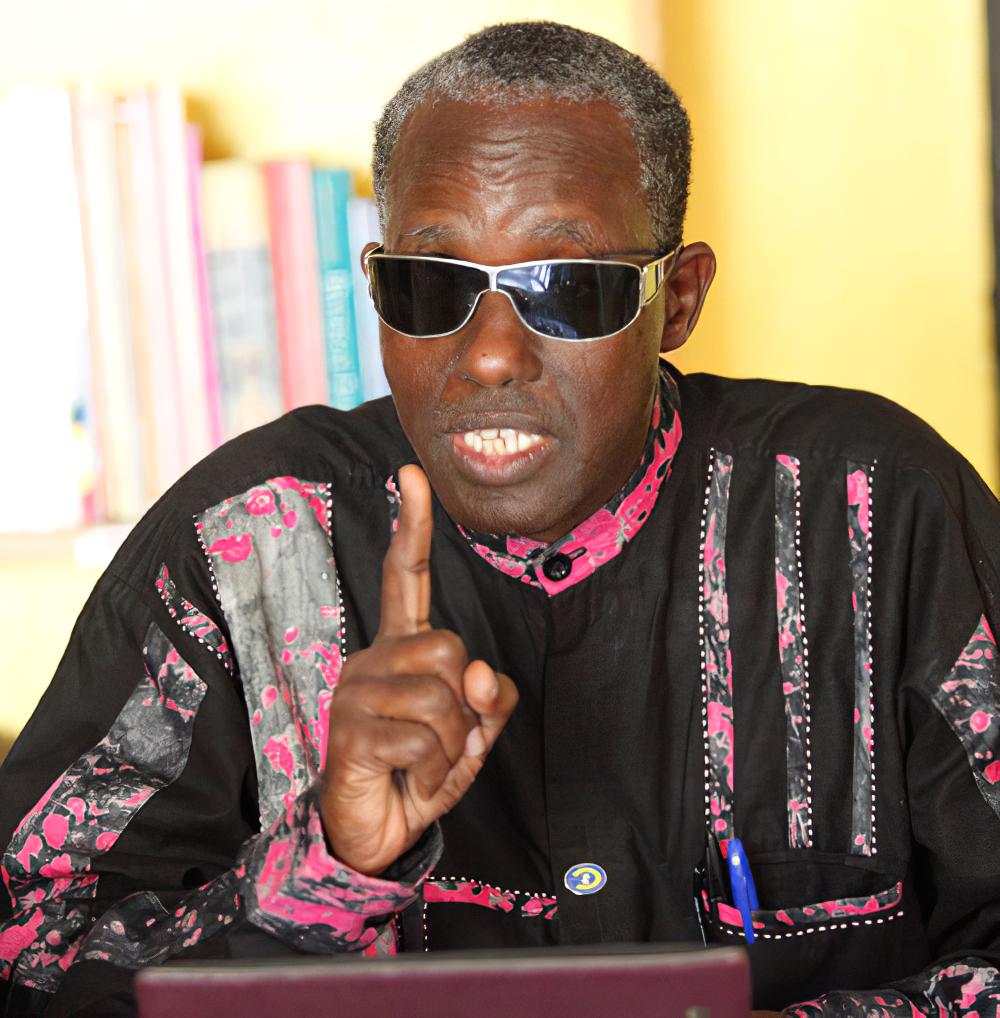 Meanwhile Today in Parliament Gen Elly Tumwine showed us that this is a Military Government and us window dresses…. After deliberating and condemning him for his behaviour he went out,narrowly missing lynching Maama Cecilia Ogwal in the lobby and finally ASKING us the following questions through the Press:
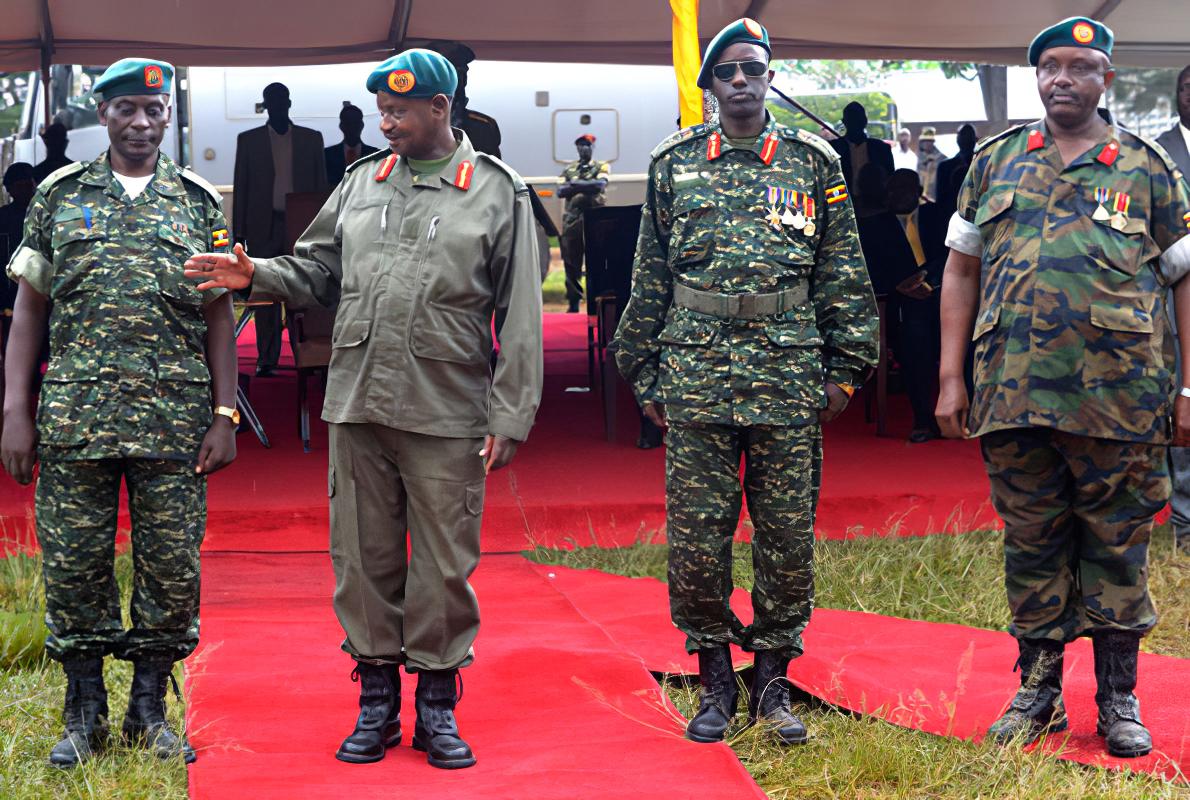 Do Ugandans have to go back to the bush to end dictatorship regime, tribalism, injustices, corruption, stupid taxes, land theft, evictions of Ugandans from their lands & homes & killing of innocent Ugandans with impunity?
 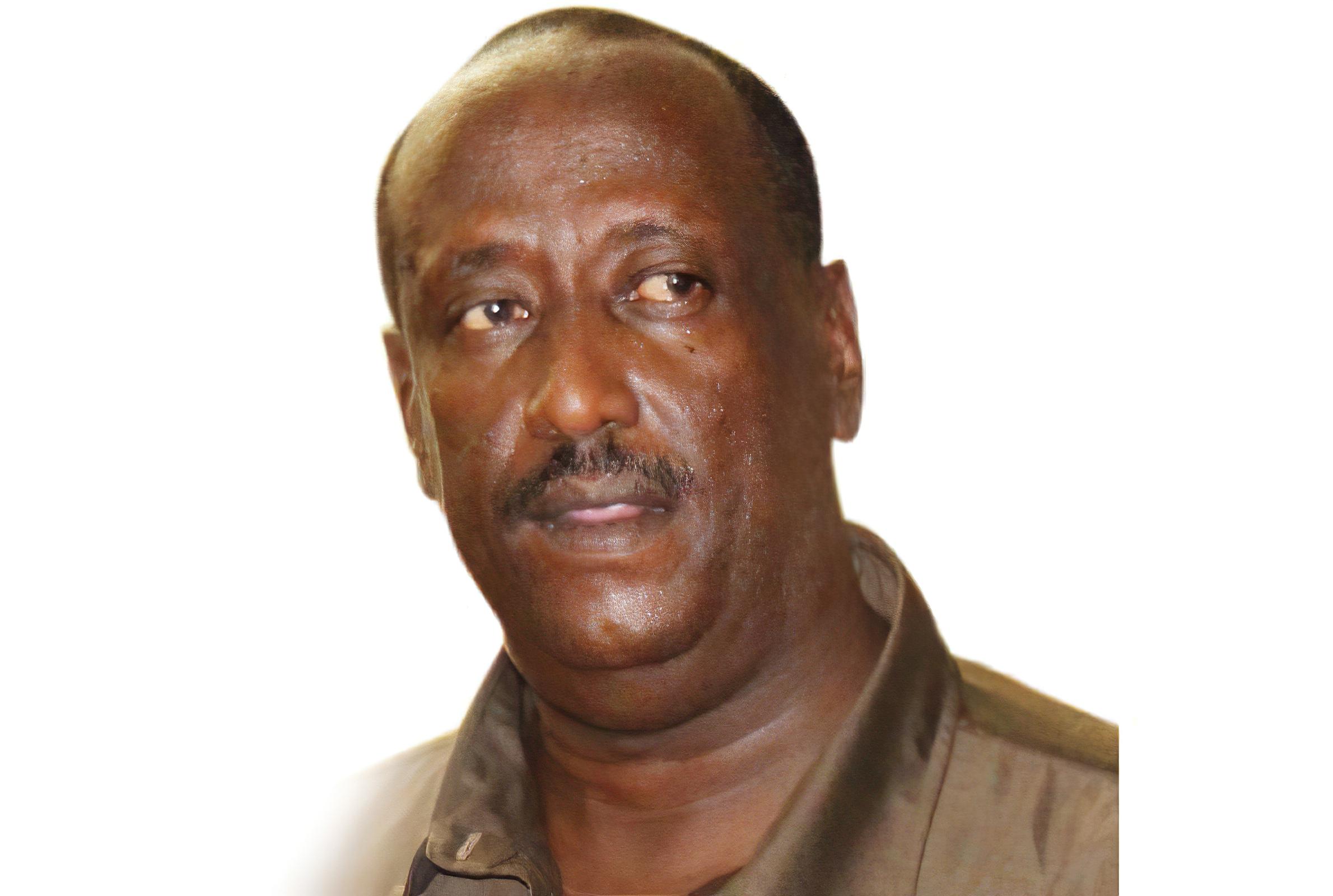 “As the speaker of Parliament i have made my conclusion with members of parliament that your construction company is known for doing very substandard works and embezzling state money on government construction projects, therefore however much you threaten me not to terminate your subcontracts worth 96 Billion part of construction of the new chamber of parliament, I vow not to give your fraud construction firm this money”
 In 1960 to 1962 every where in Uganda the pressure for independence had grown immeasurably strong with bitter struggles among est Ugandans against the whites colonial rule in Uganda.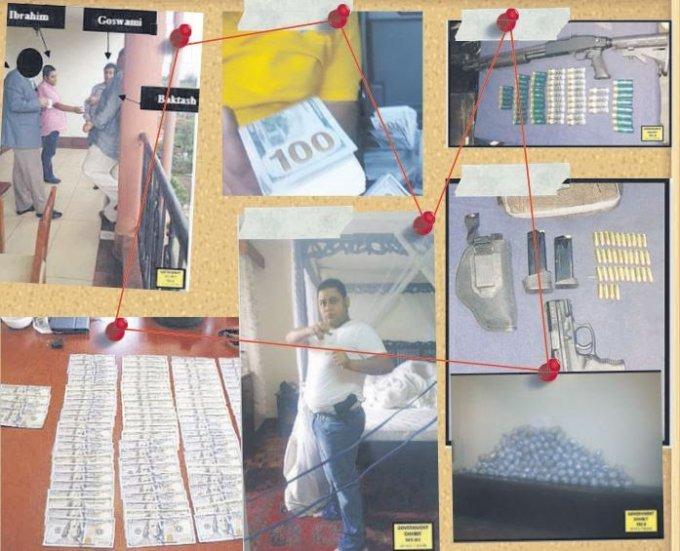

 Yoweri Museveni’s origins are shrouded in mystery. Many versions of where he was born and his true nationality are claimed. Those who know him view the vagueness around his origins as deliberately created. He one time said that he was born in Mbarara Hospital even as he claimed he does not know his exact date of birth. That was in Mbarara in April 1992. But later he changed and said it was Ntungamo! This feigned ignorance of his exact birth date is atypical of a man who otherwise boasts of having an incredible memory and ability to recall events that many people have forgotten. The clearest signal of Yoweri Museveni’s origin comes from the stigma that Rwandese and Ugandans of Rwandese origin have been subjected to.
 The wife of Criminal Jim Muhwezi Katugugu, that stole Global Fund for AIDS, Malaria and Tuberculosis funding for Uganda children, Doubles as the Proprietor of Kampala Casino, Agip Motel, Mbarara and Rukungiri Inn. The Parasite Suzan Kabonero Muhwezi, has Been Elected Chairperson of Uganda Hotel Owners Association (UHOA)
 A report by a Parliamentary watchdog committee has called for unspecified action to be taken against the President’s brother, Gen (rtd) Salim Saleh and others for obtaining billions in public funds through a company in which they had interests to do business with the government.
 Influencers on Ugandan social media and others with large, commercialised online followings must henceforth register their activities for monitoring by the state, the country’s communications regulator said on Thursday.
You must be logged in to reply to this topic.