
The Rule of Law Dichotomy: A Critical Examination of Western Intervention in African Legal Affairs
The concept of the rule of law is a cornerstone of democratic societies, revered and espoused by Western nations as a universal principle that should guide the governance of nations across the globe. It is a principle that demands fairness, accountability and impartiality in the application of justice. However, recent actions by the United Kingdom to impose sanctions on African officials without due process have sparked a contentious debate about the sincerity and uniformity of the application of the rule of law. This article explores the complexities of this issue and examines the implications of such actions for the sovereignty of African nations and the integrity of legal processes.
The principle of a fair trial
A fair trial is an essential element of the rule of law, based on the notion that every accused person has the right to be heard and to defend themselves against charges. The UK’s recent sanctions against certain African officials, without the possibility of a fair trial, raise critical questions about its adherence to the very principles it espouses. It is not enough for an individual, even with the assistance of a diligent spouse correcting spelling mistakes, to unilaterally decide the fate of foreign dignitaries from the confines of an office. Such actions undermine the basic principles of justice and due process that should be universally upheld.
The sanctity of ongoing judicial proceedings
The imposition of sanctions on African ministers who are undergoing legal proceedings in their own countries is a matter of grave concern. It suggests a disregard for domestic legal processes and an overreach that undermines the sovereignty of the nation concerned. The UK’s position in this case seems to imply that the legal systems of African countries are inadequate and that justice can only be done under Western supervision. This not only disrespects the legal institutions of these nations, but also casts a shadow over the legitimacy of international law and its application.
The role of governments in upholding justice
The governments of both Uganda and the UK have not conducted trials for the Speaker of the Ugandan Parliament, raising questions about the basis on which the sanctions were imposed. The absence of a trial, whether in Uganda or the UK, means that the individuals concerned have not been formally charged or found guilty by a competent legal authority. This situation highlights a critical issue: the need for governments to respect the legal processes of other sovereign states and to refrain from extrajudicial measures that circumvent those processes.
The Complexity of Sanctions and the Pursuit of Justice
In the intricate dance of international politics and human rights, the imposition of sanctions by powerful nations such as the United States often raises questions about the fairness and effectiveness of such punitive measures. Recently, the US has sanctioned more security personnel for alleged crimes of torture. But there’s a palpable reluctance to extend these sanctions to its top commander.

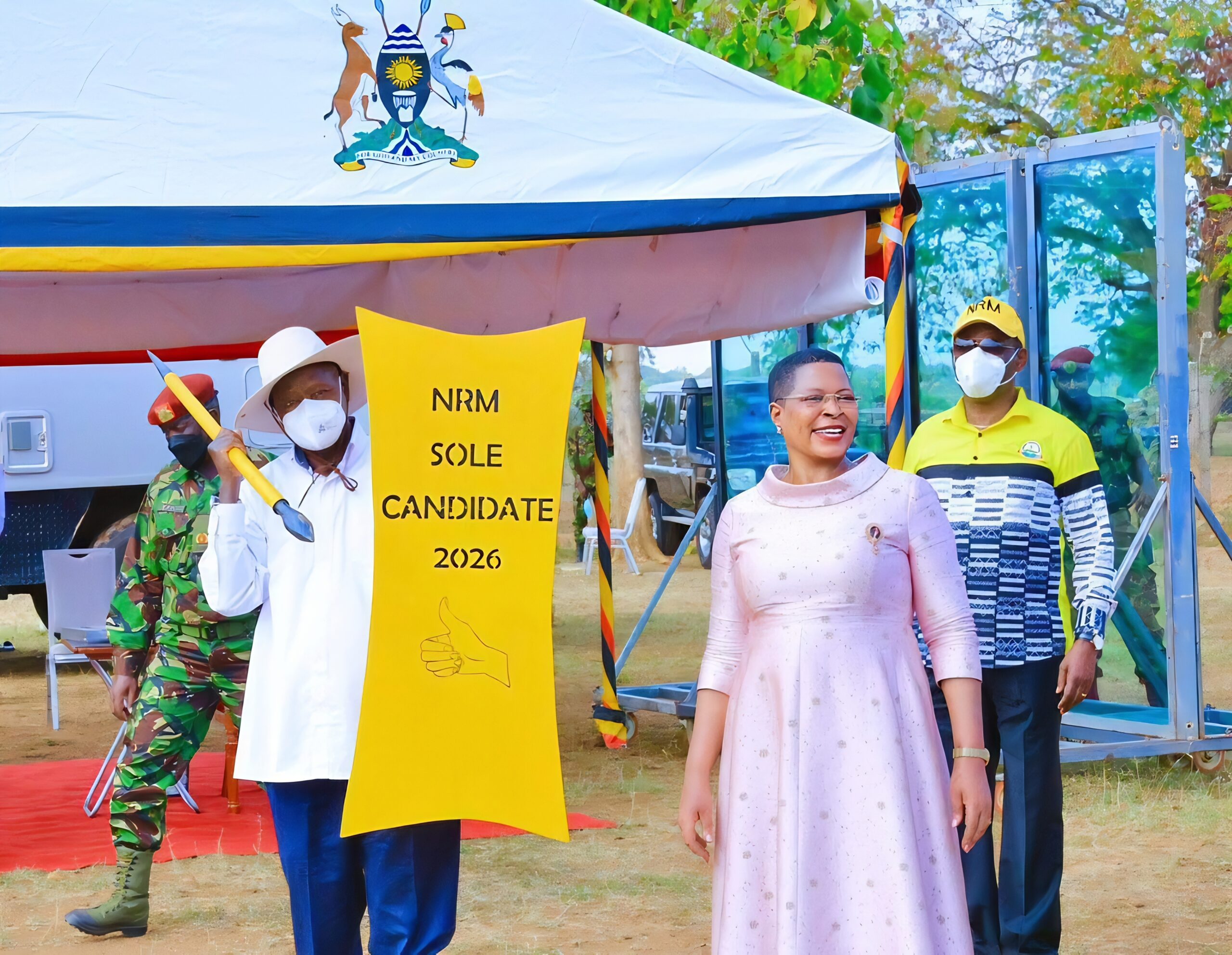
It’s an open secret who holds the position of Commander in Chief (CiC), but the reluctance to hold the highest office to account is telling. Instead, the strategy seems to focus on targeting those lower down the hierarchy – individuals who can be quickly replaced to ensure continuity of operations. This approach begs the question: why not sanction Criminal Yoweri Museveni?
The issue of sanctions is not only about accountability, but also about consistency of moral and ethical standards. For example, the person who signed the LGBTQ rights bill into law is also exempt from sanctions.
If the goal is to uphold human rights, then why is there a selective application of justice? It’s a conundrum that speaks volumes about the complexity of international relations and the often convoluted pursuit of justice.
My personal position is clear: I abhor corruption in all its forms. But my contempt for mob justice and kangaroo courts goes even deeper. I stand firmly against all forms of injustice, whether it’s corruption or the miscarriage of justice. In this context, the UK’s approach to Africa is particularly disturbing. The UK’s actions and policies, under the guise of solving problems, appear to be more harmful to the African people than the problems they claim to address. To suggest that the UK’s stance on LGBTQ+ rights is a veiled attempt to undermine the very existence of African peoples is a serious accusation that warrants a closer examination of the underlying intentions and consequences of such policies.
The pursuit of justice is a universal ideal, often espoused by Western nations as a pillar of democratic values and human rights. However, the selective outcry and response to various human rights issues in Uganda raise critical questions about the consistency and priorities of Western justice. The stark contrast between the international uproar over Uganda’s Anti-Homosexuality Bill and the relative silence over chronic human rights abuses, including the killing and detention of innocent Ugandans, and war crimes allegedly committed by Criminal Yoweri Museveni’s personal army, the Uganda People’s Defence Force (UPDF), in northern Uganda, is telling.
Uganda’s controversial Anti-Homosexuality Bill:
In 2014, Uganda’s Anti-Homosexuality Bill, often referred to as the “Kill the Gays” bill, drew widespread condemnation from Western governments, human rights organisations and the international community at large. The bill proposed harsh penalties for same-sex relations, including life imprisonment and, in earlier drafts, the death penalty. The bill sparked a global outcry, leading to threats of aid cuts, diplomatic pressure and public denunciations by prominent Western figures.
The Western response was swift and strong, with many seeing the bill as a gross violation of human rights and an affront to the dignity of the LGBTQ+ community in Uganda. The bill was eventually struck down by Uganda’s Constitutional Court on a technicality, but not before it had become a symbol of the struggle for gay rights in Africa and a focal point for Western advocacy.
The silence on chronic human rights abuses:
In stark contrast to the vocal opposition to the Anti-Homosexuality Bill, the chronic human rights abuses committed by the Ugandan regime and its security forces have received comparatively little attention from the West. Reports of extrajudicial killings, arbitrary detention and torture of political dissidents and innocent civilians by the UPDF, particularly during the two-decade conflict in northern Uganda, have often been met with silence or muted criticism.
The actions of the UPDF, particularly during the war against the Lord’s Resistance Army (LRA), have been documented by human rights organisations, with allegations of war crimes and crimes against humanity. Despite this, Western governments have continued to provide military aid and support to the Museveni regime, citing the need for stability and the fight against terrorism in the region.
The Priority of Western Justice in Uganda:
The disparity in the Western response to human rights issues in Uganda highlights a troubling reality: the priorities of Western justice appear to be selective and, at times, inconsistent with broader ideals of human rights and humanity. While the defence of LGBTQ+ rights is undoubtedly important and necessary, the lack of equal fervour in addressing other human rights violations suggests a hierarchy of concerns that may be influenced by geopolitical interests, economic considerations or cultural biases.
The prioritisation of certain human rights issues over others not only undermines the credibility of Western advocacy, but also fails to address the systemic and widespread abuses that continue to plague Ugandan society. For victims of state violence and oppression, the selective nature of Western justice offers little comfort and raises questions about the true commitment of Western nations to the principles of universal human rights.
This complex tableau raises questions about the perceived threat posed by different individuals. Anita Annet Among, Agnes Nandutu and Mary Goretti Kitutu are Ugandan politicians who have faced criticism, but are they really more dangerous than a figure like Gen Peter Elwelu? The disparity in how justice is pursued and who is deemed worthy of legal defence speaks to a broader narrative of selective justice and the prioritisation of certain crimes over others.
As we navigate these murky waters, it is crucial to maintain a clear and unwavering commitment to justice, equality and human rights. Sanctions, when applied, must be part of a consistent and fair framework that holds all individuals, regardless of their position or power, accountable for their actions. Only then can we hope to move towards a world where justice is not a selective principle but a universal obligation.
In conclusion, the imposition of sanctions and the pursuit of justice must be guided by a balanced and equitable approach. It is imperative that we scrutinise the motives and methods behind such actions to ensure that they serve the common good and not just the interests of a few. As we strive for a just and fair world, let us remember that every decision, every sanction and every legal proceeding should reflect our collective values and our unwavering commitment to uphold human dignity for all.
The rule of law is not a selective principle to be applied when convenient or to serve geopolitical interests. It is a universal standard that demands consistency and respect for due process and the sovereignty of nations. The UK’s actions, as described, represent a disturbing departure from these standards, which could set a dangerous precedent for international relations and the administration of justice. It is imperative that all nations, regardless of power or influence, commit to upholding the rule of law in its truest form, ensuring that every individual and government is subject to fair and impartial justice.
In the spirit of promoting a world where the rule of law is not just a theoretical concept, but a lived reality, it is vital that Western nations lead by example. This means respecting the legal processes within African nations and helping to strengthen, rather than undermine, their judicial systems. Only through mutual respect, cooperation and adherence to international legal standards can the global community hope to achieve the high ideals of justice and equality that the rule of law embodies.
Sub Delegate
Joram Jojo

- Controversy Rocks National Unity Platform Over Alleged Ticket Fee Demand - 2nd February 2025
- Supreme Court of Uganda Rules: Civilians Cannot Be Tried in Military Courts - 1st February 2025
- Kisoro Elections: Democracy, Minority Rights, and the Batwa’s Struggle - 16th November 2024
RELATED PUBLICATIONS:
 THE VELVET REVOLUTIONS SWEEPING AFRICA
  Justice on Trial: The Fall of a Ugandan Judge Accused of Modern Slavery
  UGANDA MAKERERE UNIVERSITY UNDER SIEGE
  COVID-19 PANDEMIC RELIEF, BECOMES A THIEVING BONANZA IN UGANDA
  UGANDANS NEED TO WAKE UP FROM THEIR DEEP SLUMBER
  COVID-19 VACCINATION EXERCISE IN UGANDA IS DISCRIMINATORY
  THE BRITISH GOVERNMENT HAS RESTRICTED TRAVELLERS FROM UGANDA
  UGANDAN WORKING IN THE UK SENTENCED FOR RAPE
  POLITICIANS HAVE GANGED UP AGAINST UGANDANS
  PARASITISM AND PUPPET POLITICIANS IN UGANDA
  YOWERI MUSEVENI HAS ALWAYS BEEN A PARASITE
  THE UGANDA FINANCIAL INSTABILITY
  UGANDA PARLIAMENT SECRETLY SIPHONES COVID-19 FUND
  A Triple Disaster in Karamoja
  DR. JANE RUTH ACENG GOES ON A COVID-19 INFECTING SPREE
  THE OXFORD COVID JAB WORKS WELL AGAINST THE VARIANT
  UGANDA ELECTORATE REJECTED THE BOBI WINE CALIPHATE
  ROBERT KYAGULANYI, AKA BOBI WINE IS A SCAM
  THE UGANDA NATIONAL UNITY PLATFORM PARASITES
  Batwa Communities in Kisoro Boycott Bye-Elections Over Unresolved Grievances
  IN A BROKEN UGANDA ONE HAS TO BE CREATIVE
  CAPITALISTS SCUMBAGS TAKING UGANDANS FOR FOOLS
  UGANDAN WHO LOWERED THE UNION JACK AND HOISTED THE UGANDA FLAG IS DEAD
  THE URGENT NEED FOR FUNDING AND EQUIPPING UGANDAN HOSPITALS