Uganda Autonomous Media: Independent News and Insights › Forums › Exposed › Bahima Century Dynasty is a Fiefdom of Dictator Yoweri Museveni

- AuthorPosts
- 10th August 2019 at 6:13 pm #348
Uganda Peoples Defence Fores, UPDF 35billion Shillings utilities Ghost bill
 Officials from the Ministry of Defence were Thursday kicked out of the Public Accounts Committee (PAC) over inconsistencies in the implementation of the ministry’s Shs 1.4 trillion budget for the FY 2017/18.
The officials first failed to explain at staggering Shs 35billion utilities bill that supposedly went to water and electricity.
And yet a closer look at the Auditor General (AG) John Muwanga’s June 2018 report, revealed much more unexplained expenditures that perturbed the MPs.
Key among these is the infrastructure development at the Peace Support Operation Training Centre (PSO TC) at Singo military Barracks.
The AG’s report observes that there is no end in sight to this project which was initiated in FY 2014/15 and was supposed to be commissioned on 31st December 2015.
At the time of the inspection, construction of 22 tent bases had stopped under unclear circumstances according to the report, and some soldiers were found residing in mobile flex tents.
This Muwanga says goes against the standards of an International Peace Training School.
More so, some of the tents that were installed in 2008 were found to be too old and irreparable to shelter the soldiers.
Out of 8 residential blocks for officers, 3 had been abandoned at slab level, 4 at window level while commander and deputy commander locks are still stuck at slab level.
Also 8 dormitory blocks remain incomplete and 1 is yet to be roofed.
At the time of the audit, the report says, 4.2 billion shillings had been spent on this project.
Fuel and Spares
The report also notes that a local company YAMASEC Ltd supplied spare parts worth 1.7 billion shillings to the Air Force without an independent person witnessing the transaction.
Documents show that 5 orders were placed between June and October.
Although deliveries for the above goods were witnessed by the receiving committee, AG insists most of the transactions did not adhere to control dictates.
In the same vein, the report notes that the receiving committee was on many occasions notified late to receive delivered Jet –A1 fuel and Avgas fuel worth 10.9 billion shillings.
Attempts to get a comment from army spokesperson Brig Richard Karemire were futile.
23rd August 2019 at 11:37 am #369General Elly Tumwine implicated in robbing 150,000 USD
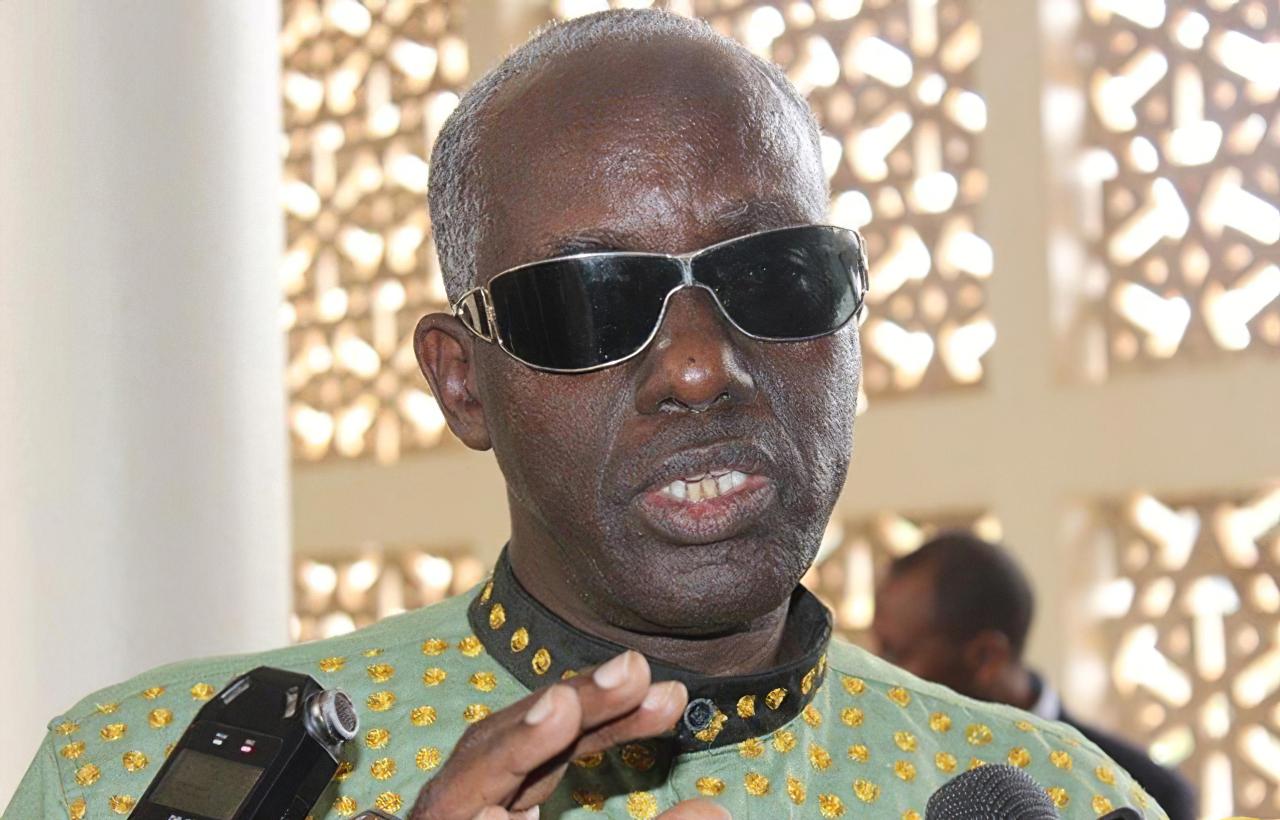 Uganda’s most untouchable soldier in General Elly Tumwine, together with the deputy chief of CMI a one CK Asiimwe, are implicated in robbing 150,000 USD from a Korean national.
According to security leaks, the duo later targeted a businessman a one Sam Buchana whom they first arrested on fake charges of fake gold sales, and when this charge did not hold, they decided to charge him with illegal possession of a gun at the court-martial.
According to an impeccable source, the gun in question is fully registered and Sam is authorized to have it.
The troubles for Buchana stem from a land deal in which a close confidant of Elly Tumwine a one Kaaya defrauded Buchana of 2 billion shillings in a fake land deal.
kaaya was arrested and Tumwine stood surety for him in court. The court had given him up to the end of August to pay back all the money he took from Buchana.
However, in a bid to avoid payment, they resorted to arresting and faking charges of illegal gun possession using deputy CMI chief colonel CK Asiimwe.
Buchana’s family is accusing Elly Tumwine of telling buchana to withdraw money claim if he wants to be left alone,
“These two army officers Elly Tumwine and Asiimwe have resorted to open blackmail, telling our brother to withdraw money claims” a family member who never wanted to disclose his identity claimed.
23rd August 2019 at 11:48 am #370Global Fund Thieves
 Billions meant to aid the anti-HIV/Aids effort went to organisations that did not exist, some into the personal bank accounts of top officials and some allegedly to finance the campaign to lift presidential term limits and other dubious activities, a commission of inquiry chaired by Justice James Ogoola found out. The scandal unfolded in a newly founded entity within the Ministry of Health known as the Project Management Unit (PMU) which was in charge of disbursing $47m to about 400 NGOs. At the end, some $37m remained unaccounted for. The money came from the Geneva-based Global Fund to Fight AIDS, Malaria and Tuberculosis. The organisation had suspended a $200m grant to Uganda citing misuse, prompting Dictator Yoweri Museveni to set up the commission of inquiry. Maj. Gen. Jim Muhwezi was as a result sacked as minister of health, together with his two state ministers, Dr Alex Kamugisha and Capt. Mike Mukula. The commission ordered for the refund of the money and some of it was recovered from the individuals implicated.23rd August 2019 at 11:58 am #371
Nathan Bisamunyu siphoned Shs760 million from the Ugandans
The biggest theft scandal was discovered in July 1987 when Nathan Bisamunyu, the General manager of the Uganda Industrial Machinery Ltd (UIM) connived with and his acting chief accountant, Joseph Watson Wasswa, and siphoned Shs760 million from the Ugandans. The Criminal Investigations Department (CID now CIID) swung into action and the two were apprehended by police in Kampala, recorded a criminal case No: 1150/87 against the two.
The case was later politicised as it dragged on. The Inspector General of Government, Mr Augustine Ruzindana, instituted an investigation which discovered overwhelming evidence. Meanwhile, the two were out on court bail as the case dragged on. Because Bisamunyu was from a prominent family in Kabale, there were allegations that he was being protected by NRM stalwarts and minister from the region.
On September 11, 1989, police detective Okot Safarino who was in charge of investigations wrote to the minister of Justice and Attorney general, Prof. George Kanyeihamba, expressing dissatisfaction about irregularities in the case. The letter leaked to the press. In the same month, Peter Kabatsi, the Director of Public Prosecution (DPP) withdraw the case against the accused.
23rd August 2019 at 12:00 pm #372Commonwealth Heads of Government Meeting (Chogm)
Much of the money meant for organising the Commonwealth Heads of Government Meeting (Chogm) was allegedly stolen. The luxurious BMW vehicles and outrider motorcycles used by visiting dignitaries were said to have been fraudulently procured. Former Vice President Gilbert Bukenya, who chaired the Cabinet select committee that organised the meeting, was unsuccessfully prosecuted over the procurement of the motorcycles. Foreign Affairs Minister Sam Kutesa and then Works Minister John Nasasira were also among the officials accused of mismanaging the process. It is estimated that over Shs200b was lost.
23rd August 2019 at 12:11 pm #373Amama Mbabazi Temangalo land scandal
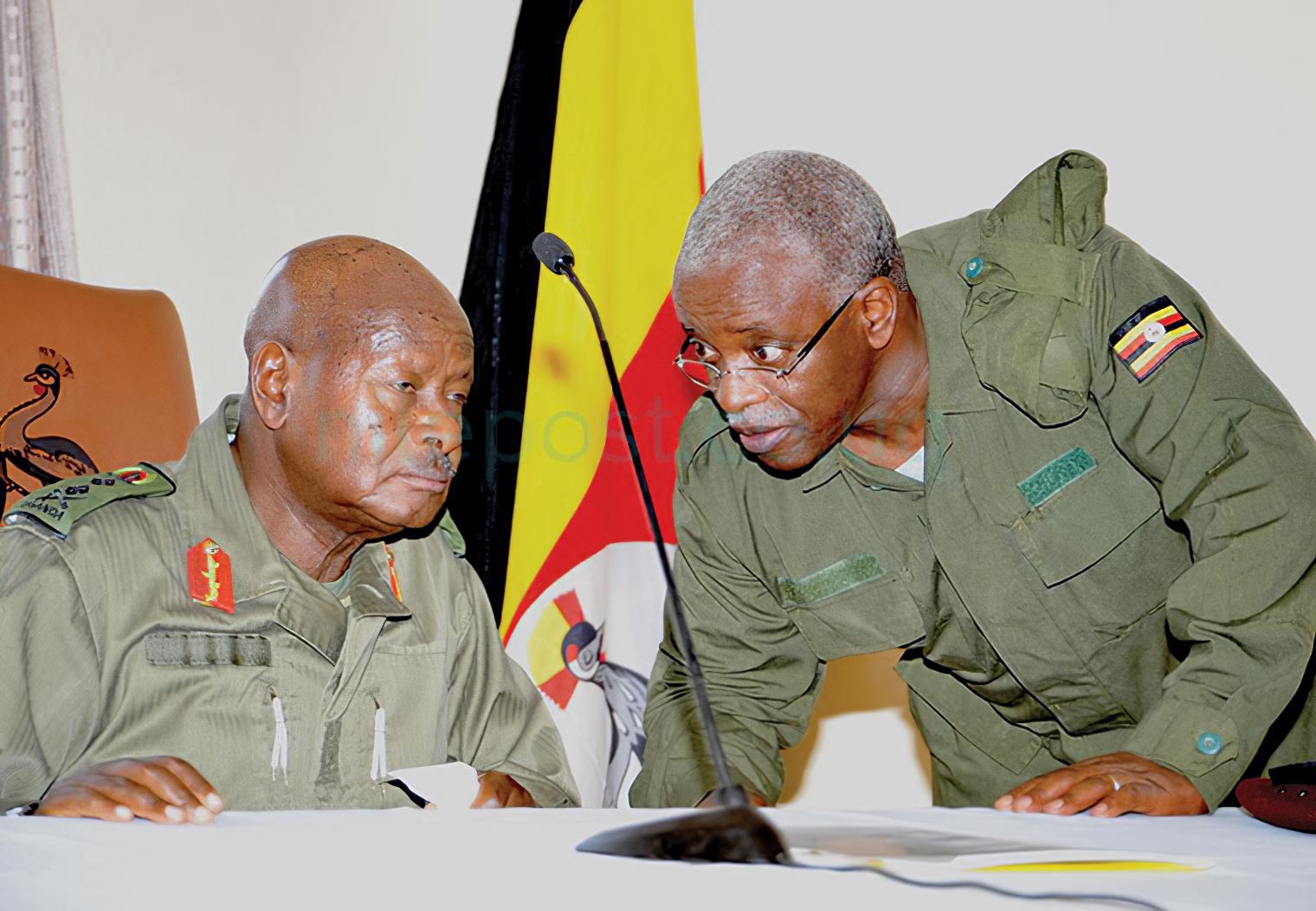 Amama Mbabazi, then security minister, was in the eye of the storm when the National Social Security Fund bought land he jointly owned with businessman Amos Nzei in Temangalo. The duo, together with Dr Ezra Suruma who was minister of finance which supervised NSSF, owned the now defunct National Bank of Commerce in which the money from the land deal was supposedly invested. A parliamentary probe report recommended action against Mr Mbabazi and Mr Suruma over conflict of interest but a committee of the whole house later quashed the report. The land, said to total 411.44 acres, was bought at Shs 11.2 billion (Shs24 million per acre). Much of the query was on the criteria used by NSSF to procure the land and whether savers got value for money.23rd August 2019 at 12:16 pm #374
Uganda guilty of Congo plunder
 The International Court of Justice sitting in The Hague in 2005, found Uganda guilty of violating the sovereignty of the Democratic Republic of Congo, plundering its natural resources and orchestrating human rights abuses when it sent its troops between 1997 and 2003. The court accordingly slapped a whopping $10b fine on Uganda. The government said it had sent soldiers over to Congo to pursue Allied Democratic Forces rebels who were terrorising parts of western Uganda, but some of the top commanders, including Gen. Salim Saleh and Maj. Gen. Kahinda Otafiire, were accused of plundering Congo’s resources.23rd August 2019 at 12:28 pm #375
Gen. Salim Saleh scandals
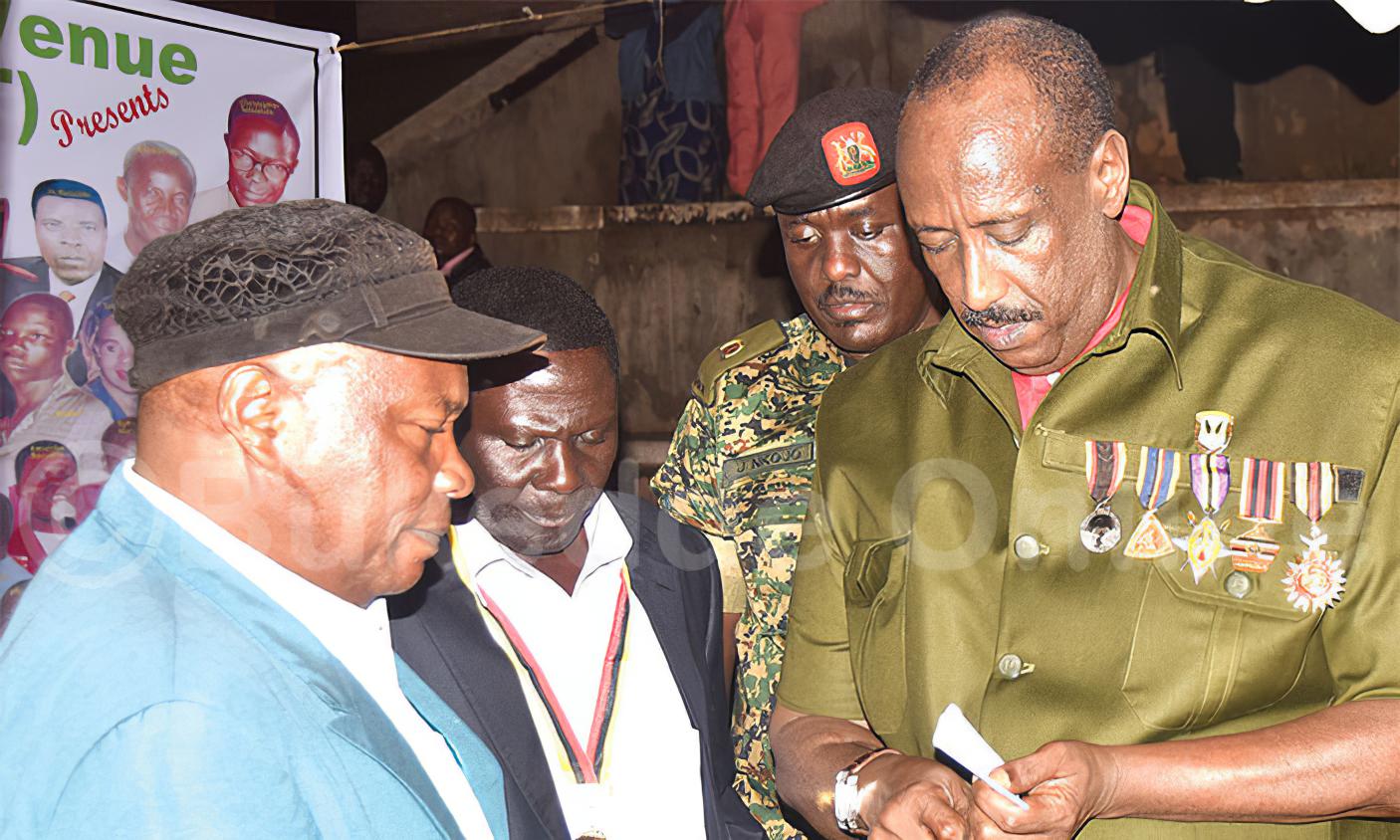 During the 1990s, the army was involved in a number of procurement scandals. Undersized uniforms from China, not-up-to-standard food rations from South Africa and 90 second-hand tanks, several unserviceable, from Belarus, were procured. But probably the most famous of the scandals was what came to be known as the junk helicopter scandal, in which two out of four unserviceable Mi-24 helicopters were procured. Four of the MiGs were modified in Israel and delivered in the country but two of them could not fly. The deal to supply the helicopters, which was brokered by Emma Katto, then a race-car driver, was aided by Gen. Salim Saleh, who convinced President Museveni to okay the deal. Gen. Saleh was as a result to bag a commission of $200,000 off each of the four helicopters. He would later tell a commission of inquiry into the matter in 2001 that he had informed the President of the “commission” he had been promised and Mr Museveni had allowed him to use it in the war against Joseph Kony’s rebels in northern Uganda11th November 2019 at 9:03 am #459
Paying taxes in Uganda is beginning to hurt
 Imagine buying all these commodities so highly in the name of taxing and the government begins pouring all this tax payers funds into these presidential adviser projects instead of working of our village feeder roads,health centre etc.
Dear Lord,if we did something wrong before you and it slipped off our memories,please forgive us for your name’s sake and by your unfailing love and mercy.
Rescue us from this tragedy that our nation has suffered since independence.
The Siyanyonja health centre in Namayingo district,One nurse attends to it.No doctors.
It’s always closed because there is always no medicine,no electricity,no water and delayed salaries for the nurse.
The only time someone ever branches there is Friday when it’s used for children immunisation just in case the vaccines are sent.Even the sign post has lost all words and read FAMILY PLANING SERVICES of late,which services are never available too.
I think we need 100 more presidential advisers.
Thank you Lord.
11th November 2019 at 9:10 am #460Racheal Ciconco Mbabazi
 Racheal Ciconco Mbabazi, the daughter of former Prime Minister Amama Mbabazi, has been appointed as the chairperson Board of Directors of National Water and Sewerage Corporation (NWSC).
Cabinet has approved the appointment of four Members of the Board of Directors of National Water and Sewerage Corporation (NWSC) for the period of three years.
The new board will be chaired by Racheal Ciconco Mbabazi, a daughter of former Premier, Amama Mbabazi.
Other members are Ms. Onyiru Sarah (member) Mr Runge George Muzungyo (member ) and Col. (Rtd.) Stephen Mwesigye Basaliza (Member).
Ms Mbabazi replaces Dr Christopher Ebal, who has served for two terms since 2013.
11th November 2019 at 9:30 am #461Catholic Bishops of Uganda have condemned the manner in which security personnel responded to the recent demonstrations
The Assembly of Catholic Bishops of Uganda have condemned the manner in which security personnel responded to the recent demonstrations in Kampala.
The Bishops observe that the amount of force used by some security agents while arresting protesting students of Makerere University, journalists and opposition groups over the recent weeks was uncalled for and violated human dignity.
In a statement signed by the Chairperson of Uganda Episcopal Conference Joseph Anthony Zziwa, the Bishop of Kiyinda Mityana Diocese, the Bishops termed the brutality as abuse of power.
They called for respect of Articles 24 and 44(a) of the Constitution which stipulate respect of human rights and dignity.
“The same Constitutional Provisions guarantee the right to protection from inhuman and degrading treatment by prohibiting any forms of torture or cruel, inhuman or degrading treatment or punishment,” the statement dated November 8, 2019 reads in part.
The bishops acknowledge the condemnation of the brutality by Members of Parliament and Government; urging all parties in the disagreement to choose dialogue over violence.
“It will not help to make our country a family where everybody can [not] live in peace and harmony. We therefore call upon government to promote dialogue and to always listen to the grievances of its citizens.”
The statement drafted during the November 4-8th Assembly of the Uganda Episcopal Conference was released to the Press on Sunday by Father Phillip Odii, the Executive Secretary for Social Communications.
They call on individuals, communities and institutions to respect the rule of law and endeavour to seek peaceful ways of resolving conflicts.
The Makerere University fees strike broke out on October 22 as students protected institution policy to annually increase tuition by 15 percent. Students opposed to the increment assert that it will affect private sponsored students and deny them basic fundamental human rights – education.
Although the violence has subsided, scores of students were injured or suspended by University administration.
11th November 2019 at 1:13 pm #462Rebecca kadaga is one confusing woman
 99% OF THOSE LED IN PARLIAMENT BY Rebecca kadaga are like her. They have no other ambitions until they die.
Rebecca kadaga is one confusing woman. Who never thinks of progressing. From when I was in School she stood as a woman MP to date, she has never believed that she can handle a substantive position.
She still come to parliament through an affirmative action vote.She also has zero plans apart from being a speaker of parliament. (A general with no ambitions)Basically she is waiting for God to call her.
She is like 99% of all MPs and Cabinet minister. What went wrong?Only one man Bobi has ambitions, only him can said to dissatisfied with the status quo and has a vision for better. You wonder when these men and women who resigned their growth hopes purport to advise Bobi.
Uganda ekabya banange😥😥
15th November 2019 at 9:34 am #466Victims of Yoweri Museveni’s Reign of Terror
Victims of Yoweri Museveni’s reign of terror – (May they RIP)
1. Brig. Perino Okoya, commander of Second Infantry Brigade, 1970. Personally shot dead by GSU intelligence officer Yoweri Museveni.
2. Nicholas Stroh, American journalist, 1971. Murdered by Lt. Silver Tibahika on orders of Museveni, for investigating FRONASA’s murder of Acholi and Langi army officers.
3. Robert Siedle, Makerere University lecturer, 1971. Murdered by Lt. Silver Tibahika on orders of Museveni, for investigating FRONASA’s murder of Acholi and Langi army officers.
4. James Bwogi, director of Uganda Television, 1971. Murdered by FRONASA agents to tarnish image of President Idi Amin.
5. Michael Kabali Kaggwa, president of Uganda Industrial Court , 1971. Murdered by FRONASA agents and burnt in his car, to turn Baganda against Amin.
6. Father Clement Kiggundu, Roman Catholic priest and former editor of Muuno newspaper, 1971. Dragged from altar during Mass to turn Baganda and Catholics against Amin.
7. Raiti Omongin, first leader of FRONASA, 1972. Personally shot in the mouth by Museveni during a morning parade in Tabora, after Museveni’s claim to FRONASA leadership was challenged.
8. Ali Picho Owiny, former GSU intelligence officer and colleague of Museveni, 1972. Murdered during the attack on Mbarara by Museveni because of his habit of humiliating Museveni in the office. The murder was blamed on Amin’s soldiers.
9. Valerino Rwaheru, comrade in arms with Museveni, 1972. Killed by Museveni to eliminate challenge to his leadership of FRONASA.
10. William a.k.a “Black” Mwesigwa, comrade in arms with Museveni, 1972. Murdered during invastion of Mbarara, to be blamed on Amin’s troops.
11. Basil Kiiza Bataringaya, former minister of Internal Affairs, 1972. Murdered by FRONASA agents and thrown into Rwizi river in Mbarara.
12. Erifazi Laki, county chief of Rwampara, 1972. Killed by FRONASA agents on orders of Museveni, because as a former GSU intelligence officer Laki possibly knew of Museveni’s hand in murdering Brig. Okoya or was a threat to Museveni’s ambitions. The private detective who in 2001 undertook to investigate Laki’s murder was poisoned on orders of Museveni.
13. Patrick Ruhinda, lawyer, 1972. Murdered by FRONASA to turn Ankole against Amin.
14. Benedicto Kiwanuka, president general of DP and Chief Justice, 1972. Abducted from the High Court buildings and shot dead by FRONASA agents near Bombo Road , Wandegeya, to tarnish Amin’s image. The abduction car was driven by a Musoga FRONASA man, Capt. Kaganda.
 15. Frank Kalimuzo, vice chancellor of Makerere University , 1972. Murdered by FRONASA agents, to cause fear in Uganda ’s civil service and academic circles. The story of Kalimuzo’s death given by Kintu Musoke had many inconsistencies.
16. John Kakonge, secretary general of Uganda People’s Congress, 1972. Murdered to tarnish Amin’s image.
17. James Karuhanga, comrade in arms of Museveni, 1973. Shot dead by Museveni and blamed on Amin’s troops.
18. Hope Rwaheru, wife of Museveni and sister of Valeriano Rwaheru, 1973. Mother of Museveni’s son, Muhoozi Kainerugaba, reportedly strangled by Museveni in Dar es Salaam .
19. Lt. Col. Michael Ondoga, minister of Foreign Affairs, 1974. Kidnapped and murdered by FRONASA agents led by Kahinda Otafiire and body thrown into River Nile.
20. Martin Mwesiga, comrade in arms of Museveni, 1974. Shot dead by Museveni after he witnessed shooting of Omongin.
21. Edith Bataringaya, wife of Basil Bataringaya, 1975. Burnt alive by FRONASA agents in order to discredit Amin.
22. Theresa Nanziri Bukenya, warden of Africa girls’ Hall at Makerere University , 1976. Killed personally by Museveni, by slitting open her stomach when she was eight months pregnant, in order to create more hatred for Amin among Ugandans.
23. Jimmy Parma, photographer, Voice of Uganda, 1976. Murdered by FRONASA for taking photographs of body of Israeli hostage Dora Bloch after Entebbe raid.
24. Esther Chesire, Kenyan student at Makerere University , 1976. Kidnapped by State Research agents working for Museveni’s FRONASA at Entebbe International Airport , in order to stir up hostility between Uganda and Kenya following Israeli attack on Entebbe .
25. Sally Githere, Kenyan student at Makerere University , 1976. Kidnapped by State Research agents working for Museveni’s FRONASA at Entebbe International Airport , in order to stir up hostility between Uganda and Kenya following Israeli attack on Entebbe .
26. Lt. Col. Sarapio Kakuhikire, army officer, 1977. Abducted and killed by FRONASA agents outside main Kampala Post Office in order to discredit Amin.
27. Dr. Jack Barlow, dentist opponents at Mulago Hospital , 1979. Shot dead in Kampala. Barlow was one of several doctors and senior civil servants murdered on orders of Defence Minister Yoweri Museveni to create an atmosphere of lawlessness in Uganda and show that President Godfrey Binaisa had failed to govern Uganda . Killers said they had been sent for his life, not his money or property.
28. Dr. Stephen Obache, doctor at Mulago hospital, 1979. Shot dead in Kampala . He was one of several doctors and senior civil servants murdered on orders of Defence Minister Yoweri Museveni to create an atmosphere of lawlessness in Uganda and show that President Godfrey Binaisa had failed to govern Uganda .
29. Dr. Joseph Kamulegeya, doctor for Kampala City Council, 1979. Shot dead in Kampala . He was one of several doctors and senior civil servants murdered on orders of Defence Minister Yoweri Museveni to create an atmosphere of lawlessness in Uganda and show that President Godfrey Binaisa had failed to govern Uganda .
30. Dr. Mitchell Bagenda, doctor at Mulago Hospital , 1979. Shot dead in his home at his home in Kampala . He was one of several doctors and senior civil servants murdered on orders of Defence Minister Yoweri Museveni to create an atmosphere of lawlessness in Uganda and show that President Godfrey Binaisa had failed to govern Uganda .
31. Lt. Colonel John Ruhinda, UNLA officer, 1979. Shot dead on orders of Museveni, seen as a threat to Museveni’s ambitions. Museveni came to the home of George and Joyce Kihuguru at Makerere University a few minutes after Ruhinda’s shooting there, pretending to be a concerned mourner. Ruhinda had gone to the Kihuguru’s home to eat millet.
32. Boniface Kaija Katuramu, Kampala quantity surveyor, 1979. Shot dead at his Malcolm X Avenue home in Kampala as part of Museveni’s reign of terror to create image of unstable Uganda after Amin.
33. James Matovu, cousin of Kabaka Ronald Mwenda Mutebi of Buganda , 1979. Shot dead at his home in Kampala . The Buganda prince was one of several prominent Ugandans murdered on orders of Defence Minister Yoweri Museveni to create an atmosphere of lawlessness in Uganda and show that President Godfrey Binaisa had failed to govern Uganda .
34. Bob Naenda Odong, news reader, Uganda Television, 1980. Shot dead on orders of Museveni as part of efforts to create image of chaos in Kampala .
35. Edidian Luttamaguzi, peasant leader in Semuto, 1981. NRA legend has it that Luttamaguzi was hiding Museveni in his house and government troops came to surround the place and kill Museveni. Museveni hid up in a tree and as the UNLA troops killed Luttamaguzi, Museveni perched in the tree watched helplessly. That was on June 9, 1981 and that is why the NRM marks that day as Hero’s Day because Luttamaguzi saved Museveni’s life by refusing to tell the UNLA where Museveni was. It is the NRA which killed Luttamaguzi in order to stiffen the harted for Obote among the Luwero peasants. Museveni created this story of his narrow escape as one of the NRA legends. That day in 1981, Museveni was not in Uganda but in Nairobi signing a merger agreement between his Popular Resistance Army and Yusufu Lule’s Uganda Freedom Fighters.
36. Ahmed Seguya, first commander of the NRA, 1981. Poisoned on orders of Museveni.
37. Beatrice Kemigisha, Makerere University lecturer and NRM supporter, 1981. NRM officials used to visit Kemigisha at her flat at the university. Museveni passed on information to the UNLA that she was an NRA supporter and she was arrested. NRA men in the UNLA army raped and tortured her to death as part of Museveni’s plan to have Obote’s image tarnished.
38. Lt. Col. William Ndahendekire, army officer, 1982. Killed on orders of Museveni after Ndahendekire refused to join Museveni’s NRA war.
39. Lt. Mule Muwanga, original NRA officer, 1982. Murdered during guerrilla war. Reasons unknown.
40. George Bamuturaki, UPC Member of Parliament, 1983. Shot dead at Kisimenti in Kampala because during 1980 election campaigns Bamuturaki had argued that Museveni, a Rwandese, should not be president of Uganda .
41. Gideon Akankwasa, lawyer with Hunter & Grieg law firm, 1983. Shot dead outside the gate of his home on Kyadondo Road in Nakasero, Kampala, to blame it on Chief of Staff David Oyite Ojok and tarnish Obote’s image. After the 1980 election, one of Akankwasa’s partners in Hunter & Grieg, Jonathan Kateera, handled Museveni’s petition.
42. Lt. Sam Magara, second commander of the NRA, 1983. Betrayed to the UNLA by Museveni in order to eliminate threat in the bush. One of the people captured during the siege on Katenta Apuuli’s house said Magara was sent to Kampala by Museveni and only Museveni could have known where Magara was staying while in Kampala .
43. Thompson Sabiti, civil servant and son of late Anglican Archbishop Eric Sabiiti, 1983. Clubbed to death near the Lake Victoria Hotel and the Ministry of Planning in Entebbe by Museveni’s NRA men and Museveni blamed his death on the bodyguards of the vice president Paulo Muwanga. Museveni wanted the Protestant Bahima community to turn in large numbers from Obote and become more loyal to the NRA. Sabiti was a good target.
44. Prof. Yusufu Kironde Lule, former head of state and chairman of National Resistance Movement, 1985. Murdered by slow-acting poison in London because of his popularity and threat to Museveni’s ambitions.
45. Enock Kabundu, Entebbe civil servant and Museveni supporter, 1985. Kabundu was one of Museveni’s staunchest supporters and Museveni used this against him. During the time of the Nairobi peace talks in December 1985, Museveni ordered two sisters working as prostitutes and informers for the NRA, Margaret and Anne Katanywa, to help get rid of Kabundu. Margaret and Anne Katanywa convinced a UNLA officer they were dating, Lt. Col. Obonyo that Kabundu was an NRA rebel. Obonyo had Kabundu taken to the Lutembe beach off the Kampala-Entebbe road where he was killed, his buttocks cut off in order to show that the Tito Okello regime was not sincere about peace talks through this action of murdering a Museveni supporter. Two years before this, Museveni had used the same tactic in killing a prominent Muhima in Entebbe , Thompson Sabiti.
46. Lt. Sam Katabarwa, NRA commander, 1986. Sent to mediate peace with UPC government, was arrested, but was alive after Museveni took power in 1986 and killed on orders of Museveni. He was a popular officer seen as a threat to Museveni’s power.
47. Capt. Robert Kagata Namiti, UNLA army officer, 1986. Murdered by a slow-acting poison injection by the NRA medical services on Museveni’s orders because he knew details of who killed Sam Katabarwa.
48. Capt. Abbey Kalega Sserwada, former Uganda Freedom Movement commandeer, 1986. He was arrested and detained at Lubiri barracks, tortured, his ears were cut off and he was killed by senior NRA officers with Museveni’s approval.
49. Francis Gureme, NRA officer, son of retired civil servant and writer F.D.R. Gureme, 1986. Killed in northern Uganda allegedly by rebels during a mission. Real reason was a set up, on orders of Museveni, after Gureme began asking too many questions about NRA atrocities in the north.
50. Major Peter Musana, former head of School of Logistics and Engineering, Jinja, 1987. Reasons unclear. He was killed by a slow-acting poison a few months after being released from prison. He might have know Capt. Namiti and how he died.
51. Andrew Lutakome Kayiira, cabinet minister and former leader of the Uganda Freedom Movement, 1987. Shot dead in Konge, Makindye, Kampala by a hit squad comprising Major Paul Kagame, James Kazini, Lt. Col. Kasirye Gwanga, Lt. Col. Moses Nyanzi (a.k.a “Drago”) and ESO assassin Humphrey Babukika. In the 1980s bush wars, Kayiira’s UFM was always the better equipped force than Museveni’s NRA and Museveni felt Kayiira was his main rival for power. The Scotland Yard report on Kayira’s death is reported to have mentioned Major Paul Kagame or Brig. Jim Muhwezi as the architect of the assassination.
52. Lance Sera Muwanga, housed Museveni’s family in exile in Sweden and human rights activist, 1988. Killed by slow-acting poison for his vocal views on Museveni’s atrocities in northern Uganda and his elimination of his political. Muwanga and the BBC correspondent Henry Gombya in a joint 1986 work wrote that the “Black Bombers” hit squad of the NRA led by Patrick Lumumba, Paul Kagame, Matayo Kyaligonza, Pecos Kutesa, Hannington Mugabi, Jero Bwende, and others were the ones carrying out the massacres of civilians in the Luwero Triangle in order to blame them on the Obote regime.
53. Robert Ekinu, deputy secretary of the Treasury, 1988. He was shot on orders of Museveni on a peace mission with other Teso ministers like Stanislus Okurut, the killing blamed on the Teso rebels, so as to paint the Teso rebels in a bad light and justify Museveni’s aggressive military offensive there. Museveni pretended to be hurt by Ekinu’s death by giving Ekinu’s widow a job in Bank of Uganda and giving the bereaved family the government house they occupied in Entebbe .
54. Henry Mugisa, DP stalwart, member of National Resistance Council and Managing Director of Consolidated Properties, the government parastatal, 1989. Shot dead at his Kololo, Kampala home on orders of Museveni because he knew about Museveni’s hand in stealing government companies under the guise of privatisation. Museveni gave away his guilt by having Mugisa’s body flown to hi burial in Bunyoro and a high powered government delegation attending the funeral.
55. Major General Fred Rwigyema, first commander of Rwandan Patriotic Army and former minister of state for defence, 1990. Shot by Major Peter Baingana and Major Chris Bunyenyezi on orders of Museveni. Rwigyema had been telling his wife Jeanette that his life was in danger in Uganda , that’s why he decided to defect to Rwanda before Museveni could assassinate him.
56. Major Peter Baingana, Rwandan Patriotic Army commander, 1990. Shot dead at a farm inside Uganda by Major General Salim Saleh on orders of Museveni, to cover up Museveni’s assassination of Fred Rwigyema.
57. Major Chris Bunyenyezi, Rwandan Patriotic Army commander, 1990. Shot dead at a farm inside Uganda by Major General Salim Saleh on orders of Museveni, to cover up Museveni’s assassination of Fred Rwigyema.
58. Chris Mboijana, General Manager of Uganda Airlines, 1990. Poisoned in London after Museveni stole money intended by management to buy four new Airbus planes for Uganda Airlines. Museveni knew that the trail of the theft would lead to him and he had to get rid of Mboijana who was once one of his staunchest supporters.
59. Emmanuel Cardinal Nsubuga, Catholic Church’s influential leader in Uganda , 1991. Murdered by contagious radioactive poison put under his plate on orders of Museveni, because of his growing criticism of Museveni’s murder of high-profile Ugandans and because he knew of Museveni’s atrocities against Ugandans in Luwero.
60. Lt. Col. Julius Aine, NRA army officer, 1991. Murdered in fake car accident. Aine and Jack Muchunguzi were some of the NRA officers Museveni charged with killing Ahmed Seguya and this killing of Aine could have been to prevent him from spilling the secret.
61. Paulo Muwanga, former vice president and chairman of the Military Commission, 1991. Injected with slow-acting poison in Luzira prison because he knew details of Museveni’s orchestrated genocide in Luwero Triangle.
62. John Begumisa, Commercial manager of Uganda Airlines, 1992. Shit dead at his home in Entebbe , after Museveni stole the money intended to buy four new Airbus planes for Uganda Airlines. NRA killers dressed up as doctors were brought to Grade A Hospital in Entebbe to make sure the wounded Begumisa did not survive the gunshot wounds.
63. Edward Mugalu, Kampala businessman and Democratic Party supporter, 1992. Shot dead near Lugogo, Kampala , on orders of Museveni, as part of his plan to eliminate DP figures close to Andrew Kayiira. Mugalu was also a strong Buganda monarchist and influential businessman.
64. Prof. Dan Mudoola, Makerere University lecturer and vice chairman of the Constitutional Review Commission., 1993. He was killed in a grenade attack in Wandegeya in order to frustrate the progress of the constitution-making process.
65. Dr Francis Kidubuka, Makerere University lecturer, 1993. Killed by grenade while having a drink outside the Paris Hotel in Wandegeya with Mudoola.
66. Amon Bazira, former UPC deputy minister, 1993. Bazira was shot dead in Nakuru , Kenya by ESO assassin Humphrey Babukika, in a plot hatched by Museveni.
67. President Melchior Ndadaye, head of state of Burundi , 1993. Assassins of Ndadaye were given shelter in Uganda and after mission was accomplished, were housed at state expense in the Kampala Sheraton Hotel.
68. President Juvenal Habyarimana, head of state of Rwanda , 1994. Killed in missile attack on his plane, ordered by Museveni. Habyarimana had approached ISO director general Brig. Jim Muhwezi with money and surface-to-air missiles to shoot down Museveni’s plane. Museveni gave Muhwezi the money and decided to hit Habyarimana with his won medicine. The assassins were trained near Lake Nabugabo in Masaka and the missiles were driven into Rwanda by RFA officer James Kabareebe.
69. President Cyprien Ntaryamira, head of state of Burundi , 1994. Killed in Habyarimana’s plane.
70. Benjamin Matogo, Uganda ’s High Commissioner to Tanzania , 1994. Matogo had gained sensitive information that Museveni masterminded the genocide against the Tutsi of Rwanda even before Habyarimana was assassinated. Ugandan intelligence intercepted his communication in which they knew he knew of Museveni’s role in both the assassination of Habyarimana and Ntarymira and the Ugandan death squads Museveni got to dress up as Hutu extremists that would kill Tutsis at random as he had done in Luwero Triangle. Matogo was killed using a slow-acting poison.
71. Hussein Musa Njuki, journalist and editor of Assalaam and former editor of Shariat newsletters, 1995. Killed by agents of Military Intelligence using a poison that induces sudden heart attacks and he was taken to a Kampala police station to die. Njuki had become a strong critic of Museveni and his regime. Museveni used Njuki and Ahmed Seguya as FRONASA men to distribute disinformation in Uganda in the Amin era.
72. Lt. Col. Ladislaw Serwanga Lwanga, former NRA chief political commissar, 1996. Killed by slow-acting poison although he was also HIV-positive, because he was seen as a threat poised by vocal Baganda officers.
73. Lt. Michael Shalita, Intelligence officer with the Internal Security Organisation, 1997. Shot in Kamwokya on orders of Museveni. Shalita was investigating cases of massive corruption involving top government parastatals like the Uganda Revenue Authority and the Uganda Posts & Telecommunications Corporation in which the Museveni family had an interest.
74. Brig. Fred Kamwesiga, 1997? Invited to State House dinner with Museveni and contagious poison put in his plate, for opposing parliamentary candidature of Augustine Ruzindana and calling Ruzindana a Rwandese unfit to run for MP in Uganda .
75. Lt. Col. Reuben Ikondere, UPDF officer, 1998. Murdered in eastern Congo on orders of Museveni for questioning why the First Family was plundering the wealth of Congo yet they claimed to be there to secure Uganda ’s borders. His murder was covered up as a stabbing by the Mai Mai warriors.
76. Dr. Akiiki Mujaju, a lecturer in Political Science at Makerere University and dean of the Social Sciences faculty, 1998?. Mujaju was murdered in a faked car accident along the Kampala-Fort Portal road because he had got sensitive information on the NRM government’s record and was about to publish it.
77. Joanne Cotton, One of eight western tourists, killed in Bwindi national park, 1999. The murders were planned personally by Museveni in order to scare the West and justify Uganda ’s invasion of Congo on the excuse of pursuing the ADF rebels and Rwandan Interahamwe who were accused of committing the crime. At a press conference in Kampala after the killings, Museveni pretended to be very hurt by the tourists’ deaths and took charge of the hunt for the killers.
78. Steve Roberts, On e of eight western tourists, killed in Bwindi national park, 1999.
79. Mark Lindgren, One of eight western tourists, killed in Bwindi national park, 1999.
80. Martin Friend, One of eight western tourists, killed in Bwindi national park, 1999.
81. Gary Tappenden, One of eight western tourists, killed in Bwindi national park, 1999.
82. Rob Haubner, One of eight western tourists, killed in Bwindi national park, 1999.
83. Susan Miller, One of eight western tourists, killed in Bwindi national park, 1999.
84. Lt. Col. Jet Mwebaze, UPDF officer, 1999. Shot in the forehead in Congo on orders of Salim Saleh with Museveni’s approval, for questioning why Saleh and Museveni’s son Muhoozi Kainerugaba were exporting beef to Congo and looting minerals, instead of looking out for Uganda ’s security interests. The government claimed it was an accident but there was an unexplained gunshot wound on his forehead. His body was returned in a sealed coffin and his family was not allowed to view his body. His brother, General James Kazini, is still convinced that there was foul play in Mwebaze’s death.
85. Anthony Ssekweyama, DP stalwart and human rights activist, 1999. Murdered and a fake car accident staged to cover up, on orders of Museveni after he catalogued Museveni’s murder of high profile Ugandans and the NRA’s atrocities in northern Uganda. Fortunately, forensic evidence of Ssekweyama’s murder was smuggled out of Uganda and to the United States.
86. Charles Owor, national electoral commissioner, 2000. He was shot dead in Kenya by ESO agents and an accident faked after he protested vigorously at the massive rigging that robbed DP presidential candidate the 1996 election. Owor had sensitive and damning evidence of how Museveni rigged the 1996 election.
87. Henry Kayondo, lawyer and DP direhard, 2000. He was poisoned by the same East Bloc KGB poison used to kill Brig. Kamwesiga, which induces sudden heart failure and makes people believe it was a genuine heart attack. Kayondo was a consistent critic of the NRM’s anti-democratic tendencies and Museveni ordered him silenced.
88. Mukono, Uganda Posts & Telecommunications employee, 2000. Mr. Mukono was gunned down at his home in Namungoona the day before he was supposed to testify at a commission probe into shody activities in the company. The killers, sent by Museveni, left with Mukono’s briefcase where he had put files and official documents of evidence.
89. President Laurent Desire Kabila, head of state of the Democratic Republic of Congo, 2001. Shot dead by bodyguard of Col. Kahinda Otafiire. An ESO intelligence officer confirmed to Reuters agency that Kabila was dead when the rest of the world was still guessing.
90. Spencer Turomwe, opposition mobiliser and husband to Betty Olive Kamya, 2001. Although he was HIV-positive and was killed by Military Intelligence agents dressed up as doctors using a slow-acting poison injection because of his influence as a mobiliser and vocal NRM government critic. The government said they hoped his widow Betty Kamya would be intimidated by their murder of Turomwe but instead she became bolder as an FDC envoy and now Minister in Museveni government as minister for kampala.
91. Agnes Katama, managing director of SWIPCO procurement company, 2002. She was murdered and her death was blamed on a staged car accident on the Kampala-Fort Portal road because she was beginning to question too much the huge corrupt deals involving the First Family in government procurements.
92. Brig. Gad Wilson Toko, former minister of defence, 2002 Murdered in fake accident. Toko during a session of the peace talks in Nairobi had walked across the table and slapped Museveni, shouting angrily why Museveni a Rwandese was determined to fight “your wars in our country.” Museveni never forgave him for that public slap.
93. Christine Kania, a member of the Constitutional Review Commission, 2002. She was killed on the same day as Brig.Toko.
94. Deus Mugizi, former Uganda Airlines manager, 2002. Gunmen came to his home in Bunga outside Kampala and as his mother pleaded for her son’s life, they said they had not come for property but for his life. Mugizi had protested many times at the sale of Uganda Airlines’ routes to the new East African Airlines which is owned in part by the Museveni family. He also knew about the four Airbus planes that Uganda Airlines was supposed to have bought and Museveni siphoned off the money.
95. Jonah Mulindwa, camera man with Presidential Press Unit, 2003. He was an eye witness to some dirty dealings that Museveni was conducting in State House. Museveni has a secret room in State House which only he opens, where he keeps a statue of himself surrounded by bones, skulls, and witchcraft items. One day Mrs. Janet Museveni opened the room, saw the skulls and bones and almost fainted.
96. Francis Ayume, Solicitor General and attorney General, 2004. Shot dead by Anthony Butele and them accident faked. Family was discouraged from viewing Ayume’s body. Ayume had been a strong critic of the Third Term project and was viewed as presidential material.
97. Robinah Kiyingi, Kampala lawyer and country director of Transparency International, 2005. Shot dead outside her home just outside Kampala . She had gathered damning data on her laptop computer on the massive corruption personally sanctioned by Museveni for his family. Transparency International had estimated Museveni’s worth was at $4billion. Museveni gave away his hand in Kiyingi’s murder by saying he had a great interest in following how the case and trial were going.
98. John Garang Demabior, First Vice President of Sudan and chairman of the Sudan People’s Liberation Movement, 2005. Killed aboard Museveni’s helicopter. Garang had come to Uganda to demand back a huge cache of arms belonging to the SPLA which Museveni had stolen and could not account for. The altimeter on the helicopter was tampered with in order to endanger the craft and the SPLA using global positioning systems established that the helicopter came down inside Uganda and not Sudan as Kampala claimed.
99. Sgt. John Atwine, alleged killer of Robinah Kiyingi, 2005. Poisoned in Luzira prison to cover up evidence of his framing and Museveni’s role in murder of Robinah Kiyingi.
100. Kevin Aliro, Managing Editor, Weekly Observer, 2005. One of Museveni’s main methods of dealing with his opponents since the 1990s has been to hit them when they are HIV-positive and in that way few people see the cause of death as foul play. He did this with Spencer Turomwe and Kevin Aliro, one of the courageous critics of the government. Patriotic sources in intelligence who are disgusted with Museveni’s handling of the country passed this information on to the Opposition that Aliro was actually killed using the poison spray that Winnie Byanyima had feared the government would use on Colonel Besigye while in Luzira should he disagree to work for museveni under opposition.
15th November 2019 at 9:44 am #467Victims of Yoweri Museveni’s Reign of Terror
 Did Yoseri Tibuhaburwa Rutabasirwa Buzariranwa AKA Yoweri Kaguta Museveni bring peace to Uganda or terror?
1. Brig. Perino Okoya, commander of Second Infantry Brigade, 1970. Personally shot dead by GSU intelligence officer Yoweri Museveni.
2. Nicholas Stroh, American journalist, 1971. Murdered by Lt. Silver Tibahika on orders of Museveni, for investigating FRONASA’s murder of Acholi and Langi army officers.
3. Robert Siedle, Makerere University lecturer, 1971. Murdered by Lt. Silver Tibahika on orders of Museveni, for investigating FRONASA’s murder of Acholi and Langi army officers.
4. James Bwogi, director of Uganda Television, 1971. Murdered by FRONASA agents to tarnish image of President Idi Amin.
5. Michael Kabali Kaggwa, president of Uganda Industrial Court , 1971. Murdered by FRONASA agents and burnt in his car, to turn Baganda against Amin.
6. Father Clement Kiggundu, Roman Catholic priest and former editor of Muuno newspaper, 1971. Dragged from altar during Mass to turn Baganda and Catholics against Amin.
7. Raiti Omongin, first leader of FRONASA, 1972. Personally shot in the mouth by Museveni during a morning parade in Tabora, after Museveni’s claim to FRONASA leadership was challenged.
8. Ali Picho Owiny, former GSU intelligence officer and colleague of Museveni, 1972. Murdered during the attack on Mbarara by Museveni because of his habit of humiliating Museveni in the office. The murder was blamed on Amin’s soldiers.
9. Valerino Rwaheru, comrade in arms with Museveni, 1972. Killed by Museveni to eliminate challenge to his leadership of FRONASA.
10. William a.k.a “Black” Mwesigwa, comrade in arms with Museveni, 1972. Murdered during invastion of Mbarara, to be blamed on Amin’s troops.
11. Basil Kiiza Bataringaya, former minister of Internal Affairs, 1972. Murdered by FRONASA agents and thrown into Rwizi river in Mbarara.
12. Erifazi Laki, county chief of Rwampara, 1972. Killed by FRONASA agents on orders of Museveni, because as a former GSU intelligence officer Laki possibly knew of Museveni’s hand in murdering Brig. Okoya or was a threat to Museveni’s ambitions. The private detective who in 2001 undertook to investigate Laki’s murder was poisoned on orders of Museveni.
13. Patrick Ruhinda, lawyer, 1972. Murdered by FRONASA to turn Ankole against Amin.
14. Benedicto Kiwanuka, president general of DP and Chief Justice, 1972. Abducted from the High Court buildings and shot dead by FRONASA agents near Bombo Road , Wandegeya, to tarnish Amin’s image. The abduction car was driven by a Musoga FRONASA man, Capt. Kaganda.
15. Frank Kalimuzo, vice chancellor of Makerere University , 1972. Murdered by FRONASA agents, to cause fear in Uganda ’s civil service and academic circles. The story of Kalimuzo’s death given by Kintu Musoke had many inconsistencies.
16. John Kakonge, secretary general of Uganda People’s Congress, 1972. Murdered to tarnish Amin’s image.
17. James Karuhanga, comrade in arms of Museveni, 1973. Shot dead by Museveni and blamed on Amin’s troops.
18. Hope Rwaheru, wife of Museveni and sister of Valeriano Rwaheru, 1973. Mother of Museveni’s son, Muhoozi Kainerugaba, reportedly strangled by Museveni in Dar es Salaam .
19. Lt. Col. Michael Ondoga, minister of Foreign Affairs, 1974. Kidnapped and murdered by FRONASA agents led by Kahinda Otafiire and body thrown into River Nile.
20. Martin Mwesiga, comrade in arms of Museveni, 1974. Shot dead by Museveni after he witnessed shooting of Omongin.
21. Edith Bataringaya, wife of Basil Bataringaya, 1975. Burnt alive by FRONASA agents in order to discredit Amin.
22. Theresa Nanziri Bukenya, warden of Africa girls’ Hall at Makerere University , 1976. Killed personally by Museveni, by slitting open her stomach when she was eight months pregnant, in order to create more hatred for Amin among Ugandans.
23. Jimmy Parma, photographer, Voice of Uganda, 1976. Murdered by FRONASA for taking photographs of body of Israeli hostage Dora Bloch after Entebbe raid.
24. Esther Chesire, Kenyan student at Makerere University , 1976. Kidnapped by State Research agents working for Museveni’s FRONASA at Entebbe International Airport , in order to stir up hostility between Uganda and Kenya following Israeli attack on Entebbe .
25. Sally Githere, Kenyan student at Makerere University , 1976. Kidnapped by State Research agents working for Museveni’s FRONASA at Entebbe International Airport , in order to stir up hostility between Uganda and Kenya following Israeli attack on Entebbe .
26. Lt. Col. Sarapio Kakuhikire, army officer, 1977. Abducted and killed by FRONASA agents outside main Kampala Post Office in order to discredit Amin.
27. Dr. Jack Barlow, dentist opponents at Mulago Hospital , 1979. Shot dead in Kampala. Barlow was one of several doctors and senior civil servants murdered on orders of Defence Minister Yoweri Museveni to create an atmosphere of lawlessness in Uganda and show that President Godfrey Binaisa had failed to govern Uganda . Killers said they had been sent for his life, not his money or property.
28. Dr. Stephen Obache, doctor at Mulago hospital, 1979. Shot dead in Kampala . He was one of several doctors and senior civil servants murdered on orders of Defence Minister Yoweri Museveni to create an atmosphere of lawlessness in Uganda and show that President Godfrey Binaisa had failed to govern Uganda .
29. Dr. Joseph Kamulegeya, doctor for Kampala City Council, 1979. Shot dead in Kampala . He was one of several doctors and senior civil servants murdered on orders of Defence Minister Yoweri Museveni to create an atmosphere of lawlessness in Uganda and show that President Godfrey Binaisa had failed to govern Uganda .
30. Dr. Mitchell Bagenda, doctor at Mulago Hospital , 1979. Shot dead in his home at his home in Kampala . He was one of several doctors and senior civil servants murdered on orders of Defence Minister Yoweri Museveni to create an atmosphere of lawlessness in Uganda and show that President Godfrey Binaisa had failed to govern Uganda .
31. Lt. Colonel John Ruhinda, UNLA officer, 1979. Shot dead on orders of Museveni, seen as a threat to Museveni’s ambitions. Museveni came to the home of George and Joyce Kihuguru at Makerere University a few minutes after Ruhinda’s shooting there, pretending to be a concerned mourner. Ruhinda had gone to the Kihuguru’s home to eat millet.
32. Boniface Kaija Katuramu, Kampala quantity surveyor, 1979. Shot dead at his Malcolm X Avenue home in Kampala as part of Museveni’s reign of terror to create image of unstable Uganda after Amin.
33. James Matovu, cousin of Kabaka Ronald Mwenda Mutebi of Buganda , 1979. Shot dead at his home in Kampala . The Buganda prince was one of several prominent Ugandans murdered on orders of Defence Minister Yoweri Museveni to create an atmosphere of lawlessness in Uganda and show that President Godfrey Binaisa had failed to govern Uganda .
34. Bob Naenda Odong, news reader, Uganda Television, 1980. Shot dead on orders of Museveni as part of efforts to create image of chaos in Kampala .
35. Edidian Luttamaguzi, peasant leader in Semuto, 1981. NRA legend has it that Luttamaguzi was hiding Museveni in his house and government troops came to surround the place and kill Museveni. Museveni hid up in a tree and as the UNLA troops killed Luttamaguzi, Museveni perched in the tree watched helplessly. That was on June 9, 1981 and that is why the NRM marks that day as Hero’s Day because Luttamaguzi saved Museveni’s life by refusing to tell the UNLA where Museveni was. It is the NRA which killed Luttamaguzi in order to stiffen the harted for Obote among the Luwero peasants. Museveni created this story of his narrow escape as one of the NRA legends. That day in 1981, Museveni was not in Uganda but in Nairobi signing a merger agreement between his Popular Resistance Army and Yusufu Lule’s Uganda Freedom Fighters.
36. Ahmed Seguya, first commander of the NRA, 1981. Poisoned on orders of Museveni.
37. Beatrice Kemigisha, Makerere University lecturer and NRM supporter, 1981. NRM officials used to visit Kemigisha at her flat at the university. Museveni passed on information to the UNLA that she was an NRA supporter and she was arrested. NRA men in the UNLA army raped and tortured her to death as part of Museveni’s plan to have Obote’s image tarnished.
38. Lt. Col. William Ndahendekire, army officer, 1982. Killed on orders of Museveni after Ndahendekire refused to join Museveni’s NRA war.
39. Lt. Mule Muwanga, original NRA officer, 1982. Murdered during guerrilla war. Reasons unknown.
40. George Bamuturaki, UPC Member of Parliament, 1983. Shot dead at Kisimenti in Kampala because during 1980 election campaigns Bamuturaki had argued that Museveni, a Rwandese, should not be president of Uganda .
41. Gideon Akankwasa, lawyer with Hunter & Grieg law firm, 1983. Shot dead outside the gate of his home on Kyadondo Road in Nakasero, Kampala, to blame it on Chief of Staff David Oyite Ojok and tarnish Obote’s image. After the 1980 election, one of Akankwasa’s partners in Hunter & Grieg, Jonathan Kateera, handled Museveni’s petition.
42. Lt. Sam Magara, second commander of the NRA, 1983. Betrayed to the UNLA by Museveni in order to eliminate threat in the bush. One of the people captured during the siege on Katenta Apuuli’s house said Magara was sent to Kampala by Museveni and only Museveni could have known where Magara was staying while in Kampala .
43. Thompson Sabiti, civil servant and son of late Anglican Archbishop Eric Sabiiti, 1983. Clubbed to death near the Lake Victoria Hotel and the Ministry of Planning in Entebbe by Museveni’s NRA men and Museveni blamed his death on the bodyguards of the vice president Paulo Muwanga. Museveni wanted the Protestant Bahima community to turn in large numbers from Obote and become more loyal to the NRA. Sabiti was a good target.
44. Prof. Yusufu Kironde Lule, former head of state and chairman of National Resistance Movement, 1985. Murdered by slow-acting poison in London because of his popularity and threat to Museveni’s ambitions.
45. Enock Kabundu, Entebbe civil servant and Museveni supporter, 1985. Kabundu was one of Museveni’s staunchest supporters and Museveni used this against him. During the time of the Nairobi peace talks in December 1985, Museveni ordered two sisters working as prostitutes and informers for the NRA, Margaret and Anne Katanywa, to help get rid of Kabundu. Margaret and Anne Katanywa convinced a UNLA officer they were dating, Lt. Col. Obonyo that Kabundu was an NRA rebel. Obonyo had Kabundu taken to the Lutembe beach off the Kampala-Entebbe road where he was killed, his buttocks cut off in order to show that the Tito Okello regime was not sincere about peace talks through this action of murdering a Museveni supporter. Two years before this, Museveni had used the same tactic in killing a prominent Muhima in Entebbe , Thompson Sabiti.
46. Lt. Sam Katabarwa, NRA commander, 1986. Sent to mediate peace with UPC government, was arrested, but was alive after Museveni took power in 1986 and killed on orders of Museveni. He was a popular officer seen as a threat to Museveni’s power.
47. Capt. Robert Kagata Namiti, UNLA army officer, 1986. Murdered by a slow-acting poison injection by the NRA medical services on Museveni’s orders because he knew details of who killed Sam Katabarwa.
48. Capt. Abbey Kalega Sserwada, former Uganda Freedom Movement commandeer, 1986. He was arrested and detained at Lubiri barracks, tortured, his ears were cut off and he was killed by senior NRA officers with Museveni’s approval.
49. Francis Gureme, NRA officer, son of retired civil servant and writer F.D.R. Gureme, 1986. Killed in northern Uganda allegedly by rebels during a mission. Real reason was a set up, on orders of Museveni, after Gureme began asking too many questions about NRA atrocities in the north.
50. Major Peter Musana, former head of School of Logistics and Engineering, Jinja, 1987. Reasons unclear. He was killed by a slow-acting poison a few months after being released from prison. He might have know Capt. Namiti and how he died.
51. Andrew Lutakome Kayiira, cabinet minister and former leader of the Uganda Freedom Movement, 1987. Shot dead in Konge, Makindye, Kampala by a hit squad comprising Major Paul Kagame, James Kazini, Lt. Col. Kasirye Gwanga, Lt. Col. Moses Nyanzi (a.k.a “Drago”) and ESO assassin Humphrey Babukika. In the 1980s bush wars, Kayiira’s UFM was always the better equipped force than Museveni’s NRA and Museveni felt Kayiira was his main rival for power. The Scotland Yard report on Kayira’s death is reported to have mentioned Major Paul Kagame or Brig. Jim Muhwezi as the architect of the assassination.
52. Lance Sera Muwanga, housed Museveni’s family in exile in Sweden and human rights activist, 1988. Killed by slow-acting poison for his vocal views on Museveni’s atrocities in northern Uganda and his elimination of his political. Muwanga and the BBC correspondent Henry Gombya in a joint 1986 work wrote that the “Black Bombers” hit squad of the NRA led by Patrick Lumumba, Paul Kagame, Matayo Kyaligonza, Pecos Kutesa, Hannington Mugabi, Jero Bwende, and others were the ones carrying out the massacres of civilians in the Luwero Triangle in order to blame them on the Obote regime.
53. Robert Ekinu, deputy secretary of the Treasury, 1988. He was shot on orders of Museveni on a peace mission with other Teso ministers like Stanislus Okurut, the killing blamed on the Teso rebels, so as to paint the Teso rebels in a bad light and justify Museveni’s aggressive military offensive there. Museveni pretended to be hurt by Ekinu’s death by giving Ekinu’s widow a job in Bank of Uganda and giving the bereaved family the government house they occupied in Entebbe .
54. Henry Mugisa, DP stalwart, member of National Resistance Council and Managing Director of Consolidated Properties, the government parastatal, 1989. Shot dead at his Kololo, Kampala home on orders of Museveni because he knew about Museveni’s hand in stealing government companies under the guise of privatisation. Museveni gave away his guilt by having Mugisa’s body flown to hi burial in Bunyoro and a high powered government delegation attending the funeral.
55. Major General Fred Rwigyema, first commander of Rwandan Patriotic Army and former minister of state for defence, 1990. Shot by Major Peter Baingana and Major Chris Bunyenyezi on orders of Museveni. Rwigyema had been telling his wife Jeanette that his life was in danger in Uganda , that’s why he decided to defect to Rwanda before Museveni could assassinate him.
56. Major Peter Baingana, Rwandan Patriotic Army commander, 1990. Shot dead at a farm inside Uganda by Major General Salim Saleh on orders of Museveni, to cover up Museveni’s assassination of Fred Rwigyema.
57. Major Chris Bunyenyezi, Rwandan Patriotic Army commander, 1990. Shot dead at a farm inside Uganda by Major General Salim Saleh on orders of Museveni, to cover up Museveni’s assassination of Fred Rwigyema.
58. Chris Mboijana, General Manager of Uganda Airlines, 1990. Poisoned in London after Museveni stole money intended by management to buy four new Airbus planes for Uganda Airlines. Museveni knew that the trail of the theft would lead to him and he had to get rid of Mboijana who was once one of his staunchest supporters.
59. Emmanuel Cardinal Nsubuga, Catholic Church’s influential leader in Uganda , 1991. Murdered by contagious radioactive poison put under his plate on orders of Museveni, because of his growing criticism of Museveni’s murder of high-profile Ugandans and because he knew of Museveni’s atrocities against Ugandans in Luwero.
60. Lt. Col. Julius Aine, NRA army officer, 1991. Murdered in fake car accident. Aine and Jack Muchunguzi were some of the NRA officers Museveni charged with killing Ahmed Seguya and this killing of Aine could have been to prevent him from spilling the secret.
61. Paulo Muwanga, former vice president and chairman of the Military Commission, 1991. Injected with slow-acting poison in Luzira prison because he knew details of Museveni’s orchestrated genocide in Luwero Triangle.
62. John Begumisa, Commercial manager of Uganda Airlines, 1992. Shit dead at his home in Entebbe , after Museveni stole the money intended to buy four new Airbus planes for Uganda Airlines. NRA killers dressed up as doctors were brought to Grade A Hospital in Entebbe to make sure the wounded Begumisa did not survive the gunshot wounds.
63. Edward Mugalu, Kampala businessman and Democratic Party supporter, 1992. Shot dead near Lugogo, Kampala , on orders of Museveni, as part of his plan to eliminate DP figures close to Andrew Kayiira. Mugalu was also a strong Buganda monarchist and influential businessman.
64. Prof. Dan Mudoola, Makerere University lecturer and vice chairman of the Constitutional Review Commission., 1993. He was killed in a grenade attack in Wandegeya in order to frustrate the progress of the constitution-making process.
65. Dr Francis Kidubuka, Makerere University lecturer, 1993. Killed by grenade while having a drink outside the Paris Hotel in Wandegeya with Mudoola.
66. Amon Bazira, former UPC deputy minister, 1993. Bazira was shot dead in Nakuru , Kenya by ESO assassin Humphrey Babukika, in a plot hatched by Museveni.
67. President Melchior Ndadaye, head of state of Burundi , 1993. Assassins of Ndadaye were given shelter in Uganda and after mission was accomplished, were housed at state expense in the Kampala Sheraton Hotel.
68. President Juvenal Habyarimana, head of state of Rwanda , 1994. Killed in missile attack on his plane, ordered by Museveni. Habyarimana had approached ISO director general Brig. Jim Muhwezi with money and surface-to-air missiles to shoot down Museveni’s plane. Museveni gave Muhwezi the money and decided to hit Habyarimana with his won medicine. The assassins were trained near Lake Nabugabo in Masaka and the missiles were driven into Rwanda by RFA officer James Kabareebe.
69. President Cyprien Ntaryamira, head of state of Burundi , 1994. Killed in Habyarimana’s plane.
70. Benjamin Matogo, Uganda ’s High Commissioner to Tanzania , 1994. Matogo had gained sensitive information that Museveni masterminded the genocide against the Tutsi of Rwanda even before Habyarimana was assassinated. Ugandan intelligence intercepted his communication in which they knew he knew of Museveni’s role in both the assassination of Habyarimana and Ntarymira and the Ugandan death squads Museveni got to dress up as Hutu extremists that would kill Tutsis at random as he had done in Luwero Triangle. Matogo was killed using a slow-acting poison.
71. Hussein Musa Njuki, journalist and editor of Assalaam and former editor of Shariat newsletters, 1995. Killed by agents of Military Intelligence using a poison that induces sudden heart attacks and he was taken to a Kampala police station to die. Njuki had become a strong critic of Museveni and his regime. Museveni used Njuki and Ahmed Seguya as FRONASA men to distribute disinformation in Uganda in the Amin era.
72. Lt. Col. Ladislaw Serwanga Lwanga, former NRA chief political commissar, 1996. Killed by slow-acting poison although he was also HIV-positive, because he was seen as a threat poised by vocal Baganda officers.
73. Lt. Michael Shalita, Intelligence officer with the Internal Security Organisation, 1997. Shot in Kamwokya on orders of Museveni. Shalita was investigating cases of massive corruption involving top government parastatals like the Uganda Revenue Authority and the Uganda Posts & Telecommunications Corporation in which the Museveni family had an interest.
74. Brig. Fred Kamwesiga, 1997? Invited to State House dinner with Museveni and contagious poison put in his plate, for opposing parliamentary candidature of Augustine Ruzindana and calling Ruzindana a Rwandese unfit to run for MP in Uganda .
75. Lt. Col. Reuben Ikondere, UPDF officer, 1998. Murdered in eastern Congo on orders of Museveni for questioning why the First Family was plundering the wealth of Congo yet they claimed to be there to secure Uganda ’s borders. His murder was covered up as a stabbing by the Mai Mai warriors.
76. Dr. Akiiki Mujaju, a lecturer in Political Science at Makerere University and dean of the Social Sciences faculty, 1998?. Mujaju was murdered in a faked car accident along the Kampala-Fort Portal road because he had got sensitive information on the NRM government’s record and was about to publish it.
77. Joanne Cotton, One of eight western tourists, killed in Bwindi national park, 1999. The murders were planned personally by Museveni in order to scare the West and justify Uganda ’s invasion of Congo on the excuse of pursuing the ADF rebels and Rwandan Interahamwe who were accused of committing the crime. At a press conference in Kampala after the killings, Museveni pretended to be very hurt by the tourists’ deaths and took charge of the hunt for the killers.
78. Steve Roberts, On e of eight western tourists, killed in Bwindi national park, 1999.
79. Mark Lindgren, One of eight western tourists, killed in Bwindi national park, 1999.
80. Martin Friend, One of eight western tourists, killed in Bwindi national park, 1999.
81. Gary Tappenden, One of eight western tourists, killed in Bwindi national park, 1999.
82. Rob Haubner, One of eight western tourists, killed in Bwindi national park, 1999.
83. Susan Miller, One of eight western tourists, killed in Bwindi national park, 1999.
84. Lt. Col. Jet Mwebaze, UPDF officer, 1999. Shot in the forehead in Congo on orders of Salim Saleh with Museveni’s approval, for questioning why Saleh and Museveni’s son Muhoozi Kainerugaba were exporting beef to Congo and looting minerals, instead of looking out for Uganda ’s security interests. The government claimed it was an accident but there was an unexplained gunshot wound on his forehead. His body was returned in a sealed coffin and his family was not allowed to view his body. His brother, General James Kazini, is still convinced that there was foul play in Mwebaze’s death.
85. Anthony Ssekweyama, DP stalwart and human rights activist, 1999. Murdered and a fake car accident staged to cover up, on orders of Museveni after he catalogued Museveni’s murder of high profile Ugandans and the NRA’s atrocities in northern Uganda. Fortunately, forensic evidence of Ssekweyama’s murder was smuggled out of Uganda and to the United States.
86. Charles Owor, national electoral commissioner, 2000. He was shot dead in Kenya by ESO agents and an accident faked after he protested vigorously at the massive rigging that robbed DP presidential candidate the 1996 election. Owor had sensitive and damning evidence of how Museveni rigged the 1996 election.
87. Henry Kayondo, lawyer and DP direhard, 2000. He was poisoned by the same East Bloc KGB poison used to kill Brig. Kamwesiga, which induces sudden heart failure and makes people believe it was a genuine heart attack. Kayondo was a consistent critic of the NRM’s anti-democratic tendencies and Museveni ordered him silenced.
88. Mukono, Uganda Posts & Telecommunications employee, 2000. Mr. Mukono was gunned down at his home in Namungoona the day before he was supposed to testify at a commission probe into shody activities in the company. The killers, sent by Museveni, left with Mukono’s briefcase where he had put files and official documents of evidence.
89. President Laurent Desire Kabila, head of state of the Democratic Republic of Congo, 2001. Shot dead by bodyguard of Col. Kahinda Otafiire. An ESO intelligence officer confirmed to Reuters agency that Kabila was dead when the rest of the world was still guessing.
90. Spencer Turomwe, opposition mobiliser and husband to Betty Olive Kamya, 2001. Although he was HIV-positive and was killed by Military Intelligence agents dressed up as doctors using a slow-acting poison injection because of his influence as a mobiliser and vocal NRM government critic. The government said they hoped his widow Betty Kamya would be intimidated by their murder of Turomwe but instead she became bolder as an FDC envoy and now Minister in Museveni government as minister for kampala.
91. Agnes Katama, managing director of SWIPCO procurement company, 2002. She was murdered and her death was blamed on a staged car accident on the Kampala-Fort Portal road because she was beginning to question too much the huge corrupt deals involving the First Family in government procurements.
92. Brig. Gad Wilson Toko, former minister of defence, 2002 Murdered in fake accident. Toko during a session of the peace talks in Nairobi had walked across the table and slapped Museveni, shouting angrily why Museveni a Rwandese was determined to fight “your wars in our country.” Museveni never forgave him for that public slap.
93. Christine Kania, a member of the Constitutional Review Commission, 2002. She was killed on the same day as Brig.Toko.
94. Deus Mugizi, former Uganda Airlines manager, 2002. Gunmen came to his home in Bunga outside Kampala and as his mother pleaded for her son’s life, they said they had not come for property but for his life. Mugizi had protested many times at the sale of Uganda Airlines’ routes to the new East African Airlines which is owned in part by the Museveni family. He also knew about the four Airbus planes that Uganda Airlines was supposed to have bought and Museveni siphoned off the money.
95. Jonah Mulindwa, camera man with Presidential Press Unit, 2003. He was an eye witness to some dirty dealings that Museveni was conducting in State House. Museveni has a secret room in State House which only he opens, where he keeps a statue of himself surrounded by bones, skulls, and witchcraft items. One day Mrs. Janet Museveni opened the room, saw the skulls and bones and almost fainted.
96. Francis Ayume, Solicitor General and attorney General, 2004. Shot dead by Anthony Butele and them accident faked. Family was discouraged from viewing Ayume’s body. Ayume had been a strong critic of the Third Term project and was viewed as presidential material.
97. Robinah Kiyingi, Kampala lawyer and country director of Transparency International, 2005. Shot dead outside her home just outside Kampala . She had gathered damning data on her laptop computer on the massive corruption personally sanctioned by Museveni for his family. Transparency International had estimated Museveni’s worth was at $4billion. Museveni gave away his hand in Kiyingi’s murder by saying he had a great interest in following how the case and trial were going.
98. John Garang Demabior, First Vice President of Sudan and chairman of the Sudan People’s Liberation Movement, 2005. Killed aboard Museveni’s helicopter. Garang had come to Uganda to demand back a huge cache of arms belonging to the SPLA which Museveni had stolen and could not account for. The altimeter on the helicopter was tampered with in order to endanger the craft and the SPLA using global positioning systems established that the helicopter came down inside Uganda and not Sudan as Kampala claimed.
99. Sgt. John Atwine, alleged killer of Robinah Kiyingi, 2005. Poisoned in Luzira prison to cover up evidence of his framing and Museveni’s role in murder of Robinah Kiyingi.
100. Kevin Aliro, Managing Editor, Weekly Observer, 2005. One of Museveni’s main methods of dealing with his opponents since the 1990s has been to hit them when they are HIV-positive and in that way few people see the cause of death as foul play. He did this with Spencer Turomwe and Kevin Aliro, one of the courageous critics of the government. Patriotic sources in intelligence who are disgusted with Museveni’s handling of the country passed this information on to the Opposition that Aliro was actually killed using the poison spray that Winnie Byanyima had feared the government would use on Colonel Besigye while in Luzira should he disagree to work for museveni under opposition.
28th May 2020 at 11:30 am #866the NRA rebellion in Luweero
 John Kazoora fled from Makerere University before graduation and joined the NRA rebellion in Luweero. In the third part of our serialisation of extracts from his memoirs, he reveals his encounters with Paul Kagame, Saleh’s shooting from the hip, and the toll of war on Museveni.
Title: Betrayed by my leader
Author: John B. Kazoora
We were ordered to sit down, and in came a towering man exuding a lot of poise and confidence. He asked us to introduce ourselves; our reasons for wanting to join the struggle and about the journey to the bush. We later learnt that he was the most feared Commander Matayo Kyaligonza (Now Major General). He said he was disappointed with “intellectuals” because one intellectual called Kwizera who had also left Makerere University had harassed a girl in the village. In his mind he lumped us together with Kwizera. I was surprised by the generalising.
[Later] Paul Kagame the intelligence officer (Now President of Rwanda) called us and took away our identity cards. When we asked him why, he said “why do you need identity cards? Don’t bring your intellectualism here”, and that was the last we saw of them. We immediately started military training.
After three weeks of training in Kitebere at about 7:30p.m. I heard people whispering that Mzee (Chairman High Command (CHC)) Yoweri Museveni had come to our camp. The following morning he summoned our group of Biraaro, Karegyesa, Gariyo, Bwirizayo and I. He was seated with Sam Magara and Elly Tumwine. He asked us to introduce ourselves and to tell him where we originated from.
A few weeks later the CHC sent for our group again. We went and found him seated with Sam Magara and Frank Guma. After fidgeting and saluting him, he asked us to reintroduce ourselves again and wanted to know what we had read at university. All of us had read Political Science except Kenneth Gariyo who had studied Accounting. He then asked us who had taught us Political Science and we told him Mahmood Mamdani. He burst out laughing and said “how can Mamdani of all people teach you? What did he teach you anyway?”He told Magara to punish us “Shughulikia haawa” “Take care of them” he said. Magara then called CHC’s escorts Arthur Kasasira, Musumbiji, Mugabi (not Hannington) and Dampa and ordered them to punish us. They removed our shirts and gave us ngwara (suddenly tilting you off from the ground), rolled us in mud and stinging shrubs (engyenyi), smeared us with ash and water and we were finally told to keep guard in the coldness the whole night. Throughout this ordeal CHC was laughing his head off. He seemed to find it hilarious. This was certainly part of initiation to remove the so-called intellectualism and face reality especially obeying orders. They later let us off.
Eyes on Kigongo
Halfway through the training, CHC summoned me and told me in Runyankole that he was attaching me to the Chairman of NRC Moses Kigongo as his Aide De Camp (ADC). He said he wanted me to assist Kigongo in mobilising wanaichi but most important of all to monitor all his activities and report back to him (He said he had gauged me during the earlier interview and knew that I would carry out this task well).
I was therefore removed from the recruits’ camp to the High Command on assignment. We had slightly better facilitation and food. My tent was behind Kigongo’s, which was next to the CHC. I found Kigongo to be very amiable and he treated me as his son especially in terms of grave scarcities. He once had a small piece of soap – he cut it into half and gave it to me. He made sure we shared the little food he would get.Angry Tinye, snoring OtafiireÂ
One day after training David Tinyefuza (now General Sejusa ) walked past us and we casually said hello while seated since he was an Old Boy and forgetting the earlier advice from Silver Oyera on familiarity. We did not know that when someone senior passes you, you stand up and salute. He then ordered that we go to endaaki (prison) and forgot us there the whole day till someone reminded him that we should be released.
We were in total concealment and had to maintain total silence but unfortunately Kahinda Otafiire who was the National Political Commissar and was living at the High Command used to snore quite a lot. The CHC joked that he should be arrested for breaking concealment rules. The snoring stopped when he lost weight. Otafiire would also sit by the fire, remove his trousers and wave them above the fire so that lice could drop off into the fire. You could hear the lice pop in the fire like popcorn.
Saleh shoots himself
On February 21, 1983, we engaged in ferocious skirmishing with government forces at Bukalabi. Salim Saleh was wounded (shot in both arms) in the fighting, and we lost eleven combatants. Saleh was treated by Dr Besigye. The battle had not been well planned, reconnaissance had not been done well and in fact a foreign journalist was in the camp and I fear they had wanted to impress him. As Saleh was recuperating, Tinyefuza succeeded Saleh with Julius Chihandae as his deputy.
This was not the last time Saleh was shot.At one time he shot himself in the leg during a drunken spur and was treated by Dr Ronald Batta. He was later charged with attempting to kill a Member of the High Command (i.e. Himself!). On another occasion under that influence, the CHC asked him about the strange scent on his body and Saleh said he had rubbed himself with a traditional herb to treat scabies to which the CHC said “ Kanihaano ogu” meaning what a terrible herb. Despite his personal weaknesses, Saleh was a superb commander.
Kigongo attempts to escapeÂ
Life in the bush was becoming incredibly harsh. Medicines were so scarce that people were dying of scabies, the enemy had squeezed us, there was lack of salt and food, and women like Janat Mukwaya had lost their breasts because of malnutrition and had ran bonkers.
It was at this time that Moses Kigongo planned to escape. I was still his ADC. One day as I was arranging his tent, I saw a passport and became suspicious. I decided to quietly inform CHC. He could not believe it and asked me to bring evidence and so I brought him the passport. I had hoped all this discussion would be in confidence.Kigongo was immediately summoned by the High Command. He denied he was trying to escape and said that he had no passport. I was then summoned and asked if Kigongo had a passport. I confirmed that he did. I was then asked to leave so I did not know what transpired thereafter. I was very embarrassed to have given Kigongo’s game away because we had become like father and son through these difficult times in the bush, but I knew that if he had escaped I would have gotten in trouble. I had also expected and hoped that the CHC would handle the matter without involving me.
My relationship with Kigongo from then onwards went downhill. He was distant and cold with me, though he did not say anything about the matter. I had expected to be immediately removed from his service but this was not the case.
When we later captured Kampala in 1986 he told me “My son – do you know I could have been executed because of your treachery” to which I replied “Mzee – if it was not for me, you would not be Vice Chairman of NRM today”.
War takes toll on Museveni
When the final attack on Kabamba was in the offing, the CHC summoned me to Galamba in Busiro. I passed via Lukola and proceeded with Julius Chihadae to Galamba. CHC had earlier spread a rumour that the final attack on Kampala was imminent. When other comrades saw me they believed the rumour since I was the one in the farthest detach.
I saluted CHC and he asked me how Kyamusisi was. That was all he had to say. He was actually going to attack Kabamba and not Kampala. He was using the tactic of moving to the east while targeting the west. After I returned to Kyamusisi, Saleh continued with his group to Kabamba which they successfully attacked on 1st January 1985.
The CHC had meanwhile joined me at Namawugulu Forest for some days with half of the group that was due to reinforce incase of any eventuality. I ensured that he was well looked-after and provided with the necessary food and information.
When I took him food one day, I found that he had left the Forest without even leaving me a message. Museveni had decided to go and meet Saleh. However, at Bulenga he fainted from exhaustion during the process of walking from this area to team up with the force that had overrun Kabamba and was now returning with lots of ammunition. He eventually caught up with the Saleh’s at Birembo.
About 10 years later, the government organised Heroes Day in Kyamusisi. I was not invited. In his book “Sowing the Mustard Seed”, Museveni mentions Kyamusisi – but not Kazoora who he had sent there to organise it. Was he trying to re-write history?
Tinyefuza’s EscapadesÂ
In September 1984, some senior officers had wives, mistresses, girlfriends and concubines in the camps. However, when the enemy squeezed us, the High Command ordered that all non-combatant women should leave immediately except Salim Saleh’s Jovia and Pecos Kuteesa’s Dora. This selective application of the rule infuriated Tinyefuza and some other officers including Henry Tumukunde who were both recuperating from gunshot wounds.
Tinyefuza had a concubine and he insisted that his concubine would stay in the bush just like Dora and Jovia. Tinyefuza also accused the CHC of favouritism and sidelining some fighters, and of being a dictator. Many people were not happy with the selective application of the rules.
At that time we were still living under concealment and we would only move with weapons at night. Hearing of Tinyefuza’s behaviour, for the first time in a long time, the CHC moved with RPGs and LPGs in broad daylight. He said he had come to quell a rebellion and that he was ready to break Tinyefuza’s legs into pieces. Tinyefuza was arrested and suspended from the High Command and spent some time in incarceration (endaaki) for defiance and disobeying the High Command’s orders. He was released in March 1985.
Facing off with Kasirye Ggwanga
While UNLA was still in disorganisation because of the 1985 coup, Saleh told me to continue reconnoitring Mityana. I found that most of the forces had withdrawn. It was only Mityana Police station that was armed. The Federal Democratic Movement for Uganda (FEDEMU) had been operating in the outskirts of Mityana towards Kampala, but their operations had been clumsy and cruel. They harassed wanainchi, stole and raped. I therefore began by disarming Mityana Police Post and put the guns in a land rover that I had.
After that a tall FEDEMU Commander who was wearing a cowboy hat came swaggering up to me and introduced himself as Kasirye Gwanga (now Brigadier), claiming that he controlled the area. He had previously belonged to Kayiira’s UFM.
FEDEMU was trying to claim some space after the Obote coup. I advised Kasirye Gwanga that I was advancing towards Mityana town and it was up to him to either cooperate or be annihilated. He immediately backed down and swiftly retreated. The next time I would see him was after we had captured power and he was part of us. With FEDEMU dealt with, we marched to Mityana to a thunderous welcome.
Links to Rwanda & meeting Prince Mutebi
In October 1985, Kabarole District was fully liberated, following on from Bundibugyo, which had been liberated earlier. Kabarole was the base of the first NRM interim government with offices at Muchwa and with Abbey Mukwaya as its first Special District Administrator (SDA).It was at Buloba that Kyaligonza told me that the High Command (HC) and the National Resistance Council (NRC) had decided to form an interim administration and that I had been appointed Special District Administrator for Kabale (which included Kisoro at that time).
Â
Kabale was strategically significant in that it was bordering Rwanda. We therefore made arrangements with the Rwanda government to ensure that our people were able to use the country as a transit without let or hindrance. Initially President Habyarimana was not friendly to us because he knew that a good number of our soldiers were Rwandese of Tutsi origin. We knew that Habyarimana had agreed with Tito Okello and Zed Maruru that they could attack us from the rear. We therefore had to monitor Mirama Hills, Katuna and Bunagana borders. He later agreed to work with us as he had no alternative.
Kahinda Otafiire, who was the Western Regional Commissioner, found me in Kabale and told me that CHC had instructed that I go with him to Rwanda to meet with President Habyarimana. We desperately needed cattle medicine as many cattle were on the verge of death. I wore a suit for the first time in five years and drove to Kigali with Otafiire. We returned from our negotiations with Habyarimana with the required drugs and Kahinda distributed them.
While in Kabale, Prince Ronald Mutebi (now Kabaka) arrived from Rwanda with John Nagenda. I took them to Kasese and handed them over to Amanya Mushega who in turn took them to Fort Portal to meet CHC. I also did the same for Samson Kisekka. He was very impressed to find a smart, eloquent guerrilla leader. He rose to the rank of Prime Minister and later Vice President before he eventually fell from grace to grass. He died on October 25th 1999. - AuthorPosts

You must be logged in to reply to this topic.