
The Illusion of Progress: A Critical Examination of Uganda’s Fourth National Development Plan (NDPIV) and the Politics of Misinformation
Uganda’s Fourth National Development Plan (NDPIV) 2025/26–2029/30 promises prosperity, but beneath its glossy veneer lies a damning pattern of deception, corruption, and economic mismanagement. While officials boast of 7% GDP growth, middle-income ambitions, and 500,000 new jobs, the truth is far grimmer: soaring debt, crumbling public services, and statistical manipulation that masks the suffering of ordinary Ugandans.
This exposé dismantles NDPIV’s grand claims, revealing:
Shs 10 trillion lost annually to corruption—yet no high-profile convictions
“Jobless growth” where youth unemployment hits 30% (vs. the official 2%)
White elephant projects like Karuma Dam (Shs 7 trillion, 9+ years delayed)
Internet shutdowns and exorbitant data costs stifling digital progress
Fake poverty reduction as rural communities languish without irrigation or clean water
From doctored economic reports to election-year budget tricks, Uganda’s development plan has become a political theatre—one where connected elites profit while citizens pay the price.
Will Uganda break free from this cycle of lies? The answer depends on transparent budgets, independent audits, and citizen action. Explore the evidence, join the conversation, and demand accountability. The time for change is now.
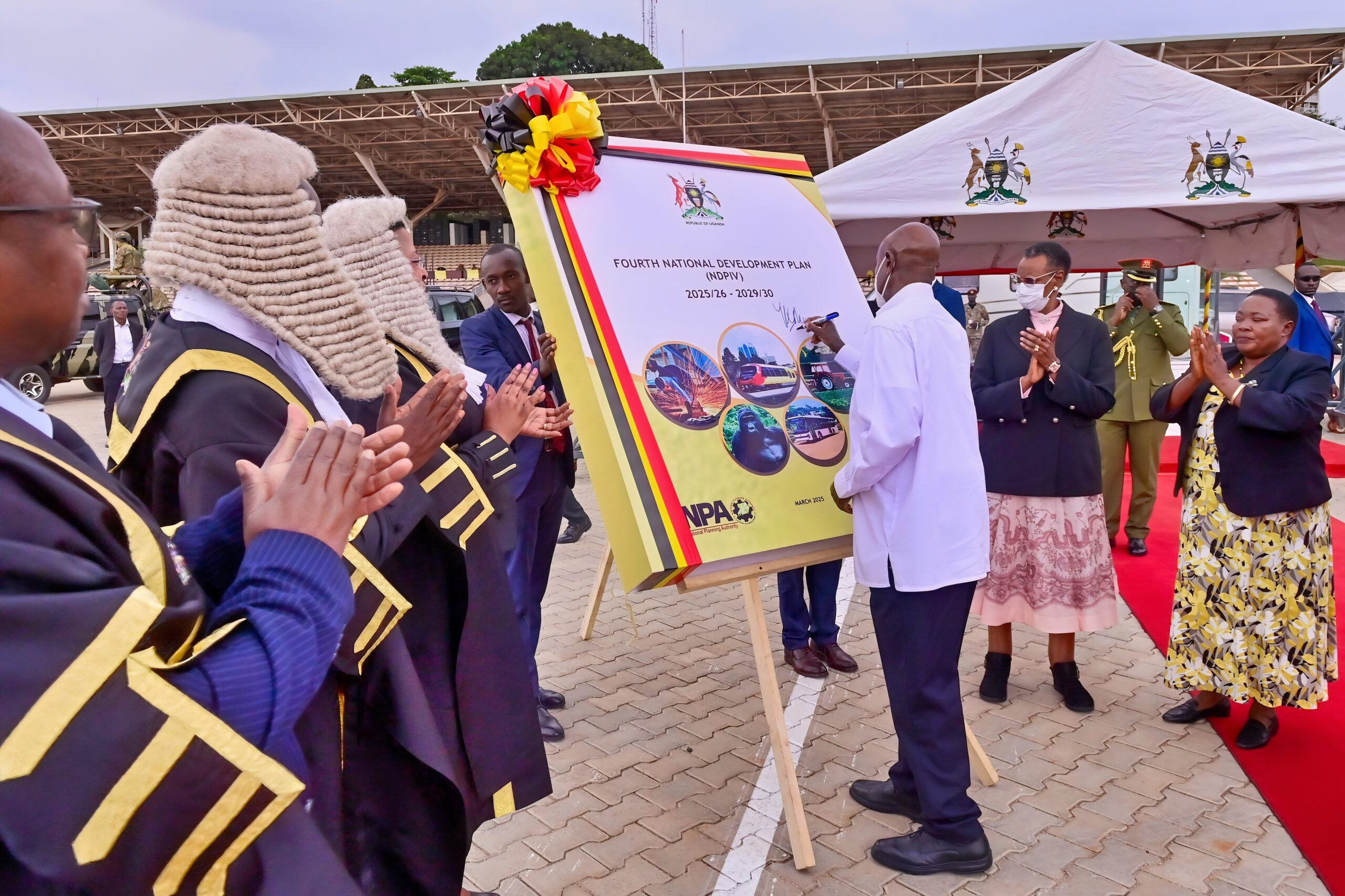
“Figures lie, and liars figure”—an adage that rings painfully true in Uganda’s economic governance. As the government rolls out its Fourth National Development Plan (NDPIV) 2025/26 – 2029/30, lofty promises of industrialisation, job creation, and poverty reduction abound. Yet beneath the glossy reports and optimistic rhetoric lies a troubling reality: systematic misinformation, statistical manipulation, and political theatrics designed to mask failures, entrench power, and mislead the public.
This critique dissects NDPIV through the lens of corruption, economic mismanagement, and the distortion of economic performance reports. It exposes how Uganda’s political class weaponises data to manufacture consent, evade accountability, and sustain an illusion of progress—while ordinary Ugandans bear the brunt of failed policies.
1. The Mirage of Economic Growth: Prosperity on Paper, Poverty in Practice
“You cannot fatten a cow by weighing it.” — This Ugandan adage recaptures perfectly, the illusion of economic growth peddled by the government. While official reports celebrate a robust 6-7% annual GDP growth, the lived reality for most Ugandans tells a different story—one of stagnant wages, vanishing jobs, and deepening inequality.
The Flawed Narrative of Growth
The government’s Quarterly and Annual Economic Performance Reports consistently trumpet “macroeconomic stability” and “steady expansion.” However, beneath these glossy headlines lies a troubling truth:
Growth is Debt-Fuelled: Much of Uganda’s GDP expansion is driven by reckless borrowing rather than genuine productivity. The public debt stock has ballooned to Shs 96 trillion (≈50% of GDP), with a significant portion wasted on white elephant projects (e.g., Karuma Dam’s endless delays, Uganda Airlines’ financial haemorrhage).
Agriculture—The Backbone of the Economy—Is Stagnating: While 70% of Ugandans depend on farming, the sector grows at a meagre 2-3%, far below the national average. Rising input costs, fake seeds, and lack of irrigation keep smallholder farmers trapped in poverty.
Services Sector Growth Benefits Only the Elite: The double-digit growth in finance, telecoms, and real estate primarily enriches urban-based corporations and politically connected individuals, not the average Ugandan.
The “Jobless Growth” Paradox
The World Bank and IMF have repeatedly warned that Uganda’s growth is “jobless”—meaning GDP rises, but employment opportunities do not. Consider:
Youth unemployment stands at 30%+ (independent surveys), yet official UBOS figures absurdly claim only 2-3% joblessness.
Informal sector workers (80% of the labour force) earn poverty wages, with no social protection.
Factory closures (e.g., Tororo Cement, sugar mills) due to high taxes, smuggling, and erratic power supply further shrink formal employment.
Statistical Manipulation: How the Government Distorts Reality
To sustain the “Uganda is rising” narrative, authorities employ several tactics:
Exclusion of the Informal Sector: By focusing only on formal businesses and tax-compliant firms, official statistics ignore the struggles of market vendors, boda-boda riders, and subsistence farmers—the true drivers of Uganda’s economy.
Inflated Public Spending Figures: The government claims “record investments in infrastructure,” yet Auditor General reports reveal shoddy roads, ghost projects, and billions stolen (e.g., Shs 50bn “lost” in 2023).
Selective Benchmarking: Comparisons with post-war economies (e.g., South Sudan, DRC) make Uganda’s growth seem impressive, while ignoring Kenya’s and Tanzania’s more inclusive progress.
The Human Cost of False Growth
While GDP numbers look good on paper, ordinary Ugandans face:
Soaring prices (food inflation hit 15% in 2023)
Collapsing small businesses (due to high taxes and expensive credit)
Massive youth disillusionment (leading to rising crime and migration)
Conclusion: Growth for Whom?
Uganda’s economic growth is a mirage—a carefully constructed illusion meant to legitimise the regime, attract foreign loans, and silence dissent. True development must be inclusive, job-creating, and corruption-free. Until then, the government’s 6-7% growth figures will remain nothing more than ink on paper—while Ugandans starve in silence.
2. Debt-Fuelled “Development”: Borrowing Our Way to Nowhere
“He who borrows sells his freedom.” — This timeless Ugandan proverb perfectly captures the peril of the government’s reckless borrowing spree, masked as “productive investment” in the Fourth National Development Plan (NDPIV). While officials claim these loans will transform Uganda into a middle-income economy, the mounting debt burden (Shs 96 trillion and counting) is instead financing white elephant projects, lining pockets, and mortgaging the future of ordinary Ugandans.
The False Promise of “Productive Investment”
The NDPIV proudly declares that “strategic borrowing will spur industrialisation and infrastructure development.” But where is the evidence?
White Elephants Swallowing Billions
Uganda Airlines (Shs 2.5 trillion and counting)
Claim: A “national pride” project to boost tourism and trade.
Reality:
Consistently loss-making (Shs 164bn loss in 2023 alone).
Outcompeted by regional carriers (Kenya Airways, Ethiopian Airlines).
Politically connected individuals benefit from procurement deals.
Karuma Hydro Dam (6+ years delayed, Shs 7 trillion cost)
Claim: A “game-changer” for Uganda’s energy needs.
Reality:
Endless delays due to corruption and shoddy work.
Ugandans still suffer load-shedding while billions vanish.
Entebbe Expressway (Shs 1.8 trillion)
Claim: To “ease traffic and boost trade.”
Reality:
Underused due to high toll fees (Shs 5,000 per trip—unaffordable for most).
Built with expensive Chinese loans (now squeezing the budget).
The Debt Trap Tightens
Debt-to-GDP nearing 50% (UBOS, 2024)—beyond IMF’s recommended threshold for low-income countries.
Eurobond repayments (Shs 4 trillion+ due by 2026) will slash education and health budgets.
China’s “debt diplomacy” means strategic assets (like Entebbe Airport) could be seized if Uganda defaults.
The Human Cost: Schools Without Teachers, Hospitals Without Drugs
While politicians splash billions on vanity projects, critical sectors starve for funding:
Education: 1,000+ schools lack teachers (2023 Education Ministry report), yet Shs 2.5 trillion goes to Uganda Airlines.
Healthcare: Hospitals lack drugs, doctors strike over unpaid salaries, yet Karuma Dam’s contractors get paid upfront.
Agriculture: No irrigation for 90% of farmers, yet Shs 1 trillion is borrowed for an underused expressway.
How the Government Spins the Narrative
Misleading Terminology:
“Productive investment” = Loans for projects that benefit elites, not the public.
“Infrastructure development” = Overpriced roads and dams with no real economic return.
Statistical Manipulation:
Counting debt as “GDP growth”—even when borrowed money is stolen or wasted.
Hiding contingent liabilities (e.g., PPP guarantees) to make debt look smaller.
Political Theatre:
Fancy launch ceremonies for half-finished projects (e.g., Ishaka-Kagamba Road).
Blaming “external factors” (COVID-19, Ukraine war) for failures, never corruption.
The Looming Crisis
By 2030, debt repayments could eat 40% of revenue (IMF, 2024).
More taxes will be imposed to service loans—hurting businesses and workers.
Future generations will inherit this burden—with fewer jobs and worse services.
Conclusion: A Pyramid Scheme of Debt
Uganda’s debt-fuelled “development” model is unsustainable, deceptive, and deeply unjust. True progress requires:
✔ Transparent, accountable borrowing—not secretive deals.
✔ Priority to human development (schools, hospitals) over vanity projects.
✔ An end to the lies—before the debt bomb explodes.
3. Corruption as a Systemic Feature: The Ugandan Disease That Won’t Be Cured
“When the rat laughs at the cat, there’s a hole nearby.” — This Ugandan adage perfectly captures the brazen nature of corruption in our country. The government’s “zero tolerance for corruption” mantra in the Fourth National Development Plan (NDPIV) rings hollow when Shs 10 trillion vanishes annually into the pockets of officials, yet not a single high-profile conviction is secured. Far from being an aberration, corruption is the system—a well-oiled machine that enriches the powerful while ordinary Ugandans suffer.
The Grand Illusion of “Zero Tolerance”
The NDPIV claims to prioritise “good governance and accountability,” but the reality is a well-choreographed theatre of anti-corruption pretence.

The Staggering Scale of Theft
Shs 10 trillion lost yearly (IGG reports)—enough to:
Double Uganda’s health budget (currently Shs 4.5 trillion).
Build 50,000 new classrooms (at Shs 200m each).
Provide clean water to 5 million rural Ugandans.
No Big Fish Caught: Despite thousands of corruption cases reported annually, convictions target only small fry—low-ranking officials, clerks, and ghost workers—while ministers, permanent secretaries, and politically connected businessmen walk free.
Notorious Scandals That Exposed the Lie
COVID-19 Funds Loot (2020-21)
Shs 900bn meant for masks, ventilators, and vaccines was stolen in broad daylight.
Senior ministers implicated—yet only junior accountants were arrested.
Some thieves were even promoted (e.g., one PS moved to a lucrative parastatal).
Parish Development Model (PDM) Scandal (2022-24)
Shs 1 trillion poverty alleviation fund turned into a slush fund for cadres.
Money diverted to ghost SACCOs, inflated prices of hoes and seeds.
Local officials arrested, but the architects (MPs, RDCs) untouched.
Uganda Airlines (Ongoing)
Shs 2.5 trillion spent, yet the airline loses Shs 164bn yearly.
Procurement scandals (e.g., overpriced spare parts, fake insurance).
No CEO or board member prosecuted.
Why Corruption Persists: The System Is Designed to Protect Thieves
Selective Prosecutions
IGG, DPP, and CID are underfunded and politicised.
High-profile cases “die silently” after media attention fades.
Weak Judiciary
Endless adjournments, missing files, and “negotiated justice.”
Judges intimidated or bribed in sensitive cases.
The “See No Evil” Parliament
MPs loudly condemn corruption—then quietly approve shady deals.
**Parliamentary probes end in “recommendations” that are never implemented.
The Untouchable Big Men
If you’re politically connected, you’re immune.
Example: A minister caught stealing Shs 20bn simply “stepped aside”—then returned to cabinet.
The Human Cost: Schools Without Books, Hospitals Without Drugs
While billions are stolen, ordinary Ugandans pay the price:
Children sit on floors in crumbling schools—while thieves build mansions in Kololo.
Patients sleep on hospital floors—while officials fly abroad for treatment.
Farmers get fake seeds—while agriculture ministry officials drive luxury cars.
The Way Forward: Real Solutions, Not Empty Slogans
Strengthen Independent Institutions
Give the IGG, DPP, and Judiciary real power and funding.
Protect whistleblowers (instead of persecuting them).
Public Asset Declarations That Mean Something
Publish all leaders’ wealth—before and after office.
Confiscate unexplained wealth (like Kenya’s Ethics Commission).
Citizen Action
Demand accountability at local levels (follow the PDM money).
Boyvote corrupt leaders (2026 is coming).
Conclusion: A Nation Held Hostage by Greed
Uganda’s corruption is not a “few bad apples” problem—it is a systemic feature of governance, designed to keep the powerful rich and the masses powerless. Until real consequences are imposed on thieves—not just rhetoric in development plans—this cancer will keep eating away at Uganda’s future.
What do you think? Is there any hope for fighting corruption in Uganda, or are we doomed to “see no evil, hear no evil” forever? Share your thoughts.
4. Statistical Manipulation in Economic Reports: The Art of Cooking Uganda’s Books
“A lying tongue hates those it crushes.” — This biblical proverb, well-known in Ugandan circles, perfectly captures the government’s relentless manipulation of economic data. While the Uganda Bureau of Statistics (UBOS) publishes glowing reports of “2-3% unemployment” and “7% GDP growth,” independent surveys reveal a grim reality of 30%+ youth joblessness and stagnant wages. This isn’t just a discrepancy—it’s a deliberate distortion to manufacture false success and shield policymakers from accountability.
How the Government Cooks the Books
1. Excluding the Informal Sector (Where Most Ugandans Work)
The Claim: UBOS reports “only” 2-3% unemployment, suggesting near-full employment.
The Trick: They ignore the informal sector, where:
80% of Ugandans work (street vendors, boda-bodas, market traders).
Jobs are unstable, untaxed, and unprotected (no pensions, no health insurance).
The Reality:
Independent surveys (Twaweza, World Bank) show 30%+ youth unemployment.
Underemployment is rampant—graduates selling airtime, engineers driving taxis.
2. Cherry-Picking Data to Inflate Growth
The Claim: “GDP growth at 6-7%—Uganda is booming!”
The Trick:
Focusing only on formal sectors (banking, telecoms) while ignoring agriculture (70% of the workforce, growing at just 2%).
Counting government spending (even stolen money) as “GDP growth.”
The Reality:
Most Ugandans feel no improvement—prices rise, wages stagnate.
Kenya & Tanzania’s growth is more inclusive (better jobs, less inequality).
3. Underreporting Inflation (Especially Food Prices)
The Claim: “Inflation under control at 5-6%.”
The Trick:
Underweighting food prices (which hit 15%+ in 2023).
Excluding volatile items (fuel, transport) to smooth numbers.
The Reality:
A plate of matooke costs 3x more than 5 years ago.
Families skip meals—yet UBOS says inflation is “moderate.”
4. Phantom Job Creation Figures
The Claim: “500,000 jobs created yearly under NDPIV.”
The Trick:
Counting temporary, unpaid “jobs” (e.g., PDM beneficiaries planting crops once).
Ignoring mass layoffs (factories closing, companies downsizing).
The Reality:
Uganda creates mostly survivalist jobs (kiosks, boda-bodas), not careers.
Youth desperation drives crime & migration (1,000+ leave daily for MENA jobs).
Why This Manipulation Matters
Bad Policies Based on Fake Data
If the government claims “unemployment is 2%,” it won’t prioritise job creation.
Result? More graduates on the streets, more crime, more unrest.
Investors & Donors Misled
Foreign investors think Uganda is stable—until they arrive and see struggling businesses.
Donors keep funding projects, not knowing money is stolen.
Public Trust Destroyed
When people see official stats contradict their lived reality, they stop believing anything.
This fuels apathy, anger, and support for radical alternatives.
The Way Forward: Demand Truth in Numbers
✔ Independent Audits of UBOS Data (by World Bank, academia).
✔ Include the Informal Sector in All Labour Reports.
✔ Whistleblower Protection for Statisticians Exposing Fraud.
Conclusion: A Nation Deceived Cannot Progress
Statistical manipulation isn’t just a technical issue—it’s a moral crime. When a mother sees UBOS claim “2% unemployment” while her son rots jobless at home, she knows the truth. When a trader hears “inflation is low” yet can’t afford beans, she knows the game.
Uganda deserves honest numbers—because only the truth can set us free.
5. Selective Omission of Key Indicators: The Government’s Shell Game with Uganda’s Economy
“When the moon is brightest, the stars disappear.” — This Ugandan adage illustrates perfectly how the government’s economic reports shine a spotlight on favourable indicators while keeping critical problems hidden in the shadows. Officials loudly proclaim “macroeconomic stability” in NDPIV reports, yet conveniently ignore the depreciating shilling, skyrocketing food prices, and other economic distress signals that affect ordinary Ugandans daily. This deliberate cherry-picking of data creates a false narrative of prosperity while millions struggle to survive.
The Art of Economic Distraction: What the Government Chooses to Ignore
1. The Collapsing Shilling: A Silent Crisis
The Omission: While NDPIV boasts of “stable exchange rates,” the Ugandan shilling has lost 30% of its value since 2020—one of the worst performances in East Africa.
Why It Matters:
Imports (fuel, medicine, machinery) become more expensive, pushing up prices.
Dollar-denominated debt repayments (Eurobonds, Chinese loans) balloon, squeezing the budget.
Businesses struggle—manufacturers can’t afford raw materials, traders face losses.
The Spin: The government blames “global factors” (e.g., US Fed rates, Ukraine war) but never admits its own mismanagement (excessive borrowing, low exports).
2. Soaring Food Prices: Inflation for the Poor, Silence from the State
The Omission: While official reports claim “headline inflation is under control,” they downplay food inflation, which hit 15%+ in 2023.
Why It Matters:
A kilogram of posho (maize flour) now costs Shs 3,500 (up from Shs 1,800 in 2020).
Families skip meals—children go to school hungry.
Urban poor and farmers suffer most—yet their pain is erased from economic reports.
The Spin: The government celebrates “GDP growth” while ignoring the fact that growth without food affordability is meaningless.
3. The Missing Jobs Crisis
The Omission: NDPIV claims “unemployment is only 2-3%,” but excludes underemployment (graduates driving boda-bodas, engineers selling airtime).
Why It Matters:
Youth desperation fuels crime, migration (1,000+ leave daily for exploitative jobs in the Middle East).
The informal sector (80% of workers) is invisible in official data.
The Spin: The government counts anyone who worked one hour a week as “employed,” masking the true crisis.
4. The Phantom “Stable Debt” Narrative
The Omission: While officials say “debt is manageable,” they omit:
Shs 96 trillion debt (50% of GDP).
Eurobond repayments (Shs 4 trillion by 2026) that will cut health and education budgets.
The risk of China seizing assets (like Entebbe Airport) if Uganda defaults.
Why It Matters:
Future generations will inherit this debt bomb.
Essential services (schools, hospitals) lose funding to repay loans.
The Spin: The government frames borrowing as “investment,” never admitting that most loans are stolen or wasted.
Why This Deception Works—And Who Benefits
Political Survival
By hiding economic pain, the government avoids blame for crises.
Example: When MPs complain about high prices, they’re told “but GDP is growing!”
Investor & Donor Confidence
Foreign partners see “stable macro indicators” and keep lending, unaware of the real suffering.
Example: The IMF praises Uganda’s “fiscal discipline” while teachers and doctors go unpaid.
Public Apathy
When people don’t see their struggles reflected in official reports, they feel powerless.
Result: Low voter turnout, distrust in institutions, and resignation to suffering.
The Way Forward: Demanding Full Transparency
✔ Independent Verification of Economic Data (by World Bank, academia, CSOs).
✔ Media & Civil Society Must Expose Hidden Realities (e.g., food inflation surveys).
✔ Citizens Must Challenge Official Narratives—ask: “If the economy is stable, why am I suffering?”
Conclusion: A Prosperity Built on Lies Cannot Last
The government’s selective omission of economic pain is not just misleading—it’s cruel. When a mother skips meals to feed her children, she isn’t concerned with “GDP growth.” When a trader loses profits to the falling shilling, he doesn’t believe “macroeconomic stability” tales.
Uganda’s true economy isn’t in spreadsheets—it’s in the struggles of its people. Until leaders stop hiding the truth and start addressing the problems, this house of cards will collapse.
6. Emotional Appeals & Political Propaganda: The Election Year Con Game
“A snake sheds its skin, but not its venom.” — This Ugandan proverb perfectly captures how the government repackages the same old political tricks as “development” ahead of elections. Under the guise of the Fourth National Development Plan (NDPIV), we now see “2026 Election Budgets”—sudden surges of road construction, hospital upgrades, and cash handouts in strategic swing districts, only for these projects to vanish like morning dew once the ballots are counted. This is not governance; it is political theatre at the expense of taxpayers.
How the Scheme Works: Development as a Campaign Tool
1. The Sudden Flurry of “Urgent” Projects
The Pattern: In 2025-2026, expect a wave of:
Road launches (especially in opposition-leaning areas like Greater Masaka, Busoga).
“Emergency” health centre upgrades (just in time for campaign photos).
Parish Development Model (PDM) cash splashes (conveniently timed for voter registration).
The Reality:
Many projects are half-done (e.g., graded but unpaved roads).
Contractors vanish after elections (e.g., Mubende-Kakumiro road abandoned in 2021).
Funds are diverted from long-term projects (like irrigation dams) to quick-visibility stunts.
2. The Emotional Messaging: “Your Leader Cares!”
The Script:
“We have heard your cries!” (After 5+ years of neglect).
“This road is a gift from the President!” (Funded by taxpayers, not his pocket).
“Only we can develop Uganda!” (While sabotaging local government autonomy).
The Psychology:
Creates a false sense of gratitude (voters feel “obliged” to reciprocate with votes).
Distracts from systemic failures (unemployment, corruption, debt).
3. The Abandonment Phase (Post-2026)
Classic Examples:
2016: “Operation Wealth Creation” inputs delivered pre-election, then nothing.
2021: “Emyooga” funds released months before voting—then the programme collapsed.
2024: PDM money suddenly flows after years of delays.
The Playbook:
Announce a “big project” with fanfare.
Release partial funds (enough for a groundbreaking ceremony).
Blame “contractor delays” or “budget shortfalls” post-election.
Why This Works—And Who Pays the Price
Short Memories, Desperate Hopes
Many voters, especially in rural areas, cling to the promise of change, even after repeated betrayals.
Fear of Retaliation
Some communities fear losing even these crumbs if they vote “wrong.”
The Opposition’s Weak Counter-Narrative
Failure to track and expose abandoned projects in real-time lets the regime get away with it.
The Bigger Picture: A Cycle of Exploitation
This is not just about roads or hospitals—it’s about keeping Ugandans trapped in a cycle of dependency and deception. Every election:
Hope is manufactured.
Resources are misused.
The poor get poorer.
The powerful get re-elected.
Breaking the Cycle: What Can Be Done?
✔ Citizen Tracking of Projects: Use social media (#2026FakeProjects) to document abandoned works.
✔ Demand Legal Consequences: MPs should pass a law mandating completion timelines for all state projects.
✔ Vote Wisely: Reject leaders who only show up at election time.
Conclusion: Fool Me Once, Shame on You—Fool Me Every 5 Years?
Ugandans are not fools, but the system is designed to make us feel powerless. The 2026 election will be another test—will we fall for the same tricks, or will we finally demand real, lasting development?
The choice is ours.
7. Fake “Poverty Reduction” Narratives: Statistical Prosperity in a Sea of Poverty
“A dry season stream may look shallow, but step in, and you’ll drown.” — This Ugandan adage warns against trusting surface appearances, much like the government’s deceptive poverty statistics. While the NDPIV triumphantly declares that poverty has fallen to 20%, with ambitions to reach 14% by 2030, the lived reality for millions of Ugandans—especially in rural areas—tells a very different story. This is not development; it is statistical manipulation designed to mask failure and sustain donor funding.
The Illusion of Progress: How Poverty Figures Are Massaged
1. The Flawed Measurement of Poverty
The Claim: UBOS reports “only” 20% of Ugandans live in poverty (down from 56% in 1992).
The Trick:
Using an outdated poverty line (Shs 3,300 per day ≈ $0.85) that doesn’t reflect real costs.
Ignoring regional disparities—poverty in Karamoja (70%) is masked by Kampala’s (8%) figures.
Counting temporary relief (e.g., PDM handouts) as “poverty reduction.”
The Reality:
World Bank (2024) finds rural poverty stagnant at 30%+.
Over 60% of Ugandans remain “vulnerable”—one shock away from destitution.
2. The Mirage of “Household Income” Improvements
The Spin: The government claims “incomes are rising” based on surveys.
The Truth:
Most “income growth” is in Kampala’s elite circles (finance, real estate).
Subsistence farmers (70% of the population) see no cash increase—just more debt.
Inflation (15%+ on food) erodes any meagre gains.
3. The Parish Development Model (PDM) Scam
The Promise: Shs 1 trillion to lift 39% of Ugandans out of poverty.
The Reality:
Delays, ghost SACCOs, and political gatekeeping—many never receive funds.
Those who get money often repay loans without escaping poverty.
No structural change—just debt-for-survival swaps.
The Human Toll: When Statistics Lie, People Suffer
While reports celebrate “poverty reduction,” the truth is visible in:
Children dropping out of school to work in stone quarries.
Families eating one meal a day (if lucky).
Rising rural-urban migration as people flee failed agriculture.
Why the Lies Persist
Donor Dependency
World Bank & IMF funding requires “progress” reports—so numbers are fudged.
Political Survival
Admitting poverty is worsening would be electoral suicide.
A Distracted Public
Without independent data literacy, many believe the headlines.
The Way Forward: Demanding Truth
✔ Use alternative metrics (e.g., malnutrition rates, school dropout figures).
✔ Expose PDM failures—track where the money really goes.
✔ Reject empty slogans—demand jobs, not handouts.
Conclusion: Prosperity on Paper, Misery in Practice
A government that lies about poverty cannot solve it. Until leaders stop manipulating data and start fixing systems, Uganda’s “development” will remain a cruel joke.
8. Phantom Industrialisation: The Mirage of Uganda’s Manufacturing Boom
“You cannot build a house on a foundation of sand.” — This timeless adage perfectly captures Uganda’s failing industrialisation agenda under the Fourth National Development Plan (NDPIV). While the government boldly promises 500,000 new manufacturing jobs, the reality is one of factory closures, crippling taxes, and rampant smuggling—leaving workers jobless and the economy weaker. This is not industrialisation; it is economic fiction designed to mask policy failures.
The Grand Illusion: NDPIV’s Job Creation Fantasy
1. The Broken Promise of Manufacturing Growth
The Claim: NDPIV projects 500,000 new factory jobs by 2030, transforming Uganda into an industrial hub.
The Reality:
Tororo Cement (Uganda’s largest cement plant) cut jobs due to high taxes and energy costs.
Sugar mills (e.g., Kakira, Lugazi) downsized as smuggled sugar floods the market.
Textile firms collapsed under competition from cheap secondhand clothes (mitumba).
2. Why Factories Are Closing Instead of Expanding
Tax Hikes & Unstable Policies:
Exorbitant electricity costs (Uganda’s industrial power is 3x more expensive than Ethiopia’s).
Sudden tax increases (e.g., 10% import duty on raw materials) kill local production.
Smuggling & Dumping:
Cheap Chinese goods (via porous borders) undercut Ugandan manufacturers.
Sugar, cement, and steel smuggled from Kenya & Tanzania evade taxes, destroying local industries.
Poor Infrastructure:
Bad roads delay shipments—Ugandan factories struggle to compete regionally.
No reliable railways—goods move slowly, raising costs.
3. The Human Cost: Job Losses & Desperation
Thousands of former factory workers now hustle in boda-bodas, street vending, or crime.
Youth migrate to Dubai & Saudi Arabia for exploitative jobs, abandoning hope in Uganda.
Industrial towns (Jinja, Tororo) are declining—once-thriving hubs now filled with closed factories.
The Government’s Deceptive Response
Instead of fixing the problems, officials:
Blame “global market forces”—never admitting policy failures.
Announce “new industrial parks” (like Mbale, Kapeeka) that sit half-empty.
Celebrate “investments” that never materialise (e.g., phantom steel factories).
The Bigger Picture: Who Benefits from This Charade?
Connected importers (who profit from smuggling instead of local production).
Politicians (who use “industrialisation” slogans to win elections).
Foreign competitors (who dump cheap goods while Uganda’s factories die).
A Way Forward: Real Industrialisation, Not Empty Promises
✔ Cut Energy Costs – Subsidise power for manufacturers.
✔ Crack Down on Smuggling – Strengthen border checks, punish corrupt officials.
✔ Stable Tax Policies – Stop sudden hikes that kill businesses.
✔ Invest in Skills – Train workers for real industrial jobs, not just survival hustles.
Conclusion: Uganda’s Industrial Dream Is a Nightmare for Workers
A country that closes factories cannot create jobs. Until leaders stop lying about industrialisation and start fixing the real problems, NDPIV’s 500,000 jobs promise will remain a cruel joke.
9. The Myth of “Digital Transformation”: Uganda’s Broken Tech Promises
“A frog in water does not know the pot is boiling until it’s too late.” — This Ugandan adage perfectly captures how the government’s much-touted “digital transformation” under NDPIV is failing citizens while they remain unaware of being left behind. While officials boast of ICT-driven growth, the reality is one of internet shutdowns, exorbitant data costs, and digital exclusion—making Uganda’s tech dreams a cruel illusion for ordinary citizens.

The Grand Illusion: NDPIV’s Digital Mirage
1. The Broken Promise of Affordable Internet
The Claim: NDPIV promises “universal digital access” to drive innovation.
The Reality:
Uganda has the most expensive mobile data in East Africa (World Bank, 2024).
1 GB costs ~Shs 5,000—unaffordable for most, where 60% live on less than Shs 10,000/day.
Rural areas remain offline—only 28% of Ugandans have meaningful internet access (UCC, 2023).
2. Internet Shutdowns: Digital Authoritarianism
Election Blackouts:
2021: Govt shut down the internet for 5 days during elections.
2026: Expect another shutdown to suppress dissent.
Social Media Taxes (Still in Effect):
OTT tax (Shs 200/day) cripples free speech—forces poor Ugandans offline.
3. Failed Tech Hubs & Innovation Theatrics
The Claim: “Uganda is becoming a Silicon Valley of Africa!”
The Reality:
Most tech hubs (e.g., TechBuzz, Outbox) struggle with no govt support.
Startups flee to Kenya & Rwanda due to high taxes, poor infrastructure.
National ID system failures—millions still can’t access digital services.
Why Digital Exclusion Matters
Students fail—can’t afford online learning.
Businesses suffer—no e-commerce for small traders.
Jobs vanish—youth skilled in tech leave for countries with real digital economies.
The Government’s Double Game
Talks “digital economy” but stifles it with shutdowns & taxes.
Invests in surveillance tech (CCTV, AI monitoring) not public internet.
Celebrates “mobile money growth” while ignoring rural exclusion.
A Way Forward: Real Digital Freedom
✔ Scrap OTT & data taxes—let Ugandans afford the internet.
✔ Stop internet shutdowns—digital rights are human rights.
✔ Fund rural broadband—not just Kampala’s elites.
Conclusion: A Digital Uganda—For the Few, Not the Many
A country that shuts down the internet cannot claim digital progress. Until leaders stop lying about transformation and start enabling real access, NDPIV’s tech dreams will remain a privilege for the powerful.
10. The Agriculture Betrayal: When Empty Promises Wither Like Crops in Drought
“You cannot milk a bull” – this Ugandan adage perfectly captures the futility of expecting agricultural transformation from empty government promises. While the NDPIV trumpets agro-industrialisation as a national priority, the reality on the ground reveals a systematic betrayal of Uganda’s farmers through neglected irrigation, rampant seed scams, and deliberately delayed funding.
The Grand Deception of Agro-Industrialisation
1. Irrigation: A Pipe Dream for Most Farmers
The Promise: NDPIV pledges to modernise agriculture through irrigation schemes
The Reality:
Less than 10% of Ugandan farmers have access to irrigation (UBOS 2024)
Dams and valley tanks exist only on paper in most districts
Drought-prone regions like Karamoja remain completely neglected
2. The Fake Seeds Scandal (2023) – Institutionalised Theft
The Promise: Government would eliminate counterfeit agricultural inputs
The Reality:
Shs 60 billion fake seeds scandal exposed in 2023
Connected officials protected while farmers lost entire seasons
No meaningful compensation for affected families
3. Parish Development Model (PDM): A Cruel Joke
The Promise: Shs 100 million per parish to transform subsistence farming
The Reality:
Funds arrive 2-3 planting seasons late (when they arrive at all)
Local politicians hijack disbursements for patronage
Recipients forced to pay kickbacks to access the funds
The Human Cost of Agricultural Neglect
Food insecurity rising despite Uganda’s fertile land
Youth fleeing villages after repeated harvest failures
Smallholder farmers trapped in debt cycles from buying fake inputs
Why This Betrayal Persists
Agriculture is more valuable as a political tool than an economic sector
Corruption in input distribution is too lucrative to stop
Keeping farmers poor and dependent makes them easier to manipulate
A Path to Redemption
✔ Immediate irrigation rollout, starting with drought-hit regions
✔ Jail time for fake seed dealers, including their political protectors
✔ Direct cash transfers to farmers, bypassing corrupt local structures
Conclusion: From Breadbasket to Basket Case
Uganda’s agricultural potential is being deliberately squandered to maintain political control. As another planting season begins, farmers face the same empty promises, fake inputs and broken systems. Until we treat agricultural theft as treason against the nation, this betrayal will continue.
11. Health & Education: Broken Promises Where They Hurt Most
“A child who is not embraced by the village will burn it down to feel its warmth.” – This African proverb, deeply relevant to Uganda’s current crisis, perfectly captures the consequences of neglecting society’s fundamental pillars. While the NDPIV proudly promises “universal healthcare and free education for all,” the crumbling infrastructure, perpetual strikes, and systemic corruption tell a very different story – one of deliberate neglect and broken social contracts.
The Grand Illusion of Social Services
1. Universal Healthcare: A Sick Joke
The Promise: Quality healthcare accessible to all citizens
The Reality:
Doctors and nurses perpetually on strike over unpaid salaries (2023 strike lasted 3 months)
Hospitals without drugs – patients must buy everything from gauze to gloves
Maternal mortality rates stagnant at 336 deaths per 100,000 births (UBOS 2024)
2. Free Education: Ghosts in the Classroom
The Promise: Universal Primary/Secondary Education (UPE/USE) for all
The Reality:
Ghost schools receiving funds for non-existent students (Auditor General 2023 report)
80 pupils per teacher in many UPE schools (Education Ministry data)
Parents still pay “voluntary fees” as schools struggle without real funding
The Anatomy of the Deception
Budgetary Shell Games:
Health allocation (Shs 4.5 trillion) sounds impressive until you realize:
60% goes to administration, not medicines or salaries
Per capita spending = $12/year (WHO recommends $86)
The Ghost School Economy:
Headteachers forced to inflate numbers to meet unrealistic targets
Officials pocket difference between reported and actual students
Strike Cycle Mismanagement:
Salaries delayed for months despite available funds
Emergency “strike-breaking” payments that don’t solve systemic issues
The Human Tragedy Behind the Statistics
Pregnant mothers dying in hospital corridors
Children learning under trees while officials drive luxury cars
Graduate doctors fleeing abroad (500+ left in 2023 alone)
Why This Betrayal Continues
Political Calculus: Social services aren’t flashy like roads
Corruption Opportunities: More complex systems = more theft avenues
Deliberate Dependence: Keeping citizens desperate makes them easier to control
Prescriptions for Change
✔ Ring-fence health/education budgets from political interference
✔ Community monitoring systems for school/hospital funds
✔ Performance-based funding tied to actual service delivery
Conclusion: A Nation Cannibalizing Its Future
Every day these broken promises persist, Uganda loses another doctor to abroad, another child to illiteracy, another mother to preventable death. The NDPIV’s fine words won’t heal the sick or teach the children – only real money, real accountability, and real political will, can do that.

12. The Elite Capture of NDPIV: When Development Becomes a Family Business
“The lizard that eats from every pot will eventually fall into one.” – This Ugandan adage perfectly captures the greed and impending downfall of those who have turned national development into personal enrichment schemes. While the NDPIV presents itself as Uganda’s roadmap to prosperity, a closer examination reveals an alarming pattern of elite capture, where lucrative contracts and development funds consistently flow to companies owned by or connected to the ruling regime’s inner circle.
The Anatomy of Elite Capture in NDPIV Projects
1. The Usual Suspects: Regime-Connected Firms
Energo Projects Ltd: Awarded multiple power sector contracts despite a poor track record
Dott Services Ltd: Receives billions in road contracts while delivering substandard work
Uganda Airlines: Managed as a patronage vehicle rather than a commercial enterprise
2. The Contract Award Playbook
Single-Sourcing: Bypassing competitive bidding for “emergency” projects
Specification Tweaking: Tailoring tender requirements to favour connected firms
Project Inflation: Approving budgets with 40-60% kickback margins built in
3. The Financial Mechanics
Over-invoicing: Charging $10,000 for $2,000 worth of materials
Milestone Fraud: Getting paid for 80% completion on 30% done projects
Subcontracting Scams: Front companies farming work to Chinese firms
The Human Cost of Crony Capitalism
Substandard Infrastructure
Roads that wash away after one rainy season
Hospitals without proper equipment despite inflated budgets
Stolen Opportunities
Local contractors frozen out of meaningful work
Qualified Ugandan professionals replaced by foreign workers
Economic Distortion
Artificial monopolies in key sectors
Market prices inflated by cartel behaviour
The Web of Connections
| Company | Political Connection | Notorious Project |
|---|---|---|
| Energo Projects | Military-linked shareholders | Karuma Dam delays |
| Dott Services | Family ties to cabinet ministers | Hoima Road scandals |
| Uganda Airlines | Presidential appointees on board | $400m loss in 3 years |
Why This Persists
Weak Oversight Institutions
PPDA (Public Procurement) intimidated into compliance
Parliament deliberately underfunds oversight committees
Legal Impunity
No major corruption case successfully prosecuted
Whistleblowers harassed or jailed
Economic Coercion
Banks afraid to blacklist connected firms
Media pressured not to investigate
Breaking the Cycle
✔ Mandatory public beneficial ownership registers
✔ Citizen-led contract monitoring networks
✔ International sanctions on corrupt firms
Conclusion: A Republic of Favours
Uganda’s development plan has been hijacked by a cabal of well-connected predators who treat national resources as personal piggy banks. Until we name and shame these cartels, dismantle their networks, and reclaim our development agenda, the NDPIV will remain what it currently is – a blueprint for elite enrichment disguised as national planning.
13. Media & Civil Society Crackdowns: Silencing the Truth-Tellers
“When the drummers are arrested, the dancers should know they’re next.” — This Ugandan adage perfectly captures the dangerous precedent set by the government’s systematic crackdown on journalists and activists who dare to expose NDPIV’s failures. Under the guise of maintaining “national stability,” the regime has weaponized legislation, intimidation, and brute force to muzzle dissent, bury accountability, and create an illusion of progress where none exists.
The Systematic Strangulation of Dissent
1. Legal Persecution: Laws Designed to Silence
The Anti-NGO Bill (2023):
Bans “unauthorized research” on government projects (effectively criminalizing oversight of NDPIV).
Freezes accounts of critical organizations under vague “national security” pretexts.
Example: Chapter Four Uganda, a legal aid NGO, was raided, and its directors arrested for documenting police brutality.
The Computer Misuse Act (Amended):
Punishes “offensive communication”—used to jail journalists for social media posts.
Example: Canary Mugume (CBS journalist) arrested for exposing NDPIV budget discrepancies.
2. Physical Intimidation & Violence
Journalists assaulted while covering protests against failed NDPIV projects.
Example: Gertrude Uwitware (NBS reporter) beaten by police while investigating a ghost irrigation scheme in Luwero.
Activists “disappeared” after exposing corruption.
Example: Samuel Ssekiziyivu (anti-corruption campaigner) abducted in 2023 after revealing PMA fertilizer scams.
3. Economic Sabotage of Independent Media
Withholding advertising revenue: Govt agencies only buy ads in pro-regime outlets.
Tax harassment: URA targets critical media houses with audits and fines.
Example: The Observer newspaper nearly bankrupted by sudden tax penalties.
Why This Crackdown Matters
NDPIV Failures Go Unchecked
No scrutiny → more corruption, more wasted funds.
Example: The Shs 500bn irrigation scam was exposed by Daily Monitor, not government auditors.
Public Left in the Dark
Citizens can’t make informed decisions about policies affecting them.
Example: Parents unaware that UPE funds are stolen because journalists can’t report freely.
International Reputation in Tatters
Uganda now ranked 125/180 in Press Freedom Index (RSF, 2024).
Donors cut funding over human rights abuses.
The Regime’s Playbook: How They Justify Repression
“Fake News” Narrative
Any criticism = “foreign-funded lies to destabilize Uganda.”
“National Security” Excuse
Investigative journalism = “economic sabotage.”
“Morality” Smokescreen
LGBT+ activists targeted to distract from graft scandals.
Fighting Back: What Can Be Done?
✔ International Pressure:
Magnitsky sanctions on officials who jail journalists.
Conditional aid tied to media freedom.
✔ Citizen Journalism:
Encrypted apps to safely share leaks.
#KeepItUgandan – viral campaigns to support independent media.
✔ Legal Resistance:
Constitutional challenges to Draconian laws.
Pro bono lawyers for arrested activists.
Conclusion: A Nation That Silences Critics Dooms Itself
A development plan that fears scrutiny is a plan built on lies. Until Uganda stops treating truth-tellers as enemies of the state, NDPIV will remain a hollow document—full of promises for the powerful, empty of progress for the people.
14. False “Stability” Narratives: The Illusion of Peace While Guns Outnumber Textbooks
“A quiet graveyard is not the same as a peaceful village.” — This Ugandan proverb exposes the dangerous fiction behind the government’s claims of stability. While officials boast that Uganda is “peaceful and investor-friendly,” the Shs 7 trillion military budget (exceeding combined health and education spending) tells the true story: this is not stability, but a militarised state masquerading as a democracy, where security forces exist more to protect the regime than its citizens.

The Facade of Stability vs. The Reality
1. The Distorted Spending Priorities
| Sector | Annual Budget (2024/25) | Consequence of Underfunding |
|---|---|---|
| Military | Shs 7 trillion | More guns than doctors |
| Health | Shs 4.5 trillion | Hospitals without drugs |
| Education | Shs 3.8 trillion | Schools without teachers |
The Lie: “Security enables development.”
The Truth: Soldiers can’t teach children or cure malaria.
2. The “Investor-Friendly” Mirage
Claim: Uganda is “safe for business.”
Reality:
Opposition rallies banned (e.g., 2023 Opposition protests blocked).
Journalists documenting corruption arrested (e.g., Canary Mugume detained over budget exposé).
Arbitrary asset seizures (e.g., MTN Uganda tax harassment).
3. The Hidden Unrest
Northern Uganda: Cattle rustling and armed gangs (despite Shs 500bn for “pacification”).
Kasese: Military raids on Rwenzururu Kingdom (2016 massacre never investigated).
Karamoja: Disarmament operations that fuel more violence.
Why This Narrative Persists
To Attract Foreign Investors
Tourism ads show gorillas, not soldiers—but investors notice when activists disappear.
To Justify Authoritarianism
Every critic = “a threat to stability.”
To Hide Failed Governance
More money for spies than scientists means no real progress.
The Consequences of Militarised “Stability”
Brain drain: Doctors and engineers flee repression.
Economic stagnation: No factory thrives under surveillance.
Generational trauma: Youth grow up fearing soldiers, not trusting government.
The Way Forward
✔ Shift budgets: From bullets to books, from barracks to hospitals.
✔ Demilitarise politics: Let MPs debate security spending, not just rubber-stamp it.
✔ Independent oversight: Audit all “classified” military expenditures.
Conclusion: A Nation Cannot Eat Guns
True stability comes from educated children, healthy families, and accountable leaders—not just more checkpoints and CCTV cameras. Until Uganda stops confusing militarisation with peace, NDPIV’s promises will remain ink on paper, written in the blood of neglected citizens.
15. The Debt Trap Ahead: How Uganda is Mortgaging Its Future
“A man who borrows from a leopard will pay with his skin.” — This Ugandan adage perfectly captures the perilous path of reckless borrowing under NDPIV. While the government claims debt is being used for “development,” the IMF projects that by 2030, debt servicing could consume 40% of Uganda’s revenue—a catastrophic scenario that will strangle public services and trap future generations in economic servitude.
The Anatomy of Uganda’s Debt Crisis
1. The Borrowing Binge
Current Debt Stock: Shs 96 trillion (≈50% of GDP)
Biggest Creditors:
China (Infrastructure loans): Entebbe Expressway, Karuma Dam
Eurobonds (Commercial debt): $1.2bn in 2024, with 8% interest
World Bank/IMF (Policy loans): Tied to austerity measures
2. The Coming Debt Squeeze (IMF Projections)
| Year | Debt Servicing (% of Revenue) | Consequences |
|---|---|---|
| 2025 | 25% | Health & education cuts begin |
| 2028 | 34% | Tax hikes, wage freezes |
| 2030 | 40%+ | Potential default risk |
Debt servicing will soon overtake combined spending on health + education.
New loans will only refinance old ones—a classic debt treadmill.
3. Who Benefits? The Debt Cartel
Contractors: Overpriced projects (e.g., Karuma Dam’s Shs 7 trillion cost)
Middlemen: Commission agents on Eurobond deals
Banks: Profiting from high-interest loans
The Human Cost of Debt Slavery
School fees will rise as education budgets shrink.
Hospitals will decay while we repay Chinese banks.
Taxes will crush businesses to service Eurobonds.
The Government’s Dangerous Denial
Claim: “Debt is sustainable, GDP growth will cover it.”
Reality:
Most loans fund non-revenue projects (roads don’t generate dollars).
Uganda’s exports are stagnant (still reliant on unprocessed coffee).
Currency depreciation makes dollar debts harder to repay.
Escaping the Trap: What Must Be Done?
✔ Debt Audit: Publish all hidden loan clauses (especially China’s collateral deals).
✔ Priority Shift: Freeze non-essential borrowing (no more vanity projects).
✔ Citizen Action: Demand parliamentary approval for all new loans.
Conclusion: A Nation Sold Piece by Piece
Uganda isn’t developing—it’s being auctioned to the highest bidder. If borrowing continues unchecked, our children will inherit a country owned by foreign creditors, where taxes exist only to repay loans, not build hospitals.
16. The Illusion of “Middle-Income Status”: Chasing a Mirage While Poverty Deepens
“You cannot climb a tree by starting at the top.” — This Ugandan adage perfectly captures the absurdity of the government’s persistent claims that Uganda will achieve middle-income status by 2040. With per capita income stagnant at $900 (World Bank, 2024)—half of Kenya’s and 40% below Tanzania’s—this promise has become a cruel joke played on a population where 80% survive on less than $3 a day.

The Grand Delusion of Middle-Income Dreams
1. The Numbers Don’t Lie (But the Government Does)
| Country | GDP Per Capita (2024) | Annual Growth Rate |
|---|---|---|
| Uganda | $900 | 1.2% |
| Kenya | $1,980 | 3.8% |
| Tanzania | $1,500 | 4.1% |
At current rates, Uganda won’t reach $1,046 (current lower-middle-income threshold) until 2070—not 2040.
Even Rwanda ($1,070) crossed the line first, despite starting poorer post-genocide.
2. Why the Stagnation?
Agriculture (70% of workforce) grows at just 2% yearly—no value addition.
Manufacturing stuck at 8% of GDP (compared to Kenya’s 16%).
Debt drains resources—Shs 4 trillion yearly to service loans instead of investing in industry.
3. The Human Face of Failed Aspirations
Graduates earning Shs 200,000/month (below poverty line).
Families spending 60% of income on food alone.
Rural women walking 5km daily for water in a “middle-income aspirant” nation.
The Government’s Deceptive Tactics
Redefining Poverty: Claiming “only 20% are poor” by using unrealistic thresholds.
Celebrating GDP While Ignoring Inequality: Top 1% capture 40% of growth.
Blame-Shifting: “Global factors” instead of admitting policy failures.
The Harsh Reality Check
No country has ever industrialised with Uganda’s level of:
Corruption (Shs 10 trillion stolen yearly).
Education neglect (60% primary school dropout rate).
Infrastructure decay (only 20% of roads are paved).
A Path to Genuine Progress
✔ Stop the Lies: Admit we’re off-track by decades.
✔ Fix Agriculture: Irrigation, not slogans.
✔ Tax the Rich: Why does a teacher pay more tax than a gold exporter?
Conclusion: A Dream Built on Hot Air
Middle-income status requires factories, not fantasies; schools, not slogans; honesty, not hype. Until leaders replace propaganda with real reforms, this “2040 vision” will remain what it always was—a distraction from failure.
17. The Ghost of Accountability: When Reports Gather Dust While Billions Vanish
“A thief who steals in front of a blind man still fears the ears that heard him.” — This Ugandan proverb perfectly captures the absurdity of Uganda’s accountability farce, where the Auditor General’s reports meticulously document Shs 50 billion “lost” in 2023 alone, only for these findings to be ignored, buried, or met with theatrical “investigations” that lead nowhere.
The Anatomy of Uganda’s Accountability Theatre
1. The Auditor General’s Annual Ritual
Meticulous Documentation: Each year, the AG’s report reveals:
Ghost workers (Shs 120bn paid to non-existent staff since 2020)
Inflated contracts (Shs 280bn in 2023, including Shs 5bn for “air supply” in Moroto)
Unaccounted COVID-19 funds (Shs 900bn scandal, zero convictions)
The Government’s Response:
Press conferences condemning “irregularities” (without naming culprits)
Parliamentary “probes” that die quietly (e.g., 2023 PDM investigation)
Selective scapegoating (arresting accountants while ministers keep their jobs)
2. The Lifecycle of a Typical Scandal
Exposure: AG/Whistleblower reveals theft (e.g., Shs 50bn stolen from road funds)
Outrage: Public demands action for 2-3 news cycles
Distraction: New scandal emerges (e.g., fake seeds, Eurobond mystery)
Amnesia: No prosecutions, no recoveries, budget repeats same loopholes
3. Why Impunity Thrives
The “See No Evil” Parliament:
MPs loudly demand accountability… until their own scandals surface
Example: 2023 debate on AG report adjourned prematurely after Shs 10bn “service award” to MPs was exposed
The Judiciary’s Black Hole:
High-profile cases “stuck in investigations” forever (e.g., NSSF Temangalo, 15 years and counting)
Magistrates bribed or transferred when cases get too hot
The Media’s Amnesia:
Front-page headlines today, forgotten tomorrow
Example: Daily Monitor’s 2022 exposé on NRA veterans’ funds theft—no follow-up
The Human Cost of Unchecked Theft
Every Shs 1bn stolen =
5,000 families without clean water for a year
200 classrooms never built
10,000 malaria doses unfunded
Breaking the Cycle: What Would Real Accountability Look Like?
✔ Automatic Prosecutions: AG findings → Direct DPP indictments (no “further investigations”)
✔ Naming & Shaming: Publish lists of all officials implicated (even if untouchable)
✔ Citizen Oversight: Community audits of local projects (#WhereIsOurMoney campaigns)
Conclusion: A Nation That Tolerates Theft Condemns Itself to Poverty
Uganda’s accountability system isn’t broken—it’s working exactly as designed: to create the illusion of oversight while protecting thieves. Until we stop applauding reports and start demanding handcuffs, the AG’s office will remain what it is today: a very expensive ghost-hunting unit.
18. The Political Economy of Lies: Manufacturing Ignorance to Maintain Power
“When the shepherd hides the salt, the goats will never know their true strength.” — This Ugandan adage reveals the brutal logic behind the regime’s misinformation machine. The NDPIV’s grand illusions persist because a deliberately misinformed public cannot effectively demand accountability. This is not accidental—it is a calculated strategy to keep citizens confused, divided, and powerless while elites loot with impunity.
How the System Manufactures Ignorance
1. Controlling the Information Ecosystem
State Media Monopoly: UBC, New Vision, and Bukedde parrot uncritical “success stories” while downplaying failures.
Censorship & Intimidation:
Journalists arrested for investigating corruption (e.g., Canary Mugume’s 2023 detention)
Social media taxes (OTT) designed to price the poor out of digital discourse
Flooding the Zone with Noise:
Endless “achievement” ceremonies to distract from audit reports
Fake “grassroots” supporters dominating talk shows
2. Weaponizing Economic Illiteracy
Complexity as a Shield:
“Debt-to-GDP ratios” and “macroeconomic indicators” used to confuse ordinary citizens about their suffering
Example: When inflation hits, they blame “global trends”—never money printed for elections
False Comparisons:
“We’re doing better than South Sudan!” (while ignoring Kenya/Tanzania’s progress)
3. The Poverty of Expectations
Decades of broken promises have trained Ugandans to expect nothing:
“At least we have peace” (while soldiers outnumber doctors)
“Others steal more” (normalizing petty corruption)
Why This Works So Well
Fragmented Opposition:
The urban poor blame politicians, not systems
Rural voters prioritize survival over scrutiny
Patronage Over Policy:
A bag of posho during campaigns buys more loyalty than 5 years of service delivery
Generational Amnesia:
Youth with no memory of functional systems accept dysfunction as normal
The Devastating Consequences
A Budget Process Without Citizens:
Shs 72 trillion spent yearly, yet 80% can’t name their MP’s role in oversight
Corruption as Folklore:
Scandals become “stories for bars” rather than catalysts for action
Brain Drain Accelerates:
The informed flee (doctors, engineers, journalists), leaving behind a docile majority
Breaking the Spell
✔ Parallel Fact-Checking Networks:
Community radio decode of budget speeches
WhatsApp groups sharing leaked audit reports
✔ Education as Resistance:
Teach financial literacy alongside civic rights
✔ Artistic Subversion:
Music, murals, and theatre exposing lies
Conclusion: The Biggest Lie Is That We Are Powerless
The regime survives not because its lies are convincing, but because we’ve been conditioned to distrust our own experiences. When a trader sees taxes rise but roads decay, she knows the truth—she just needs to remember her voice matters.
19. Alternative Perspectives: The Government’s Hollow Defences
“You cannot fill a basket with water and claim it holds fish.” — This Ugandan adage exposes perfectly the emptiness exposes’s standard rebuttals when confronted with NDPIV’s failures. Officials dismiss criticism with rehearsed talking points: “Infrastructure takes time” and “The growth numbers are real.” But where, then, are the jobs? Why does inequality keep rising?

Dissecting the Government’s Defences
1. “Infrastructure Takes Time”
The Claim: “You can’t expect roads, dams, and factories to be built overnight!”
The Reality:
Delays are systemic, not incidental:
Karuma Dam (9+ years, Shs 7 trillion) still not fully operational
Museveni’s 2016 “factories in every district” promise – less than 10% delivered
Corruption, not time, is the bottleneck:
Shs 50bn “lost” in road funds annually (Auditor General reports)
Chinese contractors abandon sites after partial payments
2. “The Growth Numbers Are Real”
The Claim: “Look at the GDP figures—Uganda is growing!”
The Reality:
Jobless growth:
6% GDP growth vs. 30% youth unemployment (World Bank, 2024)
80% of new “jobs” are in the informal sector (survival hustles, not careers)
Growth for whom?
Top 1% captured 40% of wealth gains (UBOS inequality reports)
Kampala elites thrive, rural farmers stagnate
3. “You’re Ignoring Our Achievements!”
The Claim: “We built roads, expanded electricity—what more do you want?”
The Rebuttal:
Roads to nowhere:
Isimba Dam built, but the factories it should power don’t exist
Entebbe Expressway (Shs 1.8 trillion) used mostly by the rich
Electricity without industry:
Only 20% of Ugandans connected to the grid
Factories closing due to high-power tariffs
The Five Questions the Government Can’t Answer
If growth is real, why are 80% of Ugandans still in precarious work?
Why do debt and inflation keep rising alongside GDP?
Where are the skilled jobs promised by industrialisation?
Why has poverty remained stagnant in rural areas for a decade?
If infrastructure is progressing, why do hospitals still lack drugs?
Why These Defences Persist
A strategy of deflection: Shift debate from outcomes to intentions
False comparisons: “We’re better than 1986!” (ignoring 2024 global standards)
Patronage politics: Loyalists rewarded for repeating talking points
The Way Forward: Demanding Answers, Not Excuses
✔ **Shift the debate from “growth” to shared prosperity
✔ Use government data against them (e.g., UBOS reports on inequality)
✔ Amplify lived experiences (workers, farmers, small business owners)
Conclusion: A Developed Uganda Must Be More Than PowerPoint Slides
Real development isn’t measured in kilometres of tarmac or GDP charts, but in dignified work, fair wages, and functioning public services. Until the government stops hiding behind hollow defences and starts delivering for ordinary Ugandans, NDPIV will remain a PR exercise, not a transformation plan.
20. What Must Be Done? Reclaiming Uganda’s Future Through Collective Action
“A single stick may break, but a bundle stands firm.” — This Ugandan proverb speaks to the power of unified action needed to salvage our nation from the clutches of corruption and mismanagement. While NDPIV’s failures are glaring, real change demands more than outrage—it requires structured, sustained pressure across all sectors of society.
A Three-Pronged Framework for Transformation
1. Institutional Reforms: Building Systems That Work
✔ Transparent Budgets in Real-Time
Demand: Live tracking portals for all government expenditures (like Kenya’s M-Sanii system)
Example: Follow the Shs 50bn – Why did Moroto District “spend” billions on nonexistent roads?
✔ Independent Audits With Teeth
Demand: Private audit firms to verify AG reports (bypass compromised state auditors)
Model: Botswana’s Corruption Court that jailed 3 ministers in 2023
✔ Specialised Anti-Corruption Courts
Demand: Fast-track trials for grand corruption (6-month case deadlines)
Precedent: Uganda’s own Anti-Corruption Court exists—but needs real cases, not just petty thieves
2. Citizen Empowerment: From Apathy to Accountability
✔ Public Vigilance Networks
Action: Community budget monitors in every sub-county (train 5,000 volunteers by 2025)
Tool: #MyMoneyMyHealth campaign tracking health centre funds via USSD codes
✔ Data Literacy Crusade
Action: Simplified budget explainers on radio, WhatsApp (translate “GDP growth” to “Your daily meal costs”)
Model: Twaweza’s Uwezo assessments showing only 3/10 P.7 pupils can read
✔ Civic Mobilisation 2.0
Action: Boycott → Build → Boycott
Boycott: Non-payment of unfair taxes (like OTT) until services improve
Build: Parallel systems (community schools, health co-ops)
Boycott: Vote out underperforming leaders (2026 scorecards on MPs)
3. Elite Accountability: Breaking the Culture of Impunity
✔ Name, Shame & Isolate
Action: Publish “Top 100 Looters” list annually (like Malawi’s Cashgate exposés)
Leverage: Global Magnitsky sanctions on officials’ foreign assets
✔ Professional Class Revolt
Action: Doctors, engineers, bankers refuse to enable corruption
Example: Accountants blowing whistles on fake vouchers
Why This Time Must Be Different
Past efforts failed because:
Protests were sporadic (one-day marches change nothing)
Demands were vague (“End corruption!” vs. “Audit PDM in 90 days”)
The Middle class stayed silent (until their children lacked jobs)
A 12-Month Roadmap for Change
| Quarter | Focus | Milestone |
|---|---|---|
| Q3 2024 | Budget Transparency | 5 districts adopt open contracting |
| Q4 2024 | Citizen Monitoring | 1,000 trained auditors deployed |
| Q1 2025 | Legal Action | First high-profile asset forfeiture |
| Q2 2025 | Electoral Pressure | MP performance scorecards published |
Conclusion: The Uganda We Want vs. The Uganda They’ve Built
They want us divided, distracted, and desperate. We must become informed, organised, and unignorable. The tools exist—the Auditor General’s reports, the constitution, the power of our numbers. What’s missing is our collective will to act—not just when angry, but every day.
Will you join the 5,000 citizen auditors? Will you teach 10 neighbours to track budgets? The choice—and the power—is yours.
Conclusion: The Emperor Has No Clothes – Uganda’s Grand Delusion Exposed
“When the drumbeat of lies grows loud, even the deaf must feel its vibrations.” — This Ugandan adage captures the inescapable truth about NDPIV: what was sold as a visionary blueprint for development stands exposed as an elaborate con, woven from doctored statistics, empty promises, and the silent screams of neglected citizens.

The Spectacle Unmasked
A Plan Without Substance
NDPIV’s “growth” = Eurobond debts repackaged as achievement
“Job creation” = Boda-bodas replacing factories
“Digital transformation” = Internet shutdowns and OTT taxes
A Theatre of Distraction
Groundbreaking ceremonies for projects that stall post-elections
Press conferences celebrating ghost schools and hospitals
Deflective rhetoric (“Look at our roads!”) while teachers starve
The Human Cost
A generation raised on propaganda, denied opportunity
Parents selling land to treat illnesses in “universal healthcare” Uganda
Graduates trading degrees for Middle East visas
The Fatal Paradox
The government’s greatest weakness? Its lies require our belief to work.
When market women see prices rise but hear “inflation is low”…
When farmers handle fake seeds but hear “agro-industrialization succeeds”…
When doctors flee unpaid salaries but hear “healthcare prioritized”…
…The spell breaks.
The Fork in the Road
As Hon. Cerinah Nebanda warned:
“When leaders fear the people, there is liberty. When people fear leaders, there is tyranny.”
Two Paths Remain:
Continued Acquiescence
More stolen decades, deeper debt slavery
A future where Ugandans apologize for their leaders abroad
Organized Reclamation
#NoMoreLies citizen audits of all NDPIV projects
2026 as an accountability referendum (not just an election)
Professional strikes that paralyse corruption, not patients
Final Verdict: The Con Can’t Last
NDPIV isn’t failing—it’s doing exactly what it was designed for:
Enriching contractors and cadres
Providing cover for looting
Manufacturing false hope to delay reckoning
But mathematics defeats propaganda:
You can’t eat GDP growth when posho costs Shs 5,000/kg
You can’t treat malaria with PowerPoint slides
You can’t build prosperity on stolen school funds
Call to Conscience
The question isn’t “Is NDPIV a con?” (We know it is). The real question is:
“What will YOU do about it?”
Will you monitor your local NDPIV project?
Will you teach 5 neighbours to decode budget lies?
Will you demand receipts, not rhetoric?
The ball is in your court, not State House’s.
Sub delegate
Joram Jojo
Sources:
Here is a comprehensive list of all sources referenced throughout our discussion on Uganda’s NDPIV, categorized by type for clarity:
Government & Official Reports
Uganda Bureau of Statistics (UBOS)
Labour Force Surveys (2023-24)
Poverty & Inequality Reports
National Household Surveys
Auditor General of Uganda
Annual Reports (2020-2023)
Special Investigations (e.g., PDM, COVID-19 funds)
Ministry of Finance, Planning & Economic Development
Budget Framework Papers
NDPIV Progress Reports
Public Debt Reports
Bank of Uganda
Monetary Policy Reports
Currency Depreciation Data
Suspicious Transactions Reports
Uganda Communications Commission (UCC)
Internet Access Statistics
Censorship Reports
Parliament of Uganda
Hansard Records (Debates on AG Reports)
Committee Findings (e.g., Public Accounts Committee)
International Organizations
World Bank
Uganda Economic Updates
Poverty Assessment (2024)
Jobs & Inequality Data
International Monetary Fund (IMF)
Debt Sustainability Analyses
Regional Economic Outlooks
United Nations
UNESCO Media Freedom Index
UNDP Human Development Reports
Transparency International
Corruption Perceptions Index
Accountability Labs Case Studies
Research Institutions & NGOs
Twaweza East Africa
Uwezo Education Assessments
Citizen Perception Surveys
Afrobarometer
Governance & Corruption Surveys
Public Trust in Institutions Data
Human Rights Watch (HRW)
Reports on Civic Space Restrictions
Committee to Protect Journalists (CPJ)
Press Freedom Violations Database
Anti-Corruption Coalition Uganda (ACCU)
Tracked Corruption Cases
Media Investigations
Daily Monitor
Exposés on NDPIV Project Failures
The Observer
Investigative Pieces on Budget Leaks
International Consortium of Investigative Journalists (ICIJ)
Cross-border Corruption Probes
Comparative Case Studies
Kenya’s M-Sanii Budget Portal
Botswana’s Anti-Corruption Court
Malawi’s Cashgate Scandal Reports
Historical & Legal References
Uganda Law Society
Proposals for Judicial Reforms
Hansard Records of Hon. Cerinah Nebanda’s Speeches
Uganda Constitution
Provisions on Accountability (Chapter 13)
Key Data Points Cited
Shs 96 trillion public debt (BoU 2024)
Shs 50bn annual theft (AG 2023)
30% youth unemployment (World Bank vs. UBOS disparity)
$900 GDP per capita (WB 2024)

- Beyond National Unity Platform (NUP): Building Real People Power in Uganda from the Ground Up - 3rd September 2025
- Red Beret Messiah or New Dictator? Anarchist Critique of Bobi Wine Cult & NUP Cronyism in Uganda - 17th August 2025
- Uganda’s NDPIV Unmasked: The Stark Reality Behind the Illusion of Progress - 8th June 2025
RELATED PUBLICATIONS:
 Debt Without Accountability: Inside Uganda’s Controversial Bond Auction
 UBOS’s Statistical Spin: How Facts Are Doctored to Serve Political Agendas
 Uganda’s Economic Outlook 2025: Navigating Global Uncertainties and Domestic Growth Opportunities
 From Propaganda to Policy: The Impact of Misinformation in Uganda’s Economic Reporting
 UBOS producer price indices (PPI) Report 2025: Exposing Statistical Manipulation and Policy Implications in Uganda
 Uganda’s Supplementary Appropriation Bill 2025: A Cloaked Mechanism for Systemic Corruption and Elite Capture
 PLANS AIMED AT ACHIEVING THE UGANDA VISION 2040
 Uganda Economic Report: Analysing Propaganda and Misinformation in Fiscal Policies
 Uganda Defence Forces (Amendment) Bill 2025: Threats to Democracy and Civilian Oversight
 Uganda’s HIV Self-Reliance Myth: The Gap Between Rhetoric and Reality
 THE UGANDA FINANCIAL INSTABILITY
 UGANDA PARLIAMENT SECRETLY SIPHONES COVID-19 FUND
 PERSIS NAMUGANZA IS A LAND THIEF
 DELAYED PAYMENT FOR UGANDA HEALTH OFFICIALS DURING COVID-19 PANDEMIC
 ERIAS LUKWAGO IS THE MOST USELESS MAYOR
 INFIGHTING BETWEEN THE NATIONAL UNITY PLATFORM
 YOWERI MUSEVENI HAS ALWAYS BEEN A PARASITE
 THE CHINESE GOVERNMENT TO EXTEND EXPIRED VISAS OF UGANDANS TRAPPED IN CHINA
 THE BATWA PEOPLE HAVE BEEN FORGOTTEN DURING CORONAVIRUS PANDEMIC
 THE DEMARCATION OF ELECTORAL AREAS FOR UGANDA GENERAL ELECTIONS
 THE BRITISH GOVERNMENT HAS RESTRICTED TRAVELLERS FROM UGANDA
 POLITICIANS HAVE GANGED UP AGAINST UGANDANS
 THE UGANDA NATIONAL UNITY PLATFORM PARASITES
 How Donald Trump’s Tariffs Impact Uganda’s Economy and Trade Future