
Boston’s Illusion, Kampala’s Agony: An Anarchist Exposé of Uganda’s Stolen Liberation Struggle
From the air-conditioned halls of Boston’s Marriott to the bullet-scarred streets of Kampala, Uganda’s fight for freedom is mired in a cruel theatre of betrayal. The National Unity Platform’s (NUP) 2025 Diaspora Convention – championing Bobi Wine as saviour and courting diaspora millions – masks a grim reality: infiltration by Criminal Museveni’s spies, hollow rhetoric on “servant leadership,” and a cronyism carousel mirroring the NRM’s 40-year kleptocracy. Whilst delegates sipped coffee in Burlington, genuine dissidents languished in Luzira’s torture chambers and Katwe’s safe houses, surviving on posho and paranoia.
This anarchist critique dismantles NUP’s dangerous illusions: the “peaceful protest vote” in a state that murders unarmed civilians; the fundraising farce obscuring diaspora dollars funding Lexuses over grassroots resistance; and women’s “empowerment” that props up patriarchy (see Barbie Kyagulanyi’s “First Lady” paradox). Museveni’s genius? Turning opposition into controlled theatre – where spies like Boston’s laughing viper sabotage from within whilst the regime points and sneers: “See? They eat too!”

Yet, Uganda’s liberation lies not in replacing one dictator (Museveni) with another (Bobi Wine). As the Baganda implore: “What you need is in your hands” . True power blooms in Katwe’s markets, Gulu’s communes, and Bwaise’s assemblies – where mutual aid , community defence , and direct democracy render both the throne and its red-bereted challengers obsolete. Forget Boston’s stage. Build the commune.
The Boston Masquerade: When the Oppressor’s Spy Sings Freedom Songs (An Anarchist’s Snarl from the Pearl of Africa)
Intro: A Cacophony in the Concrete Jungle
The humid Ugandan night air, thick with the scent of wood smoke, ripe matooke, and the lingering tension of decades under the boot, carries strange echoes. All the way from a plush Marriott ballroom in Burlington, Massachusetts, a carefully crafted aria of liberation drifts across the Atlantic. It’s the National Unity Platform’s Diaspora Convention declaration, dripping with revolutionary fervour. But lean closer, comrades, past the polished English and the endorsements, and catch the discordant note beneath the surface: the shrill, mocking laughter of the regime’s own viper, nestling comfortably within the opposition’s bosom, masquerading as a freedom fighter. This isn’t just political theatre; it’s a grotesque carnival of the compromised, a symphony conducted by the very tyranny it claims to oppose, broadcast to a weary Ugandan populace. Welcome to the freedom industry, where the product is hope, the currency is diaspora dollars, and the quality control is non-existent.
Anarchist Dissection: Peeling the Gilded Onion
The Spy Who Sniggers in My Ear: A Ugandan Anarchist’s Dissection of Betrayal from Boston
Right then, let’s peel back the layers on this particularly pungent onion – the core obscenity of the regime’s viper nestled in the opposition’s bosom, chirruping revolutionary slogans from the cushioned confines of a Boston Marriott. From a Ugandan anarchist perspective, steeped in the humid reality of Kampala’s choked streets and the watchful dread of safe houses, this isn’t mere political gamesmanship. It’s a profound, calculated insult, a psychological operation dripping with sinister contempt. As the old Baganda adage goes, “The dog’s meat is on its chest, but the beating stick is underneath” . The spy’s sweet words are the meat, her true purpose, in the hidden club.
1. The Hydra’s Reach: An Apparatus of Infiltration, Not Incompetence:
Criminal Museveni’s intelligence network, honed over four decades, isn’t a bumbling outfit. It’s a sophisticated hydra, its tentacles extending into every conceivable crack of society – trade unions, student groups, religious bodies, NGOs, and crucially, opposition parties. The notion that the National Unity Platform (NUP), or any significant challenge, remains uninfiltrated is dangerously naive. This isn’t about finding a lone “traitor”; it’s about understanding that infiltration is the strategy. The regime doesn’t just crush dissent; it seeks to own it, to steer it, to render it harmless from within. The spy in Boston isn’t an anomaly; she’s a deliberate, deployed asset.2. Not Traitor, But Weapon: Sabotage as Design:
Calling her a “traitor” misunderstands her role entirely. She wasn’t a genuine convert who turned coat. She is, and always was, an instrument of the state, embedded with a specific mandate: sabotage. Her very presence within the diaspora convention, her access to leadership, her ability to post stirring calls for freedom – these are features, not bugs, of the regime’s design. Her mission isn’t to gather intelligence alone (though that happens); it’s to corrode trust, sow paranoia, manipulate narratives, and ultimately, ensure any challenge remains fractured, compromised, and ultimately manageable. She is the cause’s intended derailment.3. The Calculated Insult: Mockery Etched in Every Word:
This is where the profound obscenity lies, the reason it feels like a fist to the gut for those genuinely risking all. Her declaration – “leaving a comfortable, flamboyant life” to join the struggle – isn’t just hypocrisy; it’s a deliberate, gloating insult. Imagine the dissident in a stifling safe house in Ndeeba, surviving on posho and beans, jumping at every boda-boda backfire. Imagine the political prisoner in Kitalya, enduring unspeakable horrors. Imagine the family of the “disappeared,” clinging to fading hope. To them, the spy’s post from a luxury hotel, dripping with faux sacrifice, is a middle finger waved by the regime itself. It screams, “Look how easily we sit among your heroes! Look how we use your own language of freedom to mock your suffering! Your sacrifices are a joke we orchestrate!” It’s psychological warfare, designed to demoralise and breed cynicism.4. Amplifying the Cynicism, Eroding the Trust:
The impact of such infiltration extends far beyond the individual spy. It poisons the well of collective action. Every time a genuine activist questions a comrade’s motives, wondering, “Is this one a spy?”, the movement weakens. It fuels the very cynicism the regime relies upon: “All politicians are the same,” “The opposition is full of spies,” “Nothing ever changes.” This erosion of social trust is perhaps the most potent weapon in the dictator’s arsenal. Why organise, why risk everything, if the movement itself is honeycombed with betrayal? The spy’s laughter is the sound of that trust crumbling.5. The Anarchist Lens: Exposing the Folly of Centralised Power:
From an anarchist perspective, this fiasco isn’t just about Museveni’s brutality; it’s a damning indictment of all hierarchical political structures seeking state power. The NUP convention, with its focus on endorsing a single “flag bearer,” its top-down resolutions, and its vulnerability to infiltration, exemplifies the problem. Centralising power (even aspirational power) creates a single point of failure, a juicy target for the hydra. It replicates the very pyramid of control anarchists reject. The spy thrives because the movement revolves around leaders, conferences, and centralised decision-making – structures easily penetrated and manipulated.6. Beyond Infiltration: The Regime’s Theatre of the Absurd:
Criminal Museveni doesn’t merely want to crush opposition; he often prefers to manage it. A heavily infiltrated, compromised opposition serves several purposes:International Legitimacy: It presents a facade of pluralism. “Look,” they can say, “there is opposition, they hold conventions in Boston!”
Safety Valve: It channels dissent into manageable, often symbolic avenues (like diaspora conferences and “protest votes” in rigged systems), diverting energy from more radical, grassroots, uncontrollable action.
Discrediting Tool: When scandals erupt (often fuelled or exposed by the spies within), the entire opposition is tarnished. “See,” the narrative goes, “they are corrupt/hypocrites/infiltrated – just like us, or worse!”
Intelligence Goldmine: It provides unparalleled access to strategies, funding sources, and internal divisions.
The Bitter Pill: Sugar-coated Betrayal & the Path Forward:
The spy sniggering from Boston embodies this grotesque theatre. Her post isn’t activism; it’s state-sanctioned performance art, a sugar-coated pill of betrayal fed to the desperate. Recognising this isn’t surrendering to despair, but a call for radical clarity.The anarchist response is not to find a better leader or a more secure party structure, but to reject the pyramid altogether. True liberation for Uganda lies in communities organising themselves – building networks of mutual aid in markets and villages, forming community defence groups against brutality, creating horizontal structures for decision-making that have no “head” for the hydra to bite. It means fostering a culture of deep, local accountability, where trust is built through shared action and solidarity on the ground, not grand pronouncements from five-star hotels.
In Conclusion: When the Laughter Echoes, Build Louder From Below
That snigger from Boston, that calculated insult wrapped in revolutionary rhetoric, is indeed a core obscenity. It’s the regime’s club, hidden beneath the dog meat of false solidarity. But understanding its purpose is the first step to rendering it futile. The path isn’t towards purging every spy (an impossible task within hierarchical politics) but towards building a form of resistance so diffuse, so rooted in community autonomy and direct action, that infiltration becomes meaningless. Let the spy laugh from her Marriott suite. Meanwhile, let Ugandans build power from the ground up, brick by communal brick, creating a future where neither the dictator in State House nor his mocking agents in borrowed opposition garb hold any sway. The real revolution won’t be televised from a conference hall; it will hum in the determined resilience of communities taking control, leaving the sniggers to echo into an irrelevant past. “The dog’s meat is on its chest, but the beating stick is underneath” – recognise the meat for the lure it is, and keep your eyes firmly on the hidden club, and then build a world where such clubs find no hand to wield them.The Comfortable Exile: Ugandan Diaspora Activism and the Bitter Taste of Revolutionary LARPing
Right. Let’s dissect this “sacrifice” proclaimed from the plush carpets of a Boston Marriott, viewed through the sweat-streaked, dust-choked lens of Ugandan reality and the uncompromising critique of anarchism. The assertion of leaving a “comfortable, flambish life” to join the struggle, whilst sipping conference coffee thousands of miles from the kidnap vans and safe-house posho, isn’t just disingenuous – it’s a profound disconnect that grates like sand in the wound for those enduring the actual fight. As the old Acholi proverb goes, “Lacwic kwede pe romo kongo” – The one who tastes the soup is not the one who blows the fire. The diaspora delegate feels the warmth of distant solidarity; the activist in Kamwokya feels the scorching flames of state terror. The disconnect isn’t merely ironic; it’s stomach-churning.
1. The Theatre of Sacrifice: From Kampala Cocktails to Boston Buffets:
The claim of abandoning “flamboyance” rings spectacularly hollow. Swapping rooftop cocktails at Emin Pasha or Protea Skyz for networking sessions and buffet lunches in a climate-controlled American hotel isn’t hardship. It’s a lateral move within a bubble of relative privilege. Scaling the Rwenzoris barefoot it is not. This isn’t to dismiss the genuine concerns or contributions of all diaspora Ugandans – remittances are a lifeline for many families. But conflating attendance at a well-funded convention, complete with honoured guests and photo-ops, with the actual sacrifices of the struggle is an insult to those sacrificing everything. It’s revolutionary cosplay – Live Action Role-Playing – dressed in the borrowed robes of resistance.2. The Chasm of Experience: Room Service vs. Safe House Terror:
While delegates in Burlington debate resolutions over room service, the real struggle unfolds in a terrifyingly different key:The Safe House: Cramped, stifling rooms where activists rotate sleeping on mats, surviving on meagre posho and beans, ears straining for the tell-tale roar of the infamous “Drone” kidnap vans or the heavy bootfalls at the door. Every moment is charged with dread.
The Street Protest: Facing down militarised police and shadowy operatives, the sting of tear gas, the crack of live bullets (often labelled “stray” or “accidental”), the scramble for cover, the frantic calls to confirm who was arrested or worse, “disappeared.”
The Torture Chamber: The unspeakable reality for too many – the chilling anonymity of places like Nalufenya or the CMI safe houses, where state-sanctioned brutality aims to break body and spirit.
This is the sacrifice lived, not discussed. To hear tales of “comfort abandoned” from the safety of Massachusetts, often funded by remittances sent by those actually suffering economic hardship under the regime, adds a layer of perverse exploitation to the disconnect.
3. The Anarchist Critique: The Folly of Elite-Driven “Liberation”:
Anarchism fundamentally rejects the notion that liberation can be orchestrated by distant elites, whether they sit in State House or convene in diaspora luxury. This model replicates the very power structures it claims to oppose:Hierarchical Funding & Control: The convention’s focus on centralised fundraising (“every dollar raised is a step closer”) concentrates resources and decision-making power far from the grassroots. Who controls these funds? Who decides their allocation? The potential for corruption, cronyism, and disconnect from on-the-ground needs is immense. It creates a new class of opposition bureaucrats, potentially as removed from the people’s suffering as the regime they fight.
Symbolism over Substance: Grand declarations in Boston become substitutes for the messy, dangerous, essential work of building autonomous power within Uganda. Resolutions about “people-powered action” mean little when the “people” organising horizontally in their communities see scant resources or recognition flowing their way, while diaspora conferences soak up attention and cash.
Distraction from Autonomy: This focus on high-level politics, endorsing a single saviour (Bobi Wine), and courting international legitimacy actively distracts from the anarchist imperative: building self-reliant, self-governing communities now. True resilience comes from mutual aid networks, community defence initiatives, and local solidarity economies – structures that empower people directly, bypassing the state and the would-be state-capturers in the opposition elite.
4. The Regime’s Silent Chuckle: Managing Dissent Through Distance:
Museveni’s regime likely views such diaspora conventions with cynical amusement, perhaps even covert encouragement. Why?Safety Valve: It channels dissent into harmless, symbolic avenues far from the streets of Kampala. Passion is expended on resolutions and fundraising galas, not barricades or widespread civil disobedience.
Divide and Rule: It can foster resentment back home – “Look at them living large while we suffer!” – further fracturing potential unity. The regime can point to the diaspora’s comfort as “proof” the opposition is out of touch or self-serving.
Controlled Narrative: It allows the illusion of vibrant opposition, appeasing international critics without posing an immediate, organised, grounded threat.
5. Beyond Cosplay: The Imperative of Grounded Struggle:
The anarchist path demands a radical shift in focus:Resource the Grassroots, Not the Gala: Direct support (material, organisational, legal) to local groups organising mutual aid, documenting abuses, providing sanctuary, and building community resilience. Funds should flow to Uganda, not primarily through diaspora bureaucracies organising conferences.
Celebrate Invisible Sacrifice: Honour and materially support those taking real risks on the ground – the safe house guardians, the street medics, the community organisers working in silence and danger. Their “convention” is the daily struggle for survival and solidarity.
Build Autonomy, Not Personalities: Foster decentralised networks of resistance that empower communities to act independently, share resources, and defend themselves. Reject the cult of the leader waiting to inherit the state; build the capacity of the people to govern themselves without masters.
Solidarity, Not Charity: Diaspora engagement should be based on genuine partnership and listening to the needs articulated from within the struggle in Uganda, not imposing strategies conceived in comfortable exile.
In Conclusion: When the Soup Taster Blows the Fire
“Lacwic kwede pe romo kongo.” The diaspora delegate tastes the lukewarm broth of distant activism. The Ugandan facing the kidnap van or the torture chamber is the one blown upon by the searing flames of state terror. Recognising this chasm isn’t about dismissing diaspora concern, but about brutally honest prioritisation.
True solidarity with Uganda’s struggle demands more than comfortable declarations in Boston hotels funded by the remittances of the suffering. It demands humility, a rejection of revolutionary tourism, and a relentless focus on empowering the grounded resistance – the communities building autonomy from the bottom up, brick by painful brick, often unseen and unsung. The path to liberation isn’t paved with conference resolutions passed over canapés; it’s forged in the gritty reality of everyday Ugandans taking control of their lives, their neighbourhoods, and their futures, leaving both the dictator and the diaspora’s revolutionary LARPers stranded in irrelevance. The fire needs those willing to get scorched, not just those claiming to appreciate the warmth from afar.
The Red Beret Messiah: An Anarchist Dissection of Bobi Wine’s Cult and the Ugandan Liberation Trap
Right. Let’s cut through the fervent chants of “People Power” and examine the unsettling unanimity crowning Robert Kyagulanyi as Uganda’s sole liberator-in-waiting. From the sweltering streets of Kamwokya to the anarchist critique of power itself, this endorsement isn’t progressive politics – it’s the repackaging of a dangerous old disease: the Cult of the Saviour. As the Acholi wisely caution, “Lacwec ki lobo pe romo, dong lobo otum ki lacwec” – The hunter who doesn’t know the leopard becomes the leopard himself. In pinning all hopes on one man, however charismatic, the opposition risks becoming the very beast it seeks to slay.
1. The Seductive Melody and the Dangerous Chorus:
Bobi Wine’s journey from ghetto gladiator to political icon is undeniably compelling. His music gave voice to the voiceless, his defiance inspired millions. Yet, anarchists view the unanimous anointing of any single individual as the only solution with profound suspicion. It reeks of the very personality cult that sustained Criminal Museveni’s 40-year stranglehold – the “Sevo,” the “Mzee,” the indispensable leader. Replacing one strongman myth with another (“Bobi the Redeemer”) doesn’t dismantle the throne; it merely polishes it for the next occupant. True liberation is collective, horizontal, and leaderless, not leader worshipping.2. Mirroring the Monster: Centralisation as Museveni’s Blueprint:
The NUP convention’s top-down structure – endorsing a sole flag bearer, crafting resolutions in distant conferences, funnelling resources towards a central campaign – isn’t revolutionary; it’s a photocopy of the NRM’s playbook. Criminal Museveni mastered the art of centralised control: the President, the CDF, the ISO/CMI apparatus, all radiating power from State House downwards. By replicating this pyramid (albeit draped in red berets), the NUP creates:A Single Point of Failure: Crush or co-opt Bobi, and the movement risks collapse. The regime knows this – hence the constant harassment, trumped-up charges, and fake assassination attempts.
Vulnerability to Infiltration: As discussed, centralised leadership is easier for the regime’s hydra to penetrate and manipulate.
Marginalisation of Grassroots Power: Where is the voice of the Kisenyi market vendors’ collective? The self-organised youth group in Gulu documenting abductions? The women’s mutual aid network in Katwe? Their mandates, born from daily struggle, are drowned out by the roar of convention hall endorsements for the chosen one.
3. The Anarchist Imperative: Power to the Periphery, Not the Palace:
Anarchism doesn’t reject organisation; it rejects hierarchy and the concentration of power. True Ugandan liberation demands:Horizontal Organising: Building power from the base – neighbourhood assemblies, community defence councils, worker cooperatives, autonomous student unions. Decisions made by those affected, not decreed from above or abroad.
Dispersed Leadership: Fostering countless local leaders, facilitators, and organisers. A movement resilient because it has many heads, not one easily targeted.
Direct Action & Mutual Aid: Prioritising community self-reliance – organising food distribution during lockdowns, setting up clandestine medical networks for torture survivors, resisting land grabs through collective action. This builds tangible power and solidarity now, independent of electoral cycles or saviours.
Rejecting the State-Capture Fantasy: Understanding that seizing the Ugandan state apparatus, moulded by decades of militarism and patronage, is less likely to transform it than to be transformed by it. The goal isn’t to occupy State House but to render it irrelevant through empowered, self-governing communities.
4. The Regime’s Cynical Win: Playing the Messiah Game:
Criminal Museveni understands the cult of personality better than anyone. By forcing the opposition into the electoral arena – a rigged game designed for individual contenders – he traps them in his own power paradigm. The focus on Bobi:Simplifies Repression: One face to demonise, one body to imprison, one voice to try and silence.
Distracts from Systemic Change: Keeps the narrative on personalities (“Bobi vs. Museveni”) rather than the underlying structures of military dominance, economic extraction, and bureaucratic control that sustain the regime regardless of who sits atop.
Feeds Division: Fuels rivalry within the opposition (who gets closest to Bobi? Who is the “true” believer?) and resentment from those whose struggles feel sidelined by the “Kyagulanyi Show.”
5. Beyond the Red Beret: Building Ungovernable Communities:
The anarchist path isn’t passive; it’s radically active, just not centred on a messiah. It means:Ignoring the Crown: Refusing to invest all energy and hope in capturing a throne inherently corrupt.
Building the Commons: Creating spaces and structures outside state control – community gardens, alternative education initiatives, people’s tribunals for justice, self-defence networks against SFC brutality.
Practicing Direct Democracy: Making decisions collectively in local assemblies, developing the skills and confidence for self-rule.
Solidarity, Not Subservience: Supporting Bobi when he faces state terror, but critically challenging the top-down model he and the NUP represent. True solidarity demands accountability, not adulation.
In Conclusion: When the Hunter Wears the Leopard’s Spots
“Lacwec ki lobo pe romo, dong lobo otum ki lacwec.” The NUP, dazzled by Bobi Wine’s defiance and the allure of a singular saviour, risks forgetting the nature of the beast they fight. By embracing centralised power and personality cult politics, they walk perilously close to becoming a mirror image of the NRM monster – a new leopard stalking the same Savannah.
Uganda’s emancipation won’t be delivered by a messiah in a red beret, however well-intentioned. It will be forged in the daily, collective resistance of its people – in the defiant stand of a market vendor refusing a bribe, the shared pot of posho in a safe house, the community reclaiming a grabbed wetland. The anarchist vision is clear: ditch the doomed quest for a benevolent strongman and focus instead on building the ungovernable commune. Let the villages, neighbourhoods, and workplaces of Uganda become fortresses of self-determination, rendering both Criminal Museveni’s guns and the opposition’s anointed saviour equally obsolete. The future belongs not to a single voice chanting from a podium, but to the multitude finding their power together, whispering – then shouting – from the ground up.
The Servant Leader’s Lexus: Cronyism, Carousels, and the Ugandan Opposition’s Old Dance in New Berets
Right. Let’s pull back the gilded curtain on the National Unity Platform’s pledge for “ethical, visionary, and servant leaders.” From the vantage point of Ugandan reality – where patronage is the lifeblood of politics – and the anarchist rejection of hierarchical power, this rhetoric rings hollower than a dried calabash. As the Baganda wisely observe, “The ladder of friendship doesn’t fall far”. In the NUP’s swift ascent, the same faces, the same grasping hands, the same old networks seem to be climbing aboard the “People Power” bandwagon, suggesting the much-vaunted “new politics” smells suspiciously like the old nepotism reheated.
1. The Hollow Chorus: “Servant Leadership” vs. The Ugandan Patronage Machine:
The pledge sounds noble, echoing dusty textbooks on good governance. But Uganda’s political landscape, sculpted by four decades of NRM clientelism, operates on a different logic: survival and accumulation through connection. The concept of a leader as a “servant” is utterly alien to a system where power is wielded to extract, not serve. To proclaim it now, while credible accusations swirl within NUP ranks, reeks of breathtaking hypocrisy or wilful delusion. It’s like promising vegetarianism while roasting a goat in the backyard.2. The Cronyism Carousel: Old Faces, New Red Hats:
Look closely at the NUP’s rapid expansion:NRM Defectors: Opportunistic politicians, tainted by association with criminal Museveni’s corrupt system, jumping ship not out of conviction, but sensing the shifting winds and craving relevance (and positions) in a potential new dispensation. Their “conversion” often comes with minimal accountability for past deeds.
The Position Seekers: Individuals drawn less by ideology than by the scent of power and the perks associated with proximity to the new centre – be it influence, contracts, or status. The scramble for parliamentary tickets and party posts mirrors the NRM’s own toxic internal competitions.
The Accountability Vacuum: Disturbing allegations of internal corruption, favouritism in candidate selection, and misuse of funds (especially precious diaspora dollars) are met with deafening silence or vague assurances from the top. Where are the transparent audits? The public reckonings? The robust internal disciplinary mechanisms? The lack thereof speaks volumes, echoing the NRM’s culture of impunity.
3. The Diaspora Dollars & The Servant’s Prado:
This is the stomach-churning disconnect. While the convention resolution earnestly pledges funds for “grassroots mobilisation” and “support for victims of repression,” whispers persist – and sometimes erupt publicly – about the lifestyles of certain NUP officials. How many “servant leaders” cruise Kampala in luxury vehicles funded by donations explicitly meant for the struggle? How much of that hard-sent diaspora cash, squeezed from nurses in Luton and taxi drivers in Toronto, actually filters down to the safe house in Kireka or the torture survivor’s medical bills? The image of a “People Power” Prado fuelled by the sacrifice of the oppressed is not just ironic; it’s a potent symbol of the cronyism carousel spinning anew. As the adage warns, the ladder of friendship hasn’t fallen far; it’s leaning against the same gated mansions.4. The Anarchist Lens: Power Corrupts, Hierarchy Invites Exploitation:
Anarchism posits a brutal truth: concentrated power, even in “opposition” hands, inevitably corrupts. The very structure of a hierarchical party vying for state control creates fertile ground for the Ugandan disease of cronyism:The Patronage Imperative: To build a winning coalition, leaders must offer incentives – positions, access, resources. This inherently favours the connected and the ambitious over the genuinely committed grassroots organiser.
Lack of Horizontal Control: When power flows top-down, ordinary members or the communities they claim to represent have little real mechanism to hold leaders accountable. Decisions about funds, strategy, and candidacy are made behind closed doors by the inner circle.
Replicating the State: Parties aiming to capture the state often unconsciously replicate its worst features – secrecy, patronage networks, and a disconnect between rhetoric and reality. The NUP’s “servant leader” pledge feels like applying lipstick to the same old pig of Ugandan political power-seeking.
5. The Regime’s Cynical Smirk: Validating the “All Thieves” Narrative:
Criminal Museveni’s NRM thrives on the narrative that all politicians are self-serving. NUP’s internal cronyism and lack of transparency are a gift to the regime:Discrediting the Opposition: Every scandal, every accusation of favouritism, every flashy car driven by an NUP official is ammunition. “See,” the regime crows, “they are no different! Just waiting for their turn to eat!”
Demoralising the Base: For genuine supporters sacrificing under repression, news of diaspora funds potentially misused or positions doled out to NRM rejects is deeply demoralising. It breeds cynicism and saps the energy needed for sustained struggle.
Undermining International Support: Credible allegations of corruption within NUP make it harder for international partners to wholeheartedly back them, regardless of their stance against Criminal Museveni’s dictatorship.
6. Beyond the Carousel: The Anarchist Alternative – Accountability from Below:
The solution isn’t better “servant leaders,” but dismantling the ladder of hierarchy altogether:Mandate from the Commune: Leaders (or better, delegates/facilitators) should be directly mandated and instantly recallable by the communities or collectives they represent (market vendors unions, community defence groups, student assemblies). No more self-appointed elites.
Radical Financial Transparency: All funds – especially diaspora contributions – must be accounted for publicly, down to the last shilling, with clear, audited trails showing how they served the stated grassroots needs. Decisions on allocation made collectively by affected communities, not party bosses.
Rejecting the Defector Free Pass: Individuals with histories of serving the NRM kleptocracy must undergo genuine, public processes of accountability and demonstrate tangible acts of restitution before being embraced. No instant rehabilitation based on political expediency.
Building Prefigurative Power: Focus resources and energy on creating now the ethical, horizontal structures desired for the future – community-owned resources, mutual aid networks, people’s assemblies making local decisions. Let practice, not empty pledges, define “servant leadership.”
In Conclusion: When the Ladder Leads to the Same Loft
“Akalulu k’omukwano tekagwa wala.” The NUP’s rapid embrace of familiar patronage politics, its troubling silence on internal rot, and the jarring spectacle of “servant leaders” potentially living large on struggle funds, suggest the ladder of power hasn’t moved an inch. It still reaches the same gated compounds of privilege, merely adorned with a new red beret instead of the old yellow hat.
 The path forward for Uganda isn’t polishing the cronyism carousel; it’s smashing it. It demands building movements where accountability is enforced daily from below, where resources serve the collective, not the clique, and where the very notion of a distant, unassailable “leader” is replaced by the empowered agency of communities organising themselves. True servant leadership isn’t proclaimed in conference halls; it’s demonstrated in the humble, collective work of building a just society from the ground up, leaving no room for a new boss who looks, sounds, and feeds just like the old one. The revolution will only be genuine when the ladder is thrown away, and the people stand together, firmly on the ground they claim.
Clapping at Thunder: The Fatal Fiction of Peaceful Votes and Uganda’s Unyielding Dictatorship
Right. Let’s dissect this seductive, dangerous illusion peddled from Boston: that tyranny entrenched by four decades of bullets, torture, and ballot-stuffing can be vanquished by a “peaceful protest vote.” Viewed through the lens of Uganda’s blood-soaked reality and the anarchist understanding of power, this isn’t strategy; it’s a wilful blindness bordering on complicity. As the Baganda adage sharply warns, “Clapping at thunder does not stop the rain”. Chanting “People Power” while presenting a ballot slip to a regime that answers dissent with live ammunition is as futile as applauding a storm. The rain of repression will fall regardless.
1. The Regime’s Grammar: Force and Fraud, Not Fair Play:
Criminal Museveni’s National Resistance Movement (NRM) outfit didn’t conquer and retain power through eloquent debate or respect for democratic niceties. Its lexicon is written in:Live Ammunition: From the Kasese massacres to the November 2020 killings on the streets of Kampala and Luwero, unarmed protesters and bystanders are gunned down with sickening regularity. Impunity is absolute; security forces are the regime’s enforcers, not protectors of citizen rights.
Torture Chambers: Safe houses like Nalufenya and CMI facilities are factories of fear, where dissent is literally beaten, electrocuted, and psychologically shredded out of existence. Abductions by plain-clothes operatives in unmarked vans (“drones”) are routine terror tactics.
Electoral Farce: Ballot boxes stuffed, opposition agents barred, voters intimidated, results transmuted by the Electoral Commission – a wholly owned subsidiary of State House. The 2021 election was merely the latest grotesque pantomime. Criminal Museveni understands power flows from the barrel of a gun and the manipulation of the count, never from the sanctity of the vote.
To believe this regime, this military junta masquerading as a government, will relinquish power because a majority ticks a different box on a piece of paper it controls is not just naive; it’s a lethal delusion. It ignores the fundamental truth: The NRM only respects power it cannot crush or cheat.
2. The “Protest Vote” Mirage: Bringing a Petition to a Tank Battalion:
The NUP convention’s resolution, advocating “ending tyranny through peaceful, people-powered action” centred on the 2026 vote, fundamentally misdiagnoses the problem and the adversary. It assumes:A Willingness to Lose: That Criminal Museveni, facing genuine defeat, would peacefully hand over power. His entire history screams the opposite. He would unleash chaos, invoke “stability,” and annul results before conceding.
A Functioning Electoral System: That the playing field exists. Uganda’s electoral apparatus is a weapon wielded by the regime against the opposition. Expecting a fair count is like expecting a lion to judge a vegetarian cooking contest fairly.
The State as Neutral Arbiter: That the police, army, and courts will impartially protect the vote. These institutions exist solely to preserve NRM rule. They are instruments of repression, not democracy.
This strategy isn’t just ineffective; it’s dangerous. It lures people into a rigged arena where the regime holds all the weapons, fostering false hope and diverting energy, resources, and lives into a dead end. It’s the political equivalent of bringing a carefully worded petition to a tank battalion rolling down Kampala Road – ignored, then crushed.
3. The Anarchist Response: People-Power is Defence and Autonomy, Not Ballot Slips:
Anarchism doesn’t reject mass action; it rejects powerlessness and reliance on broken systems. Genuine “people-powered action” against a regime like Criminal Museveni’s means building tangible, resilient power outside and against the state right now:Building Autonomous, Self-Defending Communities: This is the core. Communities organising not just for mutual aid (food, medicine, childcare during crises), but for collective self-defence. This could mean:
Early warning networks using boda-boda riders and community watchers to alert of security force movements or abductions.
Community response teams trained in basic first aid, legal observation, and non-violent intervention during arrests or raids.
Creating safe havens and clandestine support networks for activists and victims of repression, operating independently of vulnerable centralised party structures.
Developing local solidarity economies to reduce dependence on a state-controlled market, fostering resilience.
Direct Action & Disruption: Organising strikes, boycotts, and occupations that directly challenge the regime’s economic control and ability to govern, bypassing the electoral circus entirely. Think coordinated market closures, tax refusal campaigns, or occupying land grabbed by regime cronies.
Creating Dual Power: Establishing functioning, horizontal structures of decision-making and mutual support (people’s assemblies, community councils, worker cooperatives) that increasingly render the corrupt, violent state irrelevant in people’s daily lives. The goal isn’t to capture the rotten state, but to build the new society within the shell of the old, making the state obsolete.
Refusing Legitimacy: Withdrawing consent and participation from the regime’s rituals of power, including its fraudulent elections, while building visible alternatives.
4. The Regime’s Advantage: The Ballot Box Trap:
Criminal Museveni welcomes the opposition’s focus on the “peaceful protest vote.” Why?Containment: It channels potentially explosive energy into a manageable, predictable, and rigged process he controls.
Legitimacy Theatre: It allows him to perform the charade of “democracy” for international audiences. “See, we have elections! The opposition participates!”
Divide and Exhaust: It consumes opposition resources and time in a futile endeavour, fostering disillusionment and internal divisions when the inevitable fraud occurs.
Justification for Repression: Any protests against electoral theft can be framed as “illegal” and “violent,” justifying further crackdowns. The “peaceful vote” narrative sets the opposition up for failure and repression.
5. Beyond the Mirage: When Defence Becomes Existence:
The anarchist path recognises that in the face of a predatory state, community self-defence is not aggression; it is the fundamental act of preserving existence and dignity. Waiting passively for 2026, hoping a ballot slip will magically disarm decades of militarised dictatorship, is a luxury those facing abductions and bullets cannot afford.In Conclusion: Stop Clapping, Start Sheltering
Clapping at Criminal Museveni’s thunderous repression – whether through polite diaspora resolutions or the ritual of a protest vote – will not stop the downpour. Uganda’s liberation won’t be found in the illusion of the ballot box under a dictatorship that speaks only the language of force and fraud.
 The path forward for Uganda isn’t polishing the cronyism carousel; it’s smashing it. It demands building movements where accountability is enforced daily from below, where resources serve the collective, not the clique, and where the very notion of a distant, unassailable “leader” is replaced by the empowered agency of communities organising themselves. True servant leadership isn’t proclaimed in conference halls; it’s demonstrated in the humble, collective work of building a just society from the ground up, leaving no room for a new boss who looks, sounds, and feeds just like the old one. The revolution will only be genuine when the ladder is thrown away, and the people stand together, firmly on the ground they claim.
The only credible “people-power” is the power built daily in the neighbourhoods and villages – the power of communities organising to defend themselves, sustain themselves, and govern themselves. It’s the power found in the shared lookout, the hidden safe room, the collective harvest, the neighbourhood assembly making its own rules. This grounded, autonomous resistance builds genuine counter-power that the regime cannot simply rig or shoot away. It transforms the “protest” from a plea into a practice; from a vote cast in vain to a community standing firm. The path isn’t to the polling station in 2026; it’s to the barricades of communal autonomy being built, right now, in the shadow of the dictator’s guns. Stop applauding the thunder; start building the shelter.
The Freedom Industry: Selling Water by the River – An Anarchist Exposé of Uganda’s Opposition Fundraising Farce
Right. Let’s pull the gilded lid off this gleaming collection plate passed around the Boston Marriott. That ringing declaration – “Every dollar raised is a step closer to a free Uganda!” – sounds stirring from a podium. But viewed through the grimy lens of Ugandan political reality and the anarchist distrust of hierarchical money flows, it curdles into a bitter farce. As the Baganda proverb cuts to the bone: “Atunda amazzi ku muga” – He sells water by the river. Asking the diaspora to fund liberation while swimming in the very waters of oppression’s economy isn’t just ironic; it’s a masterclass in misplaced priorities and potential profiteering.
1. The Seductive Simplicity & the Ugandan Reality:
The equation seems straightforward: Dollars In = Freedom Out. Pour diaspora money into the NUP coffers, fund “grassroots mobilisation,” “election monitoring,” and “advocacy,” and watch tyranny crumble. It’s a comforting, transactional fantasy. The Ugandan reality, however, is a labyrinth of:Chronic Corruption: A political culture steeped in patronage, where public funds and donor money routinely vanish into private pockets. The state is a kleptocracy; why assume the opposition’s financial structures are magically immune?
Opaque Operations: Where is the public, verifiable, detailed accounting for these millions solicited with such emotional fervour? How much goes to Boston conference venues, international flights, and per diems versus the family of the political prisoner in Luzira struggling to pay a lawyer? The near-total lack of granular transparency is a deafening alarm bell.
The Suffering Source: Crucially, much of this diaspora cash originates from the very communities under the boot – nurses in London sending portions of their salaries, taxi drivers in Toronto remitting earnings back to families barely surviving Criminal Museveni’s economic mismanagement. Asking them to fund an opaque political machine feels grotesquely circular.
2. Where Do the Dollars Really Flow? The Freedom Lotto:
The lack of scrutiny invites uncomfortable questions, echoing from Kampala’s alleys to anarchist circles:The NUP Secretariat Siphon: How much fattens the budgets of headquarters staff, PR consultants, and the logistical beast of running a centralised party apparatus – salaries, offices, vehicles, communications – with minimal oversight on value for struggle?
The Junket Economy: Are diaspora dollars funding comfortable international travel for a select few “leaders” to attend conferences, lobby (often ineffectively), and network, replicating the NRM’s own penchant for foreign trips?
The Crony Carousel Fuel: Does this cash lubricate the machinery of internal patronage – rewarding loyalty with positions, resources, or indirect benefits, solidifying the very top-down power structures anarchists decry?
The Grassroots Mirage: What tangible percentage actually trickles down to:
The mother visiting her abducted son in a CMI dungeon, needing transport and food?
The youth group in Kisenyi organising under threat, needing basic funds for printing flyers or safe meeting spaces?
The community medics treating victims of tear gas and live bullets?
Actual grassroots mobilisation in Uganda’s villages, not just NUP-branded rallies in Kampala?
Without transparent, independent audits accessible to the public and the diaspora donors, the claim that “every dollar” buys freedom is an article of faith, not fact. It resembles a Liberation Lotto – hopeful punters buy tickets, but the winners’ identities and the prize distribution remain shrouded.
3. The Anarchist Critique: Centralised Funds Breed Corruption & Disempowerment:
Anarchism views concentrating wealth and power in any hierarchical structure as inherently dangerous:Replicating the State Disease: Centralised fundraising and disbursement mirror the very state structures anarchists oppose. It creates a new class of opposition “bureaucrats” controlling resources, distant from the daily struggles they claim to fund, susceptible to the same temptations as NRM cadres.
Disempowering the Grassroots: Pouring money into a central party machine disempowers local initiatives. It makes communities dependent on the centre for resources rather than fostering their own capacity for self-organisation, mutual aid, and local resource generation. True resilience is built from within, not drip-fed from above.
The Accountability Vacuum: Who holds the NUP’s finance team accountable? Party loyalists? The diaspora chapters who raised the cash but lack mechanisms for real oversight? The communities receiving crumbs? This vacuum is where corruption breeds and trust dies.
4. The Regime’s Cynical Triumph: Validating the “All Are Thieves” Narrative:
Criminal Museveni’s NRM loves this fundraising circus. Why?“See? They Eat Too!”: Every whiff of financial scandal, every unexplained luxury car, every question about missing funds is gleefully weaponised. It validates their core narrative: All politicians are the same, just fighting for their turn at the trough. This demoralises the populace and erodes opposition legitimacy.
Distraction & Division: Internal squabbles over money and accusations of misuse fracture the opposition, diverting energy from organising and resistance into damaging internal conflicts.
International Scepticism: Opaque finances make it harder for international bodies or foreign governments to provide meaningful support, fearing funds will be misappropriated or simply ineffective.
5. Beyond the Farce: The Anarchist Path – Solidarity, Not Charity; Transparency, Not Telethons:
The alternative isn’t no resources; it’s radically different ways of resourcing genuine resistance:Direct Community-to-Community Solidarity: Diaspora groups or individuals linking directly with verified grassroots initiatives inside Uganda:
Funding specific mutual aid networks (e.g., food for safe houses, medical kits for street medics).
Supporting families of political prisoners through trusted local NGOs or church groups.
Backing autonomous community defence or legal aid collectives, bypassing the central party structure entirely.
Radical Financial Transparency (RFT): Any collective fundraising must adhere to ironclad principles:
Public, Real-Time Ledgers: Detailed income/expenditure accessible online, down to receipts for fuel or printing.
Diaspora Donor Oversight Committees: Elected by donors, with real power to audit and demand explanations.
Grassroots Mandate: Communities receiving funds have a direct say in budgeting and verify delivery.
Independent Audits: Regular, published audits by reputable firms not chosen by the party leadership.
Building Autarky & Mutual Aid: Prioritising strategies that build local self-reliance and resource-sharing within communities – community savings groups (like Bamuzaamu), shared gardens, skill exchanges – reducing dependence on external (and potentially corruptible) cash flows.
Rejecting the Saviour Economy: Shifting focus from funding a centralised “liberation army” (the party) to resourcing the decentralised, everyday acts of resistance and community building that are the true fabric of people power.
In Conclusion: Stop Selling Water, Start Digging Wells
“Atunda amazzi ku mugega.” The NUP’s grand diaspora fundraising, lacking rigorous transparency and genuine grassroots accountability, risks becoming precisely that: selling the very essence of the river (the people’s struggle) back to the people themselves, packaged as liberation. It fuels the cynicism Museveni thrives on and risks creating a new liberation elite funded by the sweat of exiles and the suffering of those under the boot.
True solidarity isn’t measured in dollars wired to a distant secretariat. It’s found in the direct, transparent, and accountable flow of resources to where the fire burns hottest – the safe houses, the families of the abducted, the communities organising block by block. It’s in building the self-sustaining wells of communal resilience that make buying water from passing merchants unnecessary. The path to a free Uganda isn’t paved with unchecked millions; it’s built on the bedrock of local autonomy, mutual aid, and financial flows as clear as the Nile in flood, leaving no shadow for the old (or new) hyenas to feast in. Show us the receipts, or stop passing the plate.
The Kitchen Without Keys: Uganda’s Hollow Chorus of Women’s Empowerment
Right. Let’s cut through the warm applause in Boston for “women’s central role” and peer into the dimly lit reality of Ugandan politics – both regime and opposition – through the unflinching lens of anarchism. Affirming women’s importance is facile rhetoric from a podium thousands of miles away; dismantling the deeply entrenched patriarchy that suffocates Ugandan society, including the National Unity Platform (NUP), is an entirely different, far messier struggle. As the Baganda adage piercingly observes: “The woman’s kitchen has no monitor lizard”. Women are granted their domain (the kitchen, the rally stage), but the real power, the dangerous beasts guarding the treasures of decision-making and structural control, remain firmly elsewhere. Token spaces mask enduring exclusion.
1. The Boston Chorus vs. The Kampala Whisper Network:
The convention’s resolution on “Women’s Empowerment” sounds progressive, championed by Barbie Kyagulanyi. Yet, back in Uganda, the lived experience for most women, including within the NUP, tells a different story:The “First Lady” Paradox: Is Barbie Kyagulanyi a champion of women’s empowerment in her own right, or is her prominence primarily derived from her position as wife of the party president? Her role often mirrors the very patriarchal model it claims to oppose – akin to Janet Museveni’s “Mother of the Nation” persona – where a woman’s platform is intrinsically linked to her husband’s power. Empowerment shouldn’t require matrimonial credentials.
Stage Fronting vs. Strategy Setting: Are women genuinely shaping the NUP’s core strategy, leadership selection, resource allocation, and security protocols? Or are they predominantly mobilised to fill rally grounds, sing liberation songs, provide a sympathetic face for the media, and appeal to international donors seeking gender balance optics? Being the face is not the same as holding the reins.
The Persistent Patriarchal Architecture: Ugandan society, from village councils to boardrooms, remains fundamentally patriarchal. The NUP, emerging rapidly within this context, has demonstrably failed to purge itself of these deep-seated norms:
Male-Dominated Inner Circles: Key decision-making organs, strategy teams, and security apparatuses within the party remain overwhelmingly male-dominated.
Gendered Repression: Female activists face unique horrors – sexualised torture, targeted smear campaigns leveraging societal stigma, threats against their children. The NUP’s structures often lack robust, female-led mechanisms to address this specific brutality and support survivors.
The Cronyism Carousel Bias: When positions and resources are doled out, old boys’ networks and patriarchal patronage often prevail, sidelining competent women lacking the “right” connections.
2. The Anarchist Critique: Empowerment Means Smashing Pyramids, Not Painting Them Pink:
Anarchism doesn’t just seek female faces in high places; it demands the dismantling of all hierarchical power structures, recognising patriarchy as one of the oldest and most pernicious forms of domination. Superficial “empowerment” within existing pyramids is a dead end:Replicating Oppression: Adding women to the top of a patriarchal, hierarchical structure (be it the state or the party aiming to capture it) does not transform that structure; it often simply makes them complicit in its oppressive dynamics. It’s painting the prison bars pink.
True Empowerment is Horizontal: Genuine liberation arises from autonomy and self-determination. It means women organising themselves:
Autonomous Women’s Assemblies: Creating spaces where women set their own agendas for the struggle, independent of party directives, focusing on their specific needs and forms of resistance (e.g., against sexualised state violence, land grabs affecting women, economic autonomy projects).
Direct Action & Mutual Aid: Women leading community defence networks, clandestine medical support for survivors of torture, mutual aid groups providing childcare for activists, or organising market strikes against repression. Power is built through action, not appointment.
Challenging Patriarchy Everywhere: True empowerment requires confronting patriarchal norms within the resistance movement itself – challenging sexist language, demanding equal participation in security planning, ensuring resources for women-led initiatives, and holding male comrades accountable for their actions. Silence is complicity.
Rejecting the “Saviour” Model (Female Edition): Empowerment isn’t bestowed by a benevolent female leader (a “First Lady” figure). It emerges from the collective agency of women organising from below, without needing permission or patronage from the top.
3. The Regime’s Cynical Mirror & The Spy’s Snigger:
Criminal Museveni’s NRM is a bastion of patriarchal power, using women as props (e.g., the much-touted “women MPs” quota masking systemic disempowerment). The NUP’s failure to genuinely transcend this model plays into the regime’s hands:“See, They’re No Different”: The regime points to the NUP’s male-dominated core and tokenistic female representation as proof the opposition offers no real change, merely a reshuffling of the same patriarchal deck.
Undermining Credibility: Hollow rhetoric on women’s empowerment damages the NUP’s credibility with Ugandan women, who experience the disconnect daily – between conference pronouncements and the reality of male gatekeepers controlling access and resources within the party.
The Spy’s Amusement: The regime agent embedded within the diaspora convention likely chuckles loudest at this resolution. It’s easy to endorse vague empowerment from Boston; it’s meaningless without dismantling the structures she, as an agent of the patriarchal state, helps uphold. The whisper of patriarchy persists, even amidst the shouts of “liberation.”
4. Beyond the Whisper: Building the Autonomous Hearth:
The anarchist path demands radical action, not resolutions:Fund & Empower Autonomous Women’s Groups: Direct diaspora resources specifically to independent, women-led collectives inside Uganda focused on mutual aid, community defence, legal support for survivors, and economic autonomy projects – bypassing the NUP’s central bureaucracy.
Create Parallel Structures of Power: Support the development of women’s assemblies within communities and resistance networks, giving them real decision-making power and resources independent of party hierarchies.
Institutionalise Accountability: Demand transparent mechanisms within the NUP (and build them externally) for reporting and addressing sexism, harassment, and patriarchal exclusion. Make it a struggle issue, not a whispered complaint.
Centre Grassroots Women’s Voices: Listen to and amplify the strategies and demands of women facing repression on the frontlines – the market vendor organising a strike, the safe house guardian, the mother demanding her disappeared child – not just those anointed by the party leadership.
In Conclusion: Give Us the Keys, Not Just the Kitchen
The NUP’s diaspora resolution on women’s empowerment risks being just another kitchen – a designated space where women are expected to labour (mobilise, rally, provide emotional support) whilst the monitor lizards of patriarchal power guard the real chambers of control. Barbie’s presence on the podium doesn’t dismantle this structure; it can inadvertently reinforce it.
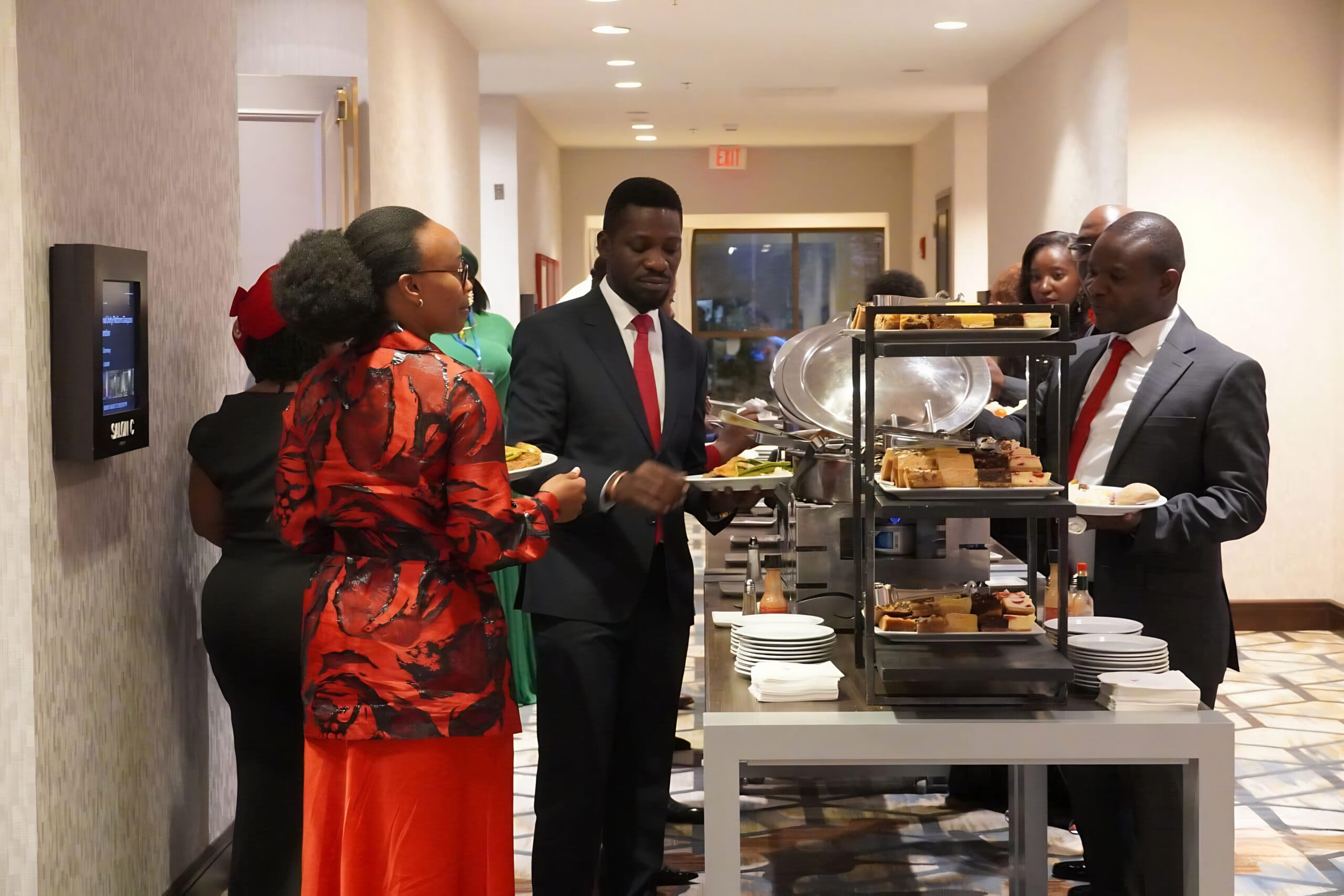
True liberation for Ugandan women won’t come from a few more female faces in the existing, toxic pyramid of power – whether NRM or NUP. It comes from smashing the pyramid altogether and building autonomous, horizontal structures where women, alongside men as equals, determine their own lives, their communities, and their resistance. It means women not just singing freedom songs, but conducting the struggle on their own terms, holding the keys to their own destiny, not just tending a kitchen assigned by men. The revolution will only be genuine when the monitor lizards are banished, not just politely ignored from a stage in Boston. Give women the tools to build a new house, not just a bigger kitchen in the old, crumbling one.
The Young Grasshopper’s Burden: Anarchist Dissection of Uganda’s Youth Mobilisation Mirage
Right. Let’s scrutinise this rousing call to empower “young Ugandans as architects of their future,” echoing from the polished halls of Boston back to the dusty streets of Kampala. Through the lens of Uganda’s history of youth exploitation and anarchist scepticism of hierarchical vanguards, this rhetoric rings dangerously hollow. As the Baganda adage wisely cautions: “The young grasshopper lands on the head”. Youth are thrust into the forefront, bearing the brunt of the struggle, but who truly guides their flight? Are they designing the future, or merely being positioned as expendable shock troops for a new set of masters waiting in the wings?
1. The Seductive Slogan vs. The Ugandan Reality:
The NUP convention’s resolution sounds empowering, progressive. Yet, the lived experience of Ugandan youth, particularly within political movements, tells a story far less emancipatory:Cannon Fodder in Red Berets: Recall the November 2020 protests. Who faced the live bullets, the tear gas, the abductions? Overwhelmingly, young people – students, boda-boda riders, unemployed graduates. They were the foot soldiers on the frontlines, bearing the horrific cost of “people power” while the leadership navigated a different kind of risk (arrests, yes, but often with lawyers on speed dial and international attention). This pattern repeats: youth provide the bodies, the energy, the visible defiance, absorbing the regime’s brutality.
Mobilised, Not Empowered: Is the NUP providing tools for autonomous youth action – critical analysis, self-organisation skills, resource management for community projects? Or is it primarily channelling their frustration into NUP-branded rallies, social media campaigns amplifying Kyagulanyi’s message, and door-to-door canvassing for the party’s electoral bid? The focus remains on harnessing their energy for the centralised machine, not fostering their independent capacity to shape solutions.
“Leadership Development” or Loyalist Grooming? The convention’s investment in “youth leadership development” sounds positive. But within the context of a hierarchical party fixated on capturing the state, what does this actually mean? History suggests it often involves:
Identifying charismatic or compliant young individuals.
Training them in party doctrine, messaging discipline, and campaign tactics.
Rewarding loyalty with positions within the party structure (youth league chairs, mobilisers, eventually MPs).
Creating a new generation of cadres dependent on the party hierarchy for their status and prospects – replicating the NRM’s own patronage system, just with younger faces and red berets. It groys loyalists for the new pyramid, not architects of a fundamentally different structure.
2. The Anarchist Critique: Architects Build Autonomously, Pawns Serve the Pyramid:
Anarchism views youth not as a resource to be mobilised by elites, but as agents capable of self-directed action and community building now. The NUP model is fundamentally flawed:Replicating Exploitation: It mirrors Criminal Museveni’s own cynical use of youth – from the historical “Kadogo” soldiers to the current Boda-Boda 2010 groups – as disposable instruments of power consolidation. Swapping yellow bibs for red berets doesn’t change the underlying dynamic: youth as means to an end defined by others.
Centralised Control vs. Decentralised Power: True “architects” need autonomy, resources, and freedom to experiment. They need to build their own organisations, define their own priorities (which may extend far beyond electoral politics to issues like unemployment, land grabs, or police brutality), and make mistakes. Centralised parties inherently stifle this, demanding alignment with the party line and the leader’s vision. You cannot design a new society while taking orders from an old-style political hierarchy.
The Pawn’s Fate: When the primary role is mobilisation for a centralised power grab, youth become pawns. When the revolution stumbles (or succeeds, only to install a new elite), they are often the first discarded, left with broken bodies, trauma, and shattered dreams, while the new “architects” (the groomed loyalists who climbed the ladder) occupy the offices. Their energy was harvested, not their potential realised.
3. The Regime’s Cynical Calculation & The Spy’s Opportunity:
Criminal Museveni’s regime understands the power and volatility of Uganda’s youth bulge. The NUP’s top-down mobilisation strategy plays into their hands:Identifiable Targets: Concentrating youth energy within a centralised party structure makes them easier to monitor, infiltrate (via youthful regime agents), and repress. The November 2020 crackdown targeted identifiable NUP-linked youth groups.
Discrediting the Youth: When state violence inevitably meets NUP youth mobilisation, the regime paints all protesting youth as violent “hooligans” or pawns of “foreign interests,” tarnishing their legitimate grievances.
The Spy’s Playground: The regime agent within the diaspora or NUP structures finds fertile ground in youth work. They can exploit youthful idealism, stoke internal divisions amongst ambitious young leaders, and report on strategies. They might even rise within the NUP youth ranks, becoming a trusted “architect” whose blueprints lead to dead ends.
4. Beyond Pawnhood: The Anarchist Blueprint – Building Ungovernable Youth Power:
True youth empowerment requires a radical departure:Skills for Autonomy, Not Servitude: Invest in practical education outside party dogma:
Critical Thinking & Political Education: Analysing power structures (state, patriarchy, capitalism), not just chanting slogans.
Self-Organisation & Direct Democracy: Training in facilitating meetings, consensus decision-making, conflict resolution within horizontal groups.
Practical Resistance Skills: Community first aid, digital security, documenting abuses, organising safe protests, building mutual aid networks.
Resource Generation & Management: Running community savings schemes (like Bamuzaamu), initiating small cooperatives, managing funds transparently within youth collectives.
Support Autonomous Youth Collectives: Encourage and resource youth to form their own groups based on locality (e.g., neighbourhood defence networks), shared interests (e.g., artists against repression), or specific issues (e.g., students against fee hikes), independent of party control. Let them define their struggles and tactics.
Horizontal Links, Not Top-Down Orders: Foster networks between these autonomous youth groups across Uganda, sharing skills, resources, and strategies directly, bypassing central party bureaucracies. Build solidarity, not a youth wing.
Confronting Hierarchies Within: Challenge patriarchal, ageist, and classist dynamics within youth movements themselves. Ensure marginalised voices (young women, rural youth, the urban poor) lead, not just the university-educated or well-connected.
Prefiguring the Future: Encourage youth to build elements of the society they want now: community gardens, alternative education projects, people’s libraries, solidarity economies. Let them be real architects, practising on the ground.
In Conclusion: From Pawns to Builders – Give Them the Tools, Not the Script
“Akakyama k’omuto kagwa ku mutwe.” The NUP’s vision of youth “architects” risks seeing them land squarely under the thumb of a new political hierarchy, their energy exploited, their true potential squandered as cannon fodder or groomed loyalists. They become grasshoppers crushed underfoot, not architects shaping the horizon.
Uganda’s future will be built by its youth – that demographic reality is undeniable. The question is: will they build it as autonomous agents, equipped with the skills and freedom to create horizontal structures of mutual aid and self-defence? Or will they merely lay the bricks for another gilded palace, occupied by a new set of rulers who once promised them the architect’s role?
The anarchist path demands the former. Stop mobilising youth as foot soldiers for the next elite. Start empowering them as genuine, autonomous builders of their own future – a future built from the ground up, commune by commune, where the only hierarchy is the collective will, freely expressed. Give them the tools for self-determination, not the script for another tragic cycle of exploitation. Let the young grasshopper design its own flight path, far from the crushing weight of falling pyramids.
The Puppet Master’s Whisky: Museveni’s Theatre of Controlled Opposition
Right. Let’s pull back the velvet curtain on perhaps the most sinister act in Uganda’s long-running political tragedy: Criminal Yoweri Museveni’s mastery of controlled opposition. From an anarchist perspective, rooted in the gritty reality of Kampala’s safe houses and the regime’s chilling efficiency, this isn’t mere repression; it’s a sophisticated, brutal theatre. And the Boston NUP convention, complete with its embedded regime viper gleefully posting revolutionary slogans, is a starring performance. As the Baganda adage pierces the farce: “Hitting the dog on the head isn’t just for seeing” . Criminal Museveni’s infiltration isn’t accidental oversight; it’s a deliberate, calculated blow designed for specific, devastating effects far beyond mere observation. It’s about control, manipulation, and perpetuating the game.
1. Beyond the Boot: The Hydra’s Embrace of Dissent:
Criminal Museveni’s regime understands that naked brutality alone breeds unsustainable resistance and international condemnation. His true genius lies in orchestrating dissent itself. Infiltrating the opposition – deeply, comprehensively – transforms potential threats into manageable assets:Narrative Steering: Agents provocateurs within movements like NUP can subtly push strategies towards dead ends – advocating futile actions, amplifying divisive rhetoric, or promoting leaders easily co-opted or crushed. They ensure dissent remains within boundaries the regime can tolerate or manipulate. The Boston resolutions, crafted partly under the unseen influence of regime plants, likely echo themes the regime finds convenient (like focusing solely on the ballot box).
Discrediting from Within: Nothing destroys a movement faster than internal scandal, hypocrisy, or exposed incompetence. Regime agents actively foment division, leak damaging information (real or fabricated), and ensure any genuine corruption or misstep within the opposition is amplified. When the NUP “servant leader” is seen cruising in a diaspora-funded Prado, the regime’s chorus of “See, they eat too!” gains deafening volume. The spy’s very presence is the scandal waiting to erupt.
Sowing Paranoia & Distrust: The known presence of infiltrators (and the regime ensures rumours swirl) poisons the well of solidarity. Genuine activists waste energy suspecting comrades, fearing betrayal, and second-guessing motives. Organising becomes paralysed by fear. “Is he CMI? Is she ISO?” becomes the constant, debilitating whisper.
Creating a Safety Valve: A visibly active, yet heavily compromised and infiltrated opposition provides a crucial pressure release:
For the Populace: It offers the illusion of resistance and hope, preventing total despair that might fuel uncontrollable, spontaneous uprising.
For International Actors: It satisfies demands for “political pluralism.” Donors and diplomats can point to the NUP’s Boston jamboree as “proof” of a functioning opposition, justifying continued engagement with the regime. It’s theatre for external consumption.
For the Regime: It channels anger and energy into predictable, manageable avenues (like doomed electoral campaigns or diaspora conferences), diverting it from more dangerous, decentralised, grassroots resistance that’s harder to infiltrate and crush.
2. Boston 2025: A Masterclass in the Art:

The NUP Diaspora Convention was perfect for this strategy:Illusion of Vitality: The glossy photos, the speeches, the resolutions – it projected an image of a vibrant, organised, global opposition movement. Perfect optics for the regime’s international narrative.
Fractured by Design: The diaspora setting inherently creates distance from the Ugandan grassroots struggle. Debates in Massachusetts can easily become disconnected from realities in Mbale or Mbarara, fostering internal tensions between diaspora and homeland activists – tensions regime agents can exploit.
Compromised Core: The regime plant, openly posting NUP propaganda, embodies the ultimate infiltration. She’s not hiding; she’s performing loyalty, gaining trust, accessing strategy, and waiting to strike or discredit. Her laughter is the sound of the trap snapping shut. She ensures the movement’s heart is poisoned.
Manageable Outcome: The convention’s output – endorsing Bobi Wine, focusing on the 2026 vote, pledging peaceful action – fits neatly into the regime’s playbook. It poses no existential threat; it’s a challenge Museveni knows how to handle (via fraud, repression, or co-option).
3. The Anarchist Lens: Why Hierarchical Opposition is the Perfect Stage:
Anarchism explains why this strategy works so well against groups like NUP:Centralised Targets: Hierarchical parties aiming for state power need leaders, headquarters, conferences, and clear structures. These are easy targets for infiltration. The hydra knows where to sink its teeth. A decentralised network of autonomous communes has no single head to corrupt.
The State-Capture Fantasy Plays into Museveni’s Hands: By seeking to replace him within the existing state structure, the opposition implicitly validates that structure. Criminal Museveni is a master of that structure; it’s his home turf. Fighting him on his own terms (elections, parliament) is fighting a battle he designed and rigged. Anarchists reject the battlefield entirely.
Vulnerability to Cynicism: The inevitable compromises, cronyism, and failures of a hierarchical opposition vying for power fuel the regime’s “all are thieves” narrative, demoralising the populace. Anarchist movements building alternatives outside the state avoid this trap by definition; their legitimacy comes from practice, not promises of future purity.
4. The Ugandan People: The Perpetual Audience (and Victims):
This theatre has one constant loser: the Ugandan citizen.Hope Weaponised: Their genuine yearning for change is channelled into compromised vehicles, setting them up for repeated betrayal and disillusionment.
Repression Continues: While the diaspora debates in hotels, abductions, torture, and economic strangulation continue unabated. The theatre provides cover for the real brutality.
Distrust is sown: The regime’s manipulation makes it incredibly difficult to build the broad, deep, trusting coalitions necessary for genuine mass resistance. The social fabric is deliberately frayed.
5. Beyond the Theatre: Disrupting the Script with Anarchist Praxis:
Escaping this trap requires rejecting the stage:Build Ungovernable Autonomy: Focus energy on creating self-reliant communities that minimise dependence on the corrupt state and the compromised opposition. Build people’s assemblies, community defence networks, mutual aid economies – structures the hydra cannot easily bite because they have no central head.
Direct Action, Not Delegated Politics: Prioritise strikes, boycotts, occupations, and grassroots civil disobedience that directly challenge the regime’s control and empower people immediately, bypassing the electoral circus and its infiltrated players.
Radical Transparency & Accountability: Within resistance movements, enforce mechanisms that make infiltration harder: decentralised decision-making, mandated delegates recallable by communities, transparent resource flows. Make loyalty to the people and the struggle, not the party or leader, paramount.
Ignore the Puppet Show: Withdraw energy and legitimacy from the regime’s controlled opposition theatre. Don’t feed the narrative. Starve the spectacle of attention.
In Conclusion: Smash the Stage, Not Just the Puppets
Criminal Museveni’s infiltration of the NUP isn’t a passive observation post; it’s an active hammer blow designed to cripple genuine resistance from within. The Boston convention, with its unwitting actors and embedded regime star, was a perfect act in his brutal theatre of control. It offers the illusion of contestation while ensuring the dictator’s script remains unchallenged.


The anarchist response is not to find better actors for the same tragic play, but to smash the stage itself. It means building power so diffuse, so rooted in community autonomy and direct action, that infiltration becomes meaningless, and the regime’s manipulative genius meets only the unyielding resilience of a people organising themselves from the ground up. Stop applauding (or despairing at) the puppets. Tear down the theatre, and build something real in its place – a society where the people are the only directors, and the only script is their collective freedom, written daily in the language of mutual aid and ungovernable resolve. Let the master of manipulation find his stage empty, his audience gone, and his brutal theatre playing only to the silence of his own irrelevance. The real show is happening in the communes, far from his gilded box.
The Soil, Not the Throne: An Anarchist Blueprint for Uganda’s True Liberation
Right. After dissecting the rotting edifice of Ugandan politics – from Criminal Museveni’s gilded cage to the NUP’s compromised carousel – we arrive at the radical heart of the matter: The Anarchist Alternative. This isn’t mere critique; it’s a call to action rooted in Ugandan soil and a ruthless understanding of power. Forget swapping one strongman for another. As the Baganda profoundly warn: “Power reveals itself on the seat”. Whether occupied by a bush-war general or a ghetto Musician-turned parasitic politician, the throne itself corrupts. True liberation demands dismantling the pyramid and building from the fertile ground below.
1. Rejecting the Poisoned Chalice: The State is the Problem, Not the Prize:
The anarchist premise is stark: The modern Ugandan state, forged in conquest and refined into a tool of extraction and repression, is inherently oppressive. Its structures – the militarised police, the patronage-sodden bureaucracy, the weaponised judiciary – exist to concentrate wealth and power, not serve the people. Replacing Criminal Museveni with Parasite Bobi Wine (or any other political leader) within this same structure is like pouring fresh mango juice into a poisoned calabash. The vessel itself is toxic. Liberation won’t come from capturing the state, but from rendering it obsolete through autonomous, self-organised power.2. Building the Commune: Ugandan Roots, Anarchist Principles:
The alternative isn’t chaos; it’s decentralised, direct democracy and mutual aid, deeply resonant with Ugandan traditions often suppressed by the centralising state:Mutual Aid Networks (Obugaaga Reborn): Reviving and radicalising the spirit of obugaaga (communal labour) and amatoro (collective cattle grazing). Imagine:
Community Granaries: Neighbourhoods pooling resources to create food banks, resisting famine profiteering during crises.
Solidarity Economies: Market vendors in Owino or Kikubo forming cooperatives for bulk buying, shared storage, and microloans, bypassing loan sharks and predatory middlemen.
Health Brigades: Nurses, traditional healers, and community volunteers organising clandestine clinics and medicine sharing, defying the collapsed state health system. Like the Lukiko (traditional council) but for daily survival and resilience.
Community Defence Groups (Eby’Obugenyi for the 21st Century): Reimagining community watch (Eby’Obugenyi) for an age of state terror:
Early Warning Systems: Boda-boda networks acting as lookouts, using coded signals to warn of “drone” vans or security deployments.
Rapid Response: Trained community members providing immediate first aid, legal observation, and non-violent intervention during arrests or raids – a human shield grounded in locality.
Safe Haven Networks: A decentralised web of homes and sanctuaries for activists, operating without a centralised list vulnerable to infiltration. Trust built neighbour-to-neighbour, not via party HQ.
Direct Democracy (People’s Assemblies – The Lukiko Unleashed): Creating autonomous People’s Assemblies at the village, parish, and neighbourhood level:
Grassroots Mandate: Decisions on local resources, security protocols, conflict resolution, and responses to repression made collectively by those affected. No MP or party official imposing solutions from Kampala or Boston.
Imperative Mandates & Recall: Delegates sent to coordinate with other assemblies carry strict, revocable mandates. No career politicians emerging.
Solving Real Problems: Addressing land disputes, organising clean water access, managing local forests – demonstrating self-governance works where the state fails. The Lukiko not as a cultural relic, but a living tool of liberation.
Reclaiming the Economy: Establishing community-controlled resources – forests, wetlands, water sources – defended against grabbers by local action. Supporting worker cooperatives in agriculture and crafts, building economic independence from the kleptocratic state and its cronies.
3. Why This Works (And Why the Ballot Fails):
Resilience Through Dispersion: No central head for the regime’s hydra to crush. Crush one commune, others persist and adapt. Infiltrate one assembly, the network continues.
Genuine Empowerment: People solve their own problems, build their own power, and develop the skills for self-governance. They become architects, not pawns.
Preempting New Tyranny: By refusing to re-create centralised power structures, the commune model inherently prevents the rise of a new Bobi Wine (or Museveni Mark II). Power remains diffused, accountable, and rooted locally.
Addressing Real Needs Now: While NUP chases the 2026 mirage, communes build food security, community defence, and local justice today, improving lives amidst the oppression and building tangible loyalty.
Starving the Beast: Reducing dependence on the corrupt state (and the compromised opposition) for essential services and security weakens their control and legitimacy.
4. The Ugandan Context: Not Foreign Ideology, Buried Wisdom:
This isn’t importing European anarchism. It’s reclaiming and radicalising latent Ugandan traditions of communal decision-making, mutual support, and resistance to central authority – traditions systematically eroded by colonial and post-colonial states. It’s Obugaaga meeting direct action. It’s the Lukiko shedding its co-opted chains. It’s the spirit of Ubuntu without leaders.5. Confronting the Objections:
“But what about the Army?” Autonomy isn’t pacifism. Community defence groups, linked regionally, are the people’s army. Their strength lies in local knowledge, popular support, and the inability of the state to decapitate them. Remember: criminal Museveni himself started small and dispersed.
“Isn’t this utopian?” Building communes amidst repression is brutally hard. But is it more utopian than expecting a rigged ballot to disarm a 40-year dictatorship? Is it more naive than trusting infiltrated parties? The seeds are already there – in market collectives, informal savings groups, neighbourhood watches. Water them.
“We need a national leader!” National leaders are targets or traitors. True national strength emerges from the federation of powerful, autonomous communities – a confederation of communes – coordinating horizontally for mutual aid and defence, not obeying a central committee.
In Conclusion: From Boston’s Illusion to Bwaise’s Reality
“Entasiima erabika ku ntebe.” Power reveals its corrupting essence upon the throne, whether in State House or aspired to from a Boston Marriott. The anarchist path rejects the throne entirely. It calls Ugandans to turn their backs on the hollow theatre of conventional politics – the spy’s snigger, the diaspora’s disconnect, the saviour’s cult, the fundraising farce.

Look down. Look around. The power is here. In the shared labour of your neighbours, the collective defence of your street, the assembly under the village tree. Build the commune in Katwe, in Gulu, in Kasese. Organise your market, your village, your neighbourhood. Practice self-rule. Practice mutual aid. Practice defence. Forget the ballot box; build the ungovernable reality from below. Let the regime and its controlled opposition play their games in the gilded cage of Kampala politics. Meanwhile, let Uganda rise from the soil, commune by resilient commune, until the throne sits empty, gathering dust, irrelevant to a people who have learned to rule themselves. The future isn’t seized from above; it’s cultivated, fiercely and together, from the ground up. Build the commune.
The Soil, Not the Stage: An Anarchist Epilogue for Uganda’s True Liberation
The curtain falls on the Boston Masquerade, the polished resolutions echoing in the plush silence of the Marriott. But here, in the humid embrace of Uganda, where the scent of woodsmoke mingles with the tang of fear and defiance, the anarchist verdict is stark: This script was penned by the very tyranny it pretends to defy. As the Baganda profoundly declare: “What you need is in your hands.” The NUP’s diaspora spectacle, funded by exile hope and greased by the regime’s own infiltrators, offers only a cruel illusion – swapping one gilded cage for another, leaving Ugandans forever grasping at shadows while the real tools of liberation lie discarded at their feet.
1. The Vicious Cycle: Boston’s Echo of State House:
The convention’s output – the unanimous coronation, the centralised strategy, the opaque funding, the hollow empowerment pledges – isn’t revolutionary. It’s State House politics in a red beret. It promises merely to replace Criminal Museveni’s ageing autocracy with a new, potentially youthful one, funded by the remittances of those fleeing the misery the old system created. The regime spy’s laughter from Boston isn’t just mockery; it’s the sound of the trap snapping shut on another generation’s hopes. This isn’t a path to freedom; it’s a well-rehearsed tragicomedy where Ugandans play the perpetually betrayed audience, funding their own deception. The ballot box, in this rigged game, is not a tool of liberation but a fig leaf for continued subjugation.
2. The Anarchist Imperative: Rejecting Masters, Embracing the Mud:
The true path forward lies not towards another gilded throne, whether in Kampala or aspired to from Boston, but downwards and outwards, into the gritty reality of everyday Ugandan life. It demands a radical rejection of all masters – the General in camouflage and the popstar in the red beret alike. As the adage insists: “What you need is in your hands.” Liberation isn’t delivered from afar; it’s forged by Ugandans themselves, organising horizontally in the spaces the state and its compromised opposition neglect or exploit:
In the Markets (Owino, Kikubo, Nakasero): Vendors forming solidarity cooperatives (Obugaaga reborn) for bulk buying, shared storage, and defence against extortion – building economic autonomy brick by brick.
In the Villages (Kasese, Gulu, Katakwi): Communities reviving People’s Assemblies (a radical Lukiko) to manage local resources, resolve land conflicts, and organise community defence (Eby’Obugenyi for survival) against SFC brutality and land grabbers, creating sanctuaries known only to trusted neighbours.
In the Neighbourhoods (Kamwokya, Ndeeba, Bwaise): Building mutual aid networks – clandestine medical support, food sharing during crises, childcare collectives for activists – weaving a web of resilience that ignores party lines and state collapse.
In the Shadows: Developing decentralised resistance – early warning systems using boda-bodas, direct action against injustice, documenting abuses through dispersed, secure networks. Power lies in the multitude acting in concert, not a single voice on a stage.
3. Beyond Rhetoric: Building the Ungovernable Commune:
This isn’t abstract theory; it’s the practical dismantling of the pyramid of power. It means:
Direct Democracy, Not Delegated Betrayal: Decisions made by those affected, in local assemblies, through consensus or clear mandates. No distant leader in Kampala or Boston dictates strategy for Kasese.
Mutual Aid, Not Patronage: Sharing resources based on need and solidarity, not party loyalty or crony connections. The commune feeds its own, defends its own, heals its own.
Community Defence, Not State “Security”: Protecting each other through collective vigilance and organised resistance, recognising that the state’s forces are instruments of oppression, not protection. Safety is built locally, not policed from above.
Prefigurative Politics: Building the free society within the shell of the old – demonstrating self-governance works now, in the marketplace, the village, the neighbourhood. Show, don’t just promise.
4. The Spy’s Laughter Drowned by the Communal Hum:
Let the regime’s viper in Boston snigger at the convention’s hollow resolutions. Her power thrives on the stage of centralised, hierarchical politics. But her laughter cannot penetrate the determined, collective hum rising from the soil of Uganda itself – the sound of communities taking control. It’s the murmur of the People’s Assembly under the mango tree in Lira, the clatter of cooperative tools in a Katwe workshop, the silent watchfulness of a neighbourhood defence network in Mbarara, the shared pot of posho in a safe house in Jinja. This is the true sound of freedom: not applause for a distant saviour, but the resilient rhythm of a people building their own world.
5. The Radical Turn: From Spectators to Architects:
The struggle continues, but it demands a radical change of direction. Away from the dead-end of state capture and diaspora-funded illusion. Towards the fertile ground of autonomy, mutual aid, and direct action. Uganda’s future belongs not to those sipping lattes in Marriotts or plotting in State House, but to those with their hands in the soil, their feet in the markets, and their hearts set on building the ungovernable commune.
Final Word: Take Hold of What is in Your Hands
“What you need is in your hands.”

The power, the tools, the future – they are here. Not in Boston’s hollow declarations, nor in the promises of the next would-be strongman. They are in the collective will, the shared labour, the fierce autonomy of Ugandans organising themselves, village by village, street by street, market by market. Reject the masters. Ignore the spies. Turn your energy inward and outward, to your neighbours and your community. Build the commune. Dismantle the pyramid. Let Uganda rise, not from the throne, but from the soil. The liberation you seek is in your hands – grasp it, together, and build.
Sub delegate
Joram Jojo

- Beyond National Unity Platform (NUP): Building Real People Power in Uganda from the Ground Up - 3rd September 2025
- Red Beret Messiah or New Dictator? Anarchist Critique of Bobi Wine Cult & NUP Cronyism in Uganda - 17th August 2025
- Uganda’s NDPIV Unmasked: The Stark Reality Behind the Illusion of Progress - 8th June 2025
RELATED PUBLICATIONS:
 ROBERT KYAGULANYI, AKA BOBI WINE IS A SCAM
 Uganda’s HIV Self-Reliance Myth: The Gap Between Rhetoric and Reality
 WHOEVER WILL LOSE THE UGANDA ELECTIONS TO PEACEFULLY CONCEDE
 From Propaganda to Policy: The Impact of Misinformation in Uganda’s Economic Reporting
 DR. JANE RUTH ACENG GOES ON A COVID-19 INFECTING SPREE
 BOBI WINE AND HIS GANG ARE FAKE LIBERATORS
 Controversy Rocks National Unity Platform Over Alleged Ticket Fee Demand
 Uganda’s NDPIV Unmasked: The Stark Reality Behind the Illusion of Progress
 UGANDA PARLIAMENT SECRETLY SIPHONES COVID-19 FUND
 PLANS AIMED AT ACHIEVING THE UGANDA VISION 2040
 UGANDA PEOPLE’S CONGRESS,UPC BACKS THE ELECTORAL COMMISSION
 BOBI WINE HAS HIGHJACKED THE NATIONAL UNITY PLATFORM
 UGANDA ELECTORATE REJECTED THE BOBI WINE CALIPHATE
 PARASITISM AND PUPPET POLITICIANS IN UGANDA
 NUP LEADERS SEXUALLY ABUSE YOUNG PARTY SUPPORTERS
 JOSE CHAMELEON ARRESTED BY UGANDA POLICE
 COVID-19 PANDEMIC RELIEF, BECOMES A THIEVING BONANZA IN UGANDA
 COVID-19 VACCINATION EXERCISE IN UGANDA IS DISCRIMINATORY
 INFIGHTING BETWEEN THE NATIONAL UNITY PLATFORM
 THE UGANDA NATIONAL UNITY PLATFORM PARASITES
 Uganda Economic Report: Analysing Propaganda and Misinformation in Fiscal Policies
 UBOS’s Statistical Spin: How Facts Are Doctored to Serve Political Agendas
 Uganda Defence Forces (Amendment) Bill 2025: Threats to Democracy and Civilian Oversight
 UGANDA MAKERERE UNIVERSITY UNDER SIEGE