
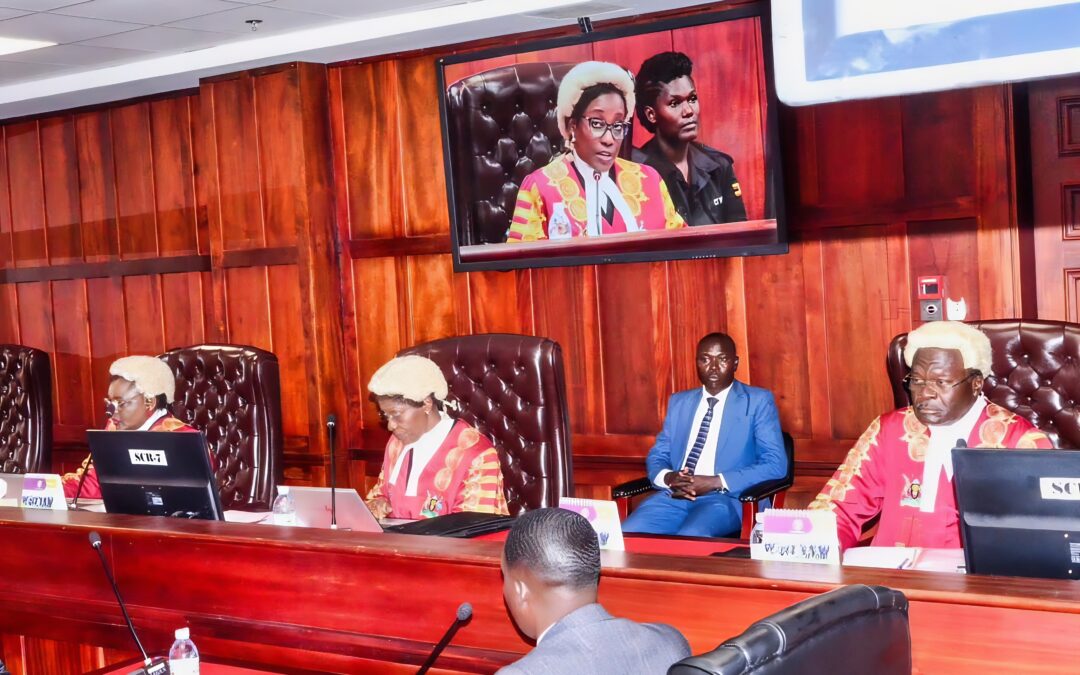
Supreme Court of Uganda Rules on Military Courts and Civilian Rights: A Landmark Judgment
The Supreme Court of Uganda has delivered a landmark judgment in Constitutional Appeal No. 02 of 2021, clarifying the constitutional limits of military courts and affirming the rights of civilians to fair trials. The case, which emanated from a petition filed by Hon. Micheal A. Kabaziguruka, addressed critical questions concerning the jurisdiction of military courts, their status as “Courts of law,” and the protection of civilian rights under the Constitution.
Background of the Case
The Arrest and Charges
Hon. Michael A. Kabaziguruka, a civilian Member of Parliament representing Nakawa Municipality, was apprehended and arraigned before the General Court Martial (GCM) under the Uganda People’s Defence Force (UPDF) Act. The charges brought against him included those of Treachery (Section 129(a)) and Offences Relating to Security (Section 130(1)(f)). The charges alleged that the accused had conspired to overthrow the government, had infiltrated the UPDF, or had acted as an agent of a foreign power.
Kabaziguruka expressed dissatisfaction with the prospect of being tried in a military court, and advanced the following argument supporting this position:
- The individual in question had no affiliation with the military, and thus he was not subject to the jurisdiction of military law.
- The GCM was found to lack the necessary constitutional authority to try civilians for non-military offences.
The Constitutional Petition
In response, Kabaziguruka filed Constitutional Petition No. 45 of 2016, challenging the legality of his trial and the constitutionality of provisions in the UPDF Act. The following arguments were presented:
- Section 197 of the UPDF Act has been found to be in violation of the constitutional principles that govern the establishment of a court, as it has been determined that the section in question was created without the requisite constitutional authority.
- It is evident that military courts do not fall under the purview of Articles 126(1), 129(1), and 257 of the Constitution, which delineate the definition of “Courts of law.”
- Sections 2, 179 and 119(1)(g) & (h) of the UPDF Act violate the Constitution by extending the jurisdiction of military courts to civilians and non-military offences.
The Constitutional Court stayed the GCM proceedings and issued a majority decision upholding Kabaziguruka’s claims. Dissatisfied with the outcome, the Attorney General appealed to the Supreme Court, while Kabaziguruka cross-appealed against certain aspects of the decision.
Key Issues Addressed by the Supreme Court
1. Are military courts “courts of law”?
The Supreme Court considered whether military courts qualified as “courts of law” under the Constitution. The respondent argued that military courts lack independence, impartiality, and adherence to the principles of fair trial guaranteed by Article 28(1).
Court’s Ruling:
- Military tribunals are tribunals and not “courts of law” within the meaning of Articles 126(1) and 129(1).
- They lack the essential attributes of ordinary courts, such as independence and impartiality.
2. Jurisdiction of Military Courts
The Court examined whether military courts have unlimited jurisdiction to try civilians and offences outside the scope of military law.

Court’s Ruling:
- Military courts can only try offences under the UPDF Act and persons subject to military law.
- Sections 119(1)(g) and (h) of the UPDF Act, which allow military courts to try civilians for offences under other laws, are unconstitutional and void.
3. Can Civilians Be Tried in Military Courts?
The Respondent contended that civilians cannot be tried in military courts unless they are accomplices to a principal offender subject to military law, and the principal is explicitly named in the charge sheet.
Court’s Ruling:
- Civilians cannot be tried in military courts except in limited circumstances where they are accomplices to a principal offender subject to military law.
- As the charges against Kabaziguruka did not name a principal offender, the charges were declared null and void.
4. Separation of Powers and Constitutional Authority
The Court emphasised the principle of separation of powers, stating that the UPDF Act could not override the constitutional framework governing the judiciary.
Court’s Ruling:
- The UPDF Act is a law of special and limited application, not a law of general application.
- Its jurisdiction is limited to military matters and cannot interfere with the jurisdiction of the judiciary.
Supreme Court’s Final Decision

The Supreme Court upheld the majority decision of the Constitutional Court and declared:
- Military courts are not “courts of law” under the Constitution.
- Sections 119(1)(g) and (h) of the UPDF Act are unconstitutional.
- Civilians cannot be tried in military courts except in limited circumstances.
- The charges against Hon. Michael A. Kabaziguruka are null and void.
The court ordered the immediate release of the defendant and restrained the Attorney General from continuing the GCM proceedings against him.
Significance of the Judgment
1. Reinforcing Fair Trial Rights
This judgment underlines the constitutional guarantee of a fair trial under Article 28(1). It ensures that civilians are not subjected to military tribunals, which may lack the independence and impartiality required for a fair trial.
2. Protecting the Separation of Powers
The ruling reaffirms the principle of separation of powers, preventing the military from overstepping its jurisdiction and encroaching on the role of the judiciary.
3. Clarifying the Role of Military Courts
The decision clarifies that military courts are specialised courts with limited jurisdiction, applicable only to military personnel and offences under the UPDF Act.
Conclusion
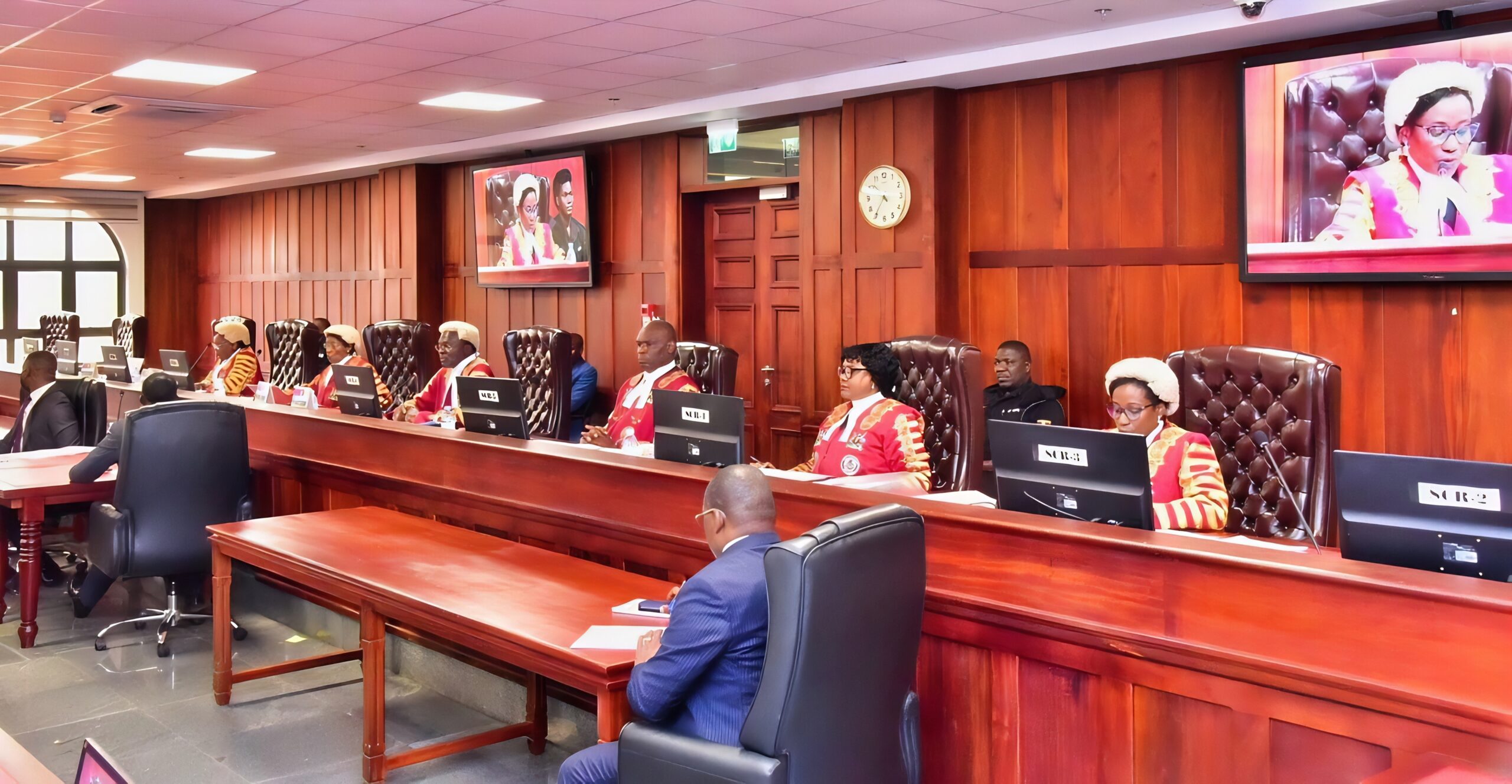
The Supreme Court’s judgment in Constitutional Appeal No. 02 of 2021 is a landmark decision that strengthens constitutional safeguards for civilians and reinforces the rule of law in Uganda. By striking down provisions of the UPDF Act that expanded the jurisdiction of military courts, the Court has ensured that the rights of civilians are protected and that military courts operate within their constitutional limits.
This case serves as a precedent for future challenges to the jurisdiction of military courts and highlights the importance of upholding constitutional principles in ensuring justice and human rights.
Sub DelegateÂ
Joram Jojo

- Controversy Rocks National Unity Platform Over Alleged Ticket Fee Demand - 2nd February 2025
- Supreme Court of Uganda Rules: Civilians Cannot Be Tried in Military Courts - 1st February 2025
- Kisoro Elections: Democracy, Minority Rights, and the Batwa’s Struggle - 16th November 2024


